Blood for the living - Excelsior PTA drive inspired by tragedy
Loading article...
-
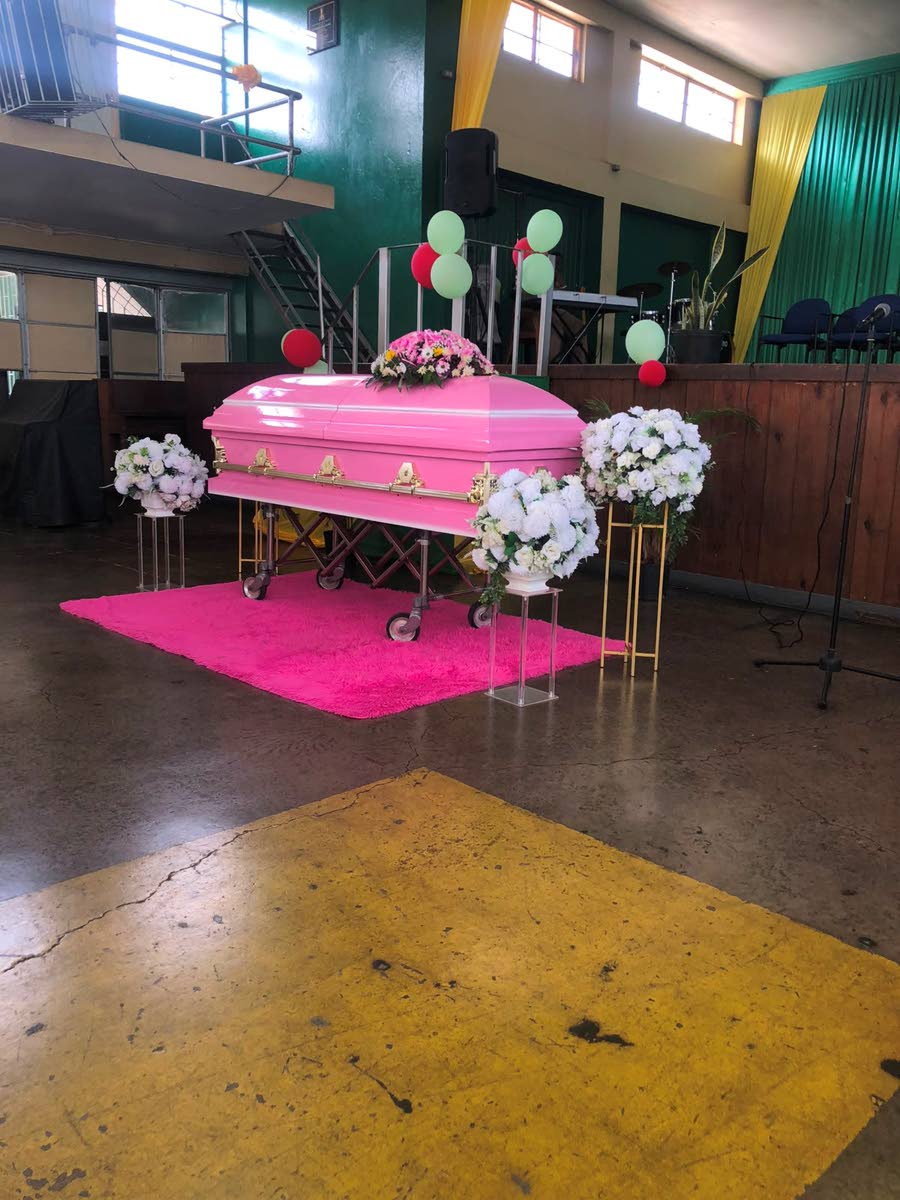 Kemelia Paul in her coffin inside the Excelsior High School auditorium earlier this year. Photo - Contributed
-
Kemelia Paul in her coffin inside the Excelsior High School auditorium earlier this year. Photo - Contributed
-
 Josephine Mitchell and her boys at the thanksgiving service for Kemelia on Sunday. Photo - Contributed
When 13-year-old Kemelia Paul was fighting for her life in hospital after being stabbed while trying to intervene in a domestic dispute at her home in Bayshore Park, St Andrew, her mother, Josephine Mitchell, was confronted with a desperate reality: finding enough blood to keep her daughter alive.
As doctors battled to save the Excelsior High School student, Mitchell and other relatives made repeated trips to source surgical supplies while simultaneously appealing to members of the public to donate blood.
It was a race against time, one that would ultimately end in heartbreak when Paul died on June 9, 2026, leaving her family to grapple with a loss that has been difficult to comprehend.
Months later, the memory of that ordeal is among the painful experiences driving the Excelsior High School Parent-Teacher Association (PTA) to organise a blood drive, in the hope of sparing other families the anguish of desperately searching for life-saving blood when a loved one is in need.
For Mitchell, the initiative carries deeply personal significance.
“I am still in disbelief. I can’t believe my daughter lost her life trying to help out an adult, when it is the adult who should be the one protecting all kids,” she told The Sunday Gleaner.
Paul, a Grade Seven student, was stabbed in the abdomen on May 9 while attempting to break up a domestic dispute at her home in Bayshore Park, on the outskirts of Harbour View.
She was rushed to the Kingston Public Hospital (KPH), where doctors performed several surgeries in an effort to save her life.
Mitchell recalled the frantic efforts to obtain the surgical equipment needed by the medical team, even as she and other family members were told that her daughter needed substantial quantities of blood.
The supplies were expensive, but nothing compared with the desperation of trying to secure the blood her child so desperately needed.
“They (the doctors) explained to me that the blood vessel to the liver got cut off, and it was cut off so badly that they had to do another surgery to take the vessel from the thigh and attach it back to her liver,” she recounted.
“So that was a second surgery, and they even had to do over that one.”
It was during that period that Mitchell said she summoned the courage to make a public appeal for blood, hoping enough people would respond to give her daughter another chance.
“They told me that she lost most of her blood. I asked them how many people they thought I needed to get the blood. They said, ‘Ma’am, you have to get at least 100 people’. But I don’t even have 100 people in my contacts,” she recalled.
Even after people responded to the appeal, further hurdles emerged, as the collected blood had to undergo testing before it could be administered, adding to an already agonising wait.
Some people were unable to donate because they were ill, although Mitchell said they still assisted the family by helping to source medication and surgical tools the hospital had asked them to buy.
The experience left her angry, disappointed and hurt, particularly as she watched her daughter undergo repeated procedures while the family struggled to meet the demands of her treatment.
Still, she has endorsed the PTA’s initiative, scheduled for November 18, saying it could make a difference to someone who might one day find themselves in the same predicament.
“My daughter’s situation was very terrible, but hopefully nobody else reaches that point where they need it,” she said, expressing gratitude to those who came forward to help her daughter.
For Mitchell, the hope is that other families will not have to endure the same desperate search for blood while watching a loved one fight for life.
For Excelsior High PTA President Cariel Findlay, the blood drive is, in part, a response to the deaths of students, parents and a teacher over the past year.
Paul’s death, in particular, reinforced the need to do something practical that could help others, she said.
“We have had the experience of losing students and parents, as well as a teacher this year. So we have a lot of motivation,” she said, encouraging parents, students, staff, residents of the Mountain View community and members of neighbouring schools to support the exercise.
Findlay said the PTA had also reached out to parents, students and staff who had lost loved ones this year as part of efforts to rally support for the initiative.
She singled out Marlise McKoy, the association’s treasurer, as another major force behind the planning and organisation of the drive.
Principal Deanroy Bromfield said the school was still coming to terms with the deaths, which have affected members of its extended community.
“Three of our students died in the last school year, and from then until now we have also had a number of parents who have passed. In a few of the cases, the persons needed blood,” he said, noting that while the passage of time had made the losses somewhat easier to process, the memories of those who died would remain.
A national shortage
The Excelsior initiative comes against the backdrop of persistent concerns about Jamaica’s blood supply, with health authorities repeatedly appealing for more people to become regular donors.
In July, The Gleaner reported that the National Blood Transfusion Service was operating with stocks at approximately half the level needed to meet demand.
Director Dr Kamille West-Mitchell warned that the shortage was so severe that patients were sometimes being denied urgently needed transfusions, forcing difficult decisions about who would receive the limited supplies available.
In May, the Ministry of Health and Wellness also disclosed that Jamaica collects between 35,000 and 40,000 units of blood annually, against significantly higher demand for surgeries, trauma care and maternal emergencies.
The ministry has been pushing to move the country away from its longstanding reliance on replacement donations, in which relatives and friends are called upon to give blood when someone they know is in need, towards a culture of voluntary and repeat donation.
The shortage is not confined to emergency cases. Blood is also needed for patients undergoing surgery, cancer treatment and other medical procedures, as well as people living with conditions requiring regular transfusions.
For the Excelsior community, the blood drive represents an opportunity to turn some of the grief of the past year into an effort that could help save lives.
And for Mitchell, whose search for blood came at one of the most painful moments of her life, the hope is that no other parent will have to experience what she did.
corey.robinson@gleanerjm.com