‘Abominable betrayal’ - Patterson demands answers over Jamaica’s Cuba vote shift
Loading article...
-
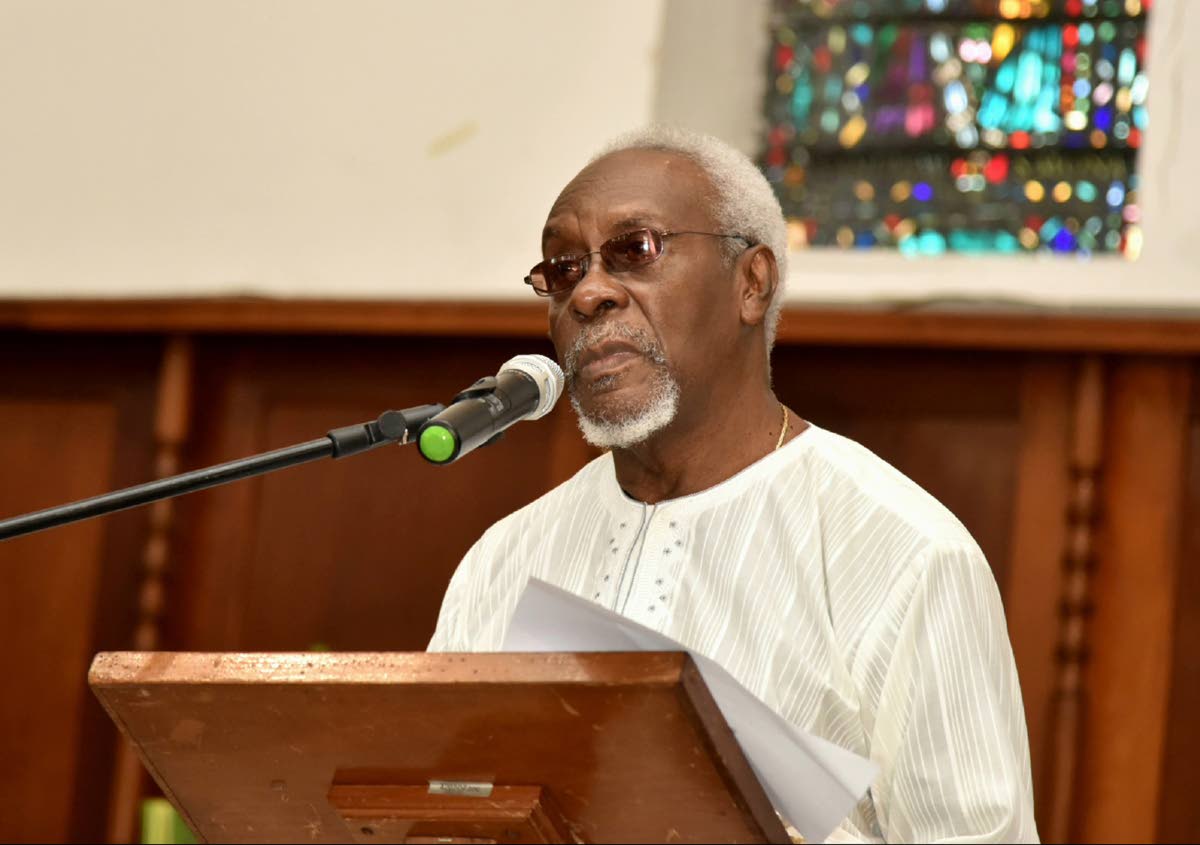 PJ Patterson, former prime minister of Jamaica. Photo - File
-
PJ Patterson, former prime minister of Jamaica. Photo - File
-
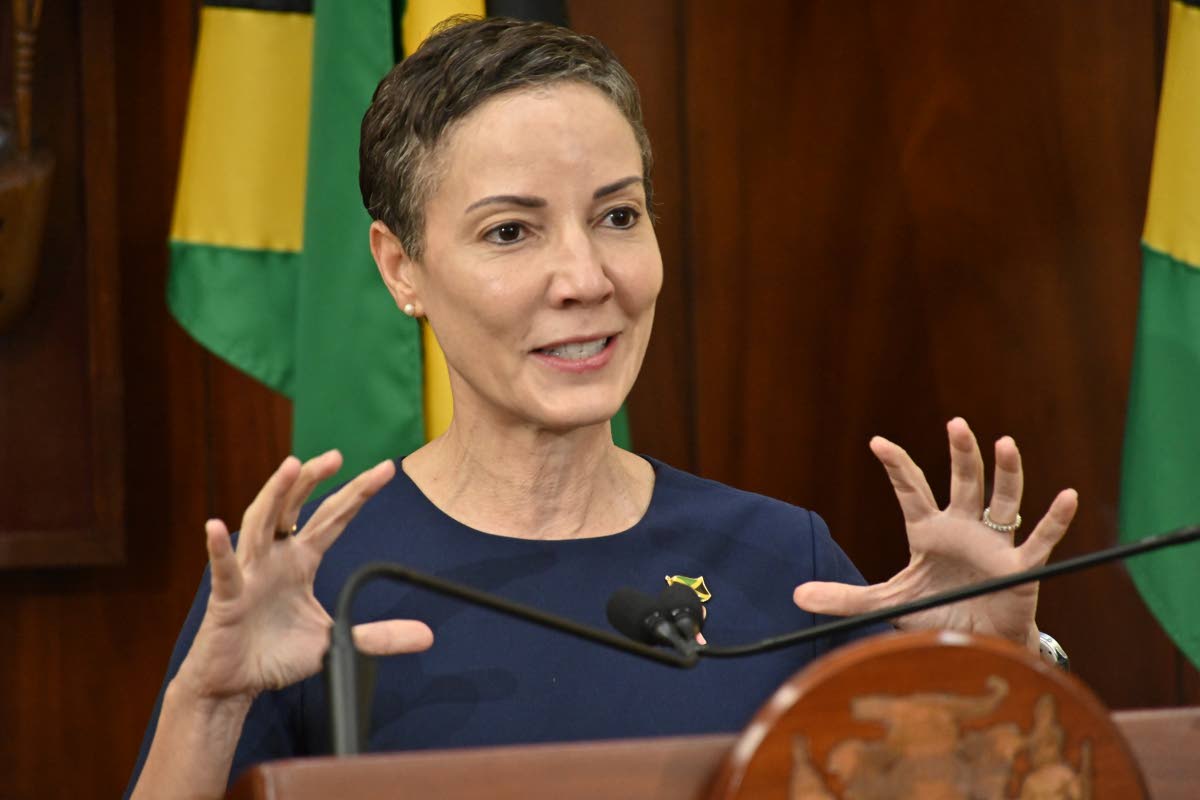 File
Senator Kamina Johnson Smith, minister of foreign affairs and foreign trade.
-
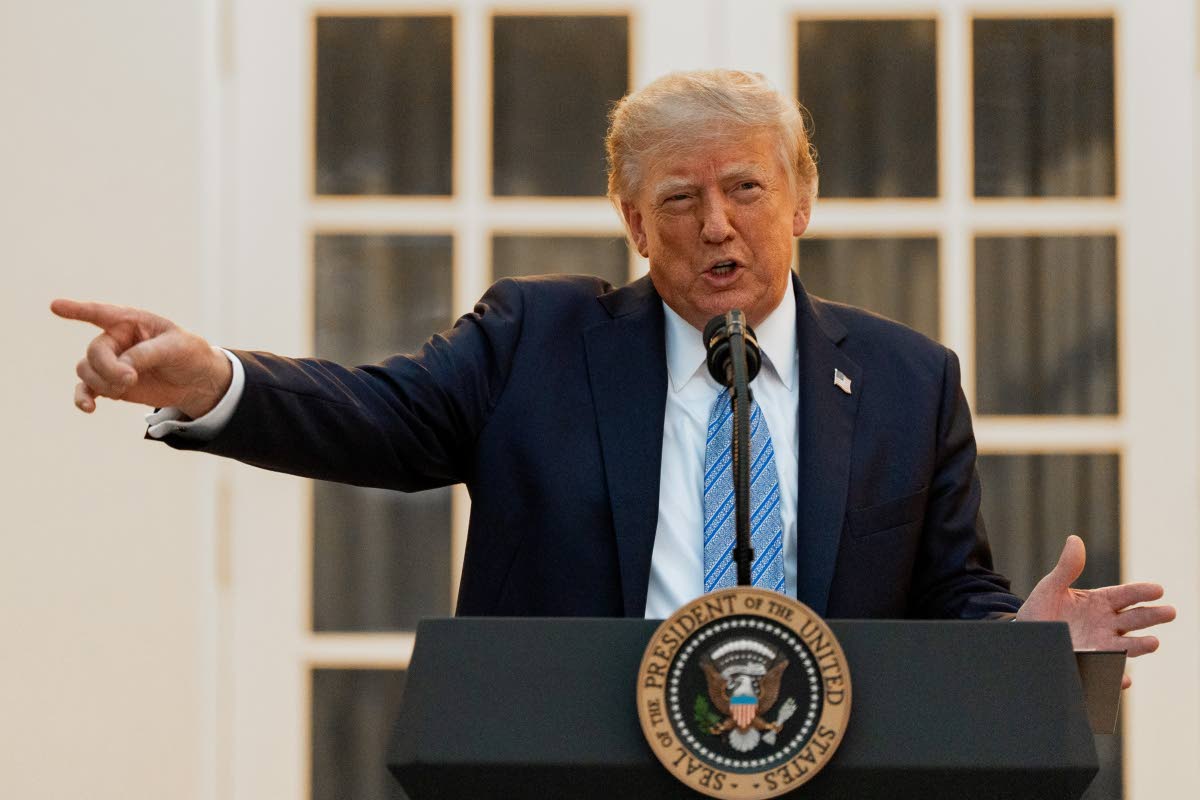 US President Donald Trump. Photo - AP
The Government of Jamaica’s abstention from the United Nations General Assembly vote to lift the United States (US) embargo against Cuba amounts to an “abominable betrayal” that stains the country’s record of standing up against oppression.
This is the pronouncement of former Prime Minister P.J. Patterson, who has demanded that the Government provide a full explanation for its departure from Jamaica’s long-standing opposition to the 66-year-old economic, commercial and financial embargo imposed by the US against Cuba.
“The entire nation and the Diaspora are entitled to a full and truthful account of how this decision was taken, by whom, and on whose advice. They are entitled to know whether pressure was applied, from what quarter, and what, if anything, was promised or threatened,” he said in a statement.
Wednesday’s vote came amid an intensifying campaign by US President Donald Trump’s administration to pressure the Cuban Government to change its political and economic system.
Washington has sought to persuade countries to oppose the resolution, arguing that the embargo is necessary to hold Cuba’s communist government accountable for corruption and alleged human rights abuses.
However, Information Minister Senator Dr Dana Morris Dixon told journalists last Wednesday that the Jamaican Government had not been pressured by the US to abstain.
“There was no one influencing Jamaica. Jamaica is a sovereign nation, and Jamaica made a decision to abstain,” she said.
In explaining Jamaica’s abstention, Foreign Affairs Minister Senator Kamina Johnson Smith said the Government had been reflecting on the matter for some time.
She said Jamaica remained concerned about the worsening humanitarian situation in Cuba and supported dialogue between Washington and Havana.
“We did not vote ‘against’ because we do not support unilateral action in accordance with the UN Charter, and we did not vote ‘for’ because it is clear that continuing to do the same thing each year to support the resolutions, simplicita, with not only no improvement in the circumstances, but in fact a deepening of the humanitarian crisis and suffering, this does not serve the benefit of the Cuban people,” she said.
The minister also highlighted a parliamentary motion moved the day before the abstention, which expressed deep concern about Cuba’s economic and humanitarian situation. It advocated internal economic and human rights reforms and supported constructive US-Cuba dialogue to reduce economic restrictions and facilitate Cuba’s progressive integration into the global economy rather than keep it isolated under the blockade.
“These broader concepts are not included in the resolution before the United Nations, and there is no scope to adjust the language of the resolution. We therefore abstained,” she said.
Fails to stand up to scrutiny
But Patterson argued that Johnson Smith’s explanation fails to stand up to scrutiny.
Pointing out that Parliament had unanimously passed the resolution against the unilateral blockade, he asserted that the Government’s decision to reverse its position the following day undermined the Legislature’s decision and represented a “deplorable flouting of Parliament’s constitutional authority, the highest expression of the will of the people in our democracy”.
“This is no mere discourtesy. It was an act of deception and a grave parliamentary offence. In any Parliament modelled on Westminster, what took place between Tuesday and Wednesday would have resulted in censure and ministerial resignations. The Parliament of Jamaica is entitled to no less. It was an abominable betrayal which history will never forget,” Patterson asserted.
He further argued that if dialogue between Washington and Havana was indeed the Government’s objective, it must disclose what initiatives had been undertaken since Prime Minister Dr Andrew Holness raised the matter at the CARICOM Heads of Government meeting in St Kitts and Nevis in February this year, and what role CARICOM had been invited to play.
“Absent such an account, the language of dialogue cannot justify a drastic change of policy,” he said.
Seven CARICOM countries – The Bahamas, Barbados, Belize, Grenada, St Kitts and Nevis, St Vincent and the Grenadines, and Suriname – voted in favour of the resolution. Jamaica, Guyana and Haiti abstained.
Antigua and Barbuda, Dominica and St Lucia did not vote, while Trinidad and Tobago voted against the resolution, marking the first time a CARICOM country had opposed the measure.
Just four days before the UN vote, Patterson and 11 former heads of government of the Caribbean Community sent a letter to global leaders advocating support for the resolution.
He said their joint correspondence condemned the embargo as contrary to international law and a violation of Cuba’s sovereignty and the most elemental rights of its people. It also called on world leaders to resist pressure to defeat the measure.
Noting that former Prime Minister Bruce Golding had also signed the appeal, Patterson highlighted Jamaica’s historically non-partisan and principled approach to the issue since the resolution was first introduced in 1992.
“On this crucial matter, Jamaica’s former leaders spoke with one voice. The present Government has chosen silence,” he said.
The General Assembly voted 130 to 17 in favour of the resolution on Wednesday, with 25 abstentions, marking a significant decline in support compared with last year, when 165 countries backed the measure, seven voted against it and 12 abstained.
Although General Assembly resolutions are not legally binding, they are widely regarded as an indicator of international opinion.
“lost its voice” on the global stage
Accusing the country of having “lost its voice” on the global stage, Patterson cited what he described as a similar display of “cowardice” in September last year, when Jamaica failed to vote on a resolution allowing Palestinian President Mahmoud Abbas to address the UN General Assembly remotely after the US denied him a visa.
He argued that, taken together, the two actions had inflicted serious damage on Jamaica’s international reputation, undermining what was once an “honourable record in councils of the world.”
Highlighting the vulnerability of small island states, Patterson argued that their security depends on the international rule of law and a credible multilateral system with the Charter of the United Nations at its centre.
“When a powerful nation imposes its will unilaterally on a small neighbour, and we do not object, we weaken the very shield on which our own sovereignty depends,” he said.
He asserted that foreign policy must be guided by principle, not expediency. It is “a considered judgment, drawn from a nation’s history, its values and the commitments it has freely made to others,” he said.
Patterson noted that the Cuban people had supported Jamaica over the years in areas such as education and health, asking for nothing in return. Now, he argued, the Cuban people “faces the threat of extinction from a hegemon that denies energy, food, medicine, water and sanitation to human beings’, and “Jamaica cannot look away,” he said.
“International law cannot be selectively applied. Inhumane measures of this kind are not imposed upon great powers whose political systems differ from that of the United States. They are imposed upon Cuba because Cuba is small and adjacent,” Patterson stated.
Cuba’s humanitarian crisis has been exacerbated by a US-imposed fuel blockade in January this year, which has sharply restricted the island’s access to oil, worsening fuel shortages and contributing to widespread power outages and disruptions to essential services.
Patterson called on the Government to reject what he described as habits of genuflection, arguing that such conduct did not reflect the resoluteness of the Jamaican people.
“When the annals of this era are written, they will record that on 28 October 2026 a Government of Jamaica resiled from our finest traditions of standing for law, justice, and sovereign equality but that the people of Jamaica did not,” he said.
sashana.small@gleanerjm.com