Replanting the spice - Support flows to pimento farmers post-storm
Loading article...
-
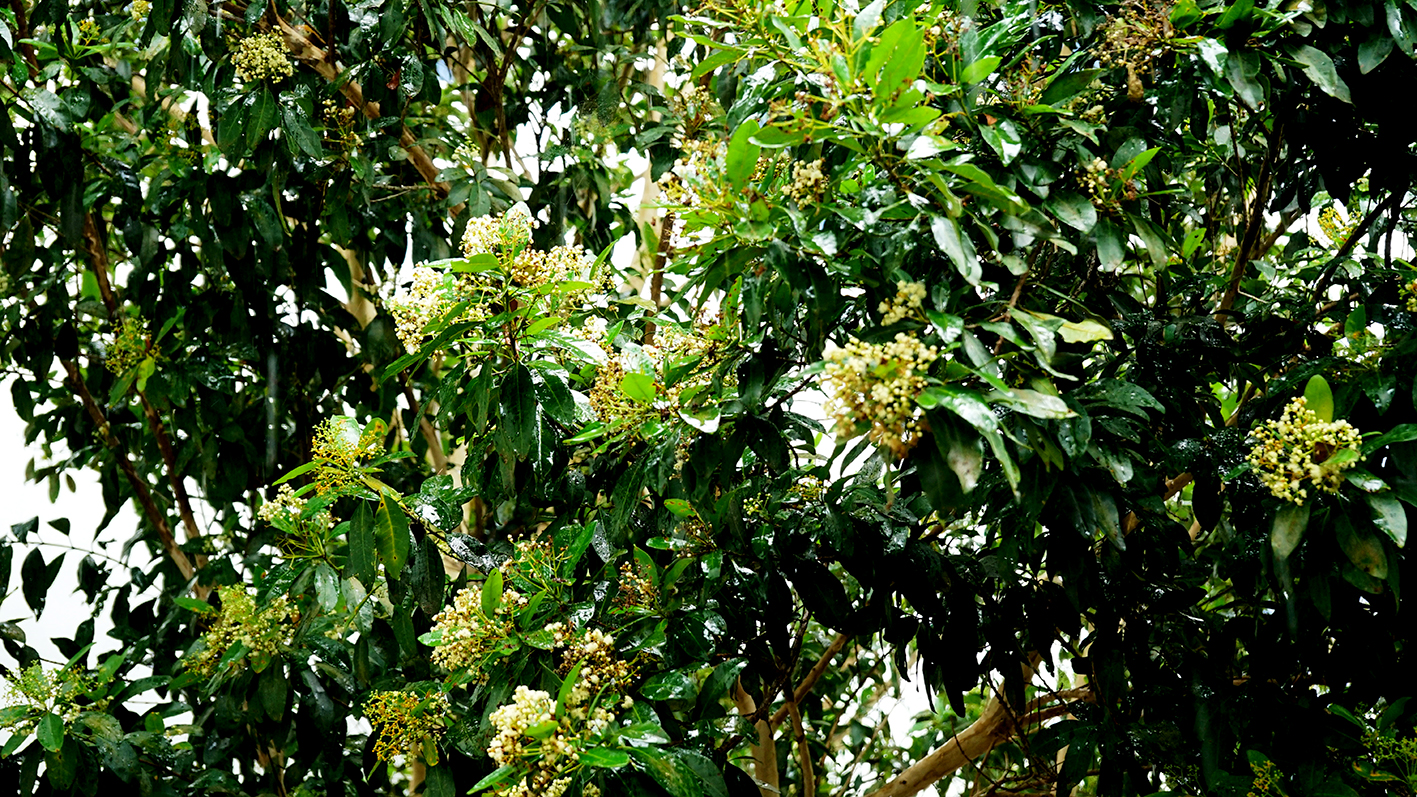
Pimento trees in the flowering stage at Jamson Farms in Paul’s Mountain, St Catherine, owned by Clifton Duggan.
-
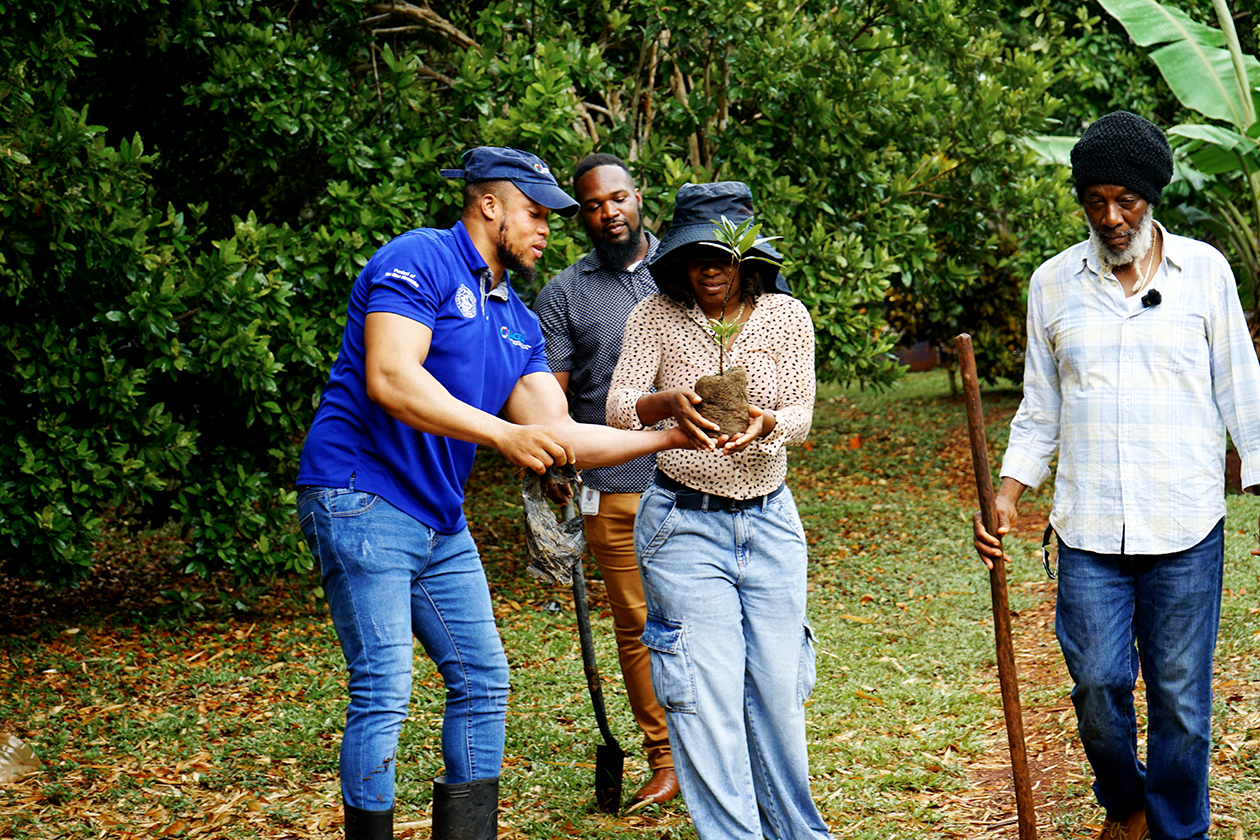
From left: Harrial Sheriffe, field advisory officer at JACRA, presents a pimento seedling to Stacy-Ann Duggan, ahead of a planting technique demonstration. Looking on are Chevonne Aschute (back left), acting senior director for the Cocoa and Coconut Unit at JACRA, and Clifton Duggan, owner of Jamson Farms.
Jamaica’s pimento industry, one of the country’s most valuable agricultural exports, is beginning a slow recovery after Hurricane Melissa destroyed an estimated 70 per cent of crops across key producing areas in October 2025.
The regulator, the Jamaica Agricultural Commodities Regulatory Authority (JACRA), has stepped up support, distributing seedlings, fertilisers and other inputs to affected farmers.
The intervention targets heavily impacted parishes in the western belt, including St Elizabeth, Westmoreland and Hanover, where the damage was most severe. Industry officials estimate that full recovery could take between two and three years.
Gerald Bryan, head of JACRA’s spices division, said pimento had been identified as the hardest-hit crop.
“Following Hurricane Melissa, pimento was identified as the commodity most severely affected. We have since begun assisting our farmers by visiting major pimento-growing areas during the start of the flowering period in April and implementing interventions, such as the provision of agricultural inputs, including fertilisers, as well as offering guidance on proper pruning techniques to our farmers to facilitate a quicker recovery process,” he said.
Support has included both material inputs and technical advice. In St Catherine, Clifton Duggan, who operates Jamson Farms in Paul’s Mountain, received 212 seedlings, both grafted and conventional varieties, after several trees were uprooted. JACRA also supplied fertilisers and bio-stimulants to restore soil health and improve yields, while its team demonstrated planting techniques aimed at increasing resilience.
In St Elizabeth, among the worst-affected areas, the authority provided similar assistance at Victoria Park, a farm in Fyffes Pen owned by Dr Lyndon Johnson. The property, spanning 40 to 50 acres and previously home to up to 1,200 trees, lost at least 500 to the storm.
Johnson welcomed the intervention. “What was very heartening for me is that JACRA came. The trip would have been three to three-and-half hours, so I appreciate that planning and effort were put into the visit. JACRA brought some pimento fertilisers, along with general-purpose fertilisers, fungicides, and additional chemical inputs that promote fruit and foliage development.”
Notwithstanding his unfamiliarity with some of the inputs received, Johnson welcomed them, noting, “This is good because JACRA has now brought a new perspective on the range of chemicals that can be used for pimento cultivation. We are very grateful for that. The support is both timely and meaningful.”
Beyond immediate relief, JACRA said its aim is to improve the industry’s long-term resilience. The use of grafted seedlings, for instance, is expected to boost yields and enhance resistance to future shocks.
“JACRA understands the importance of the pimento industry to Jamaica’s agricultural economy and to the many farmers and families who depend on it for their livelihoods. Our goal is not only to assist farmers in recovering from the effects of Hurricane Melissa, but also to encourage sustainable production practices moving forward,” Bryan added.
The authority is urging farmers to remain engaged and take advantage of ongoing support as the sector rebuilds. For now, recovery is under way, but restoring Jamaica’s prized spice to its former strength will take time.