Auto firm touts decarb process to reduce fuel use
Loading article...
-
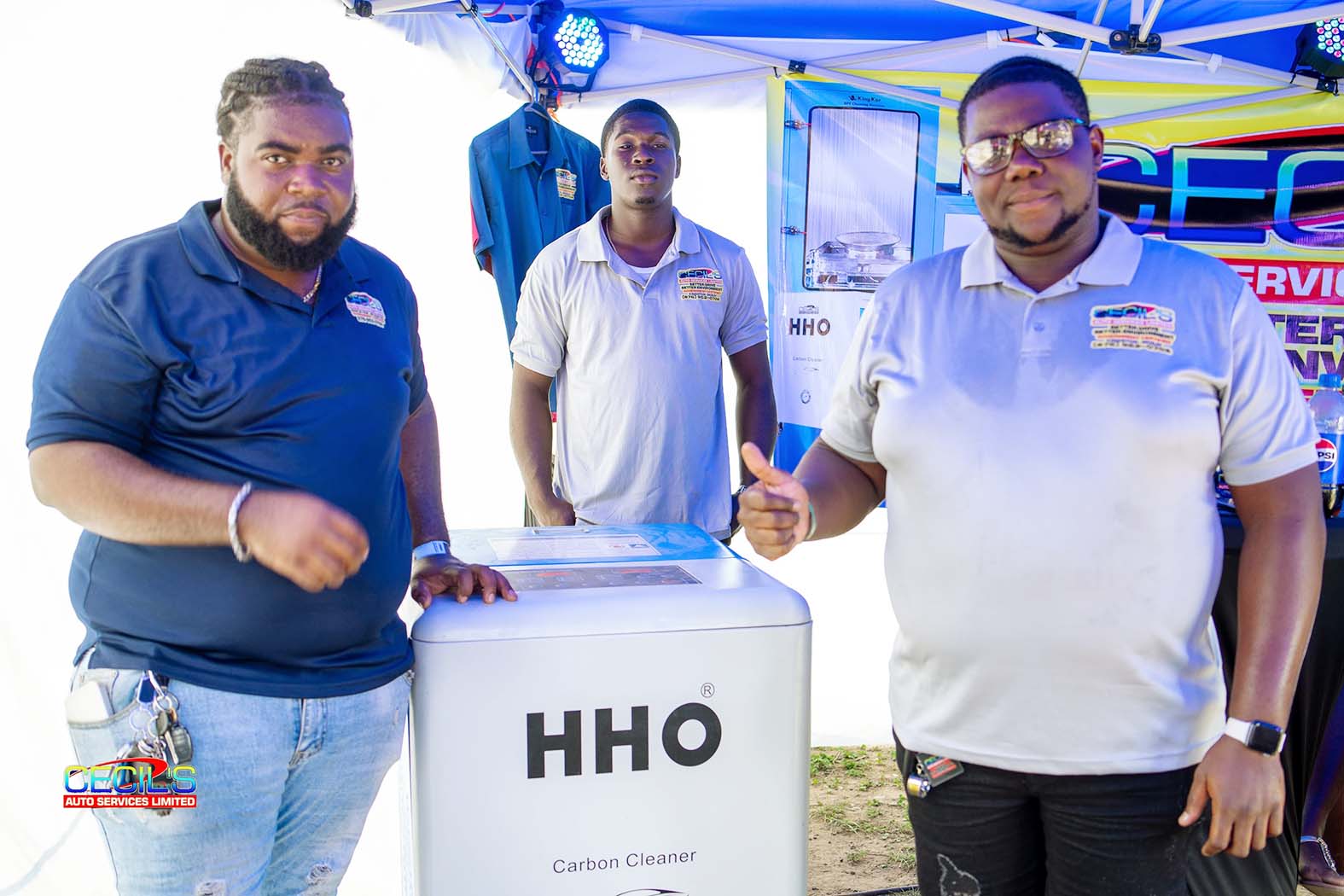
From left: Dermaine Sinclair, Marlon McFarlane and Shaqueme Thompson of Cecil’s Auto Service. Contributed photos
-
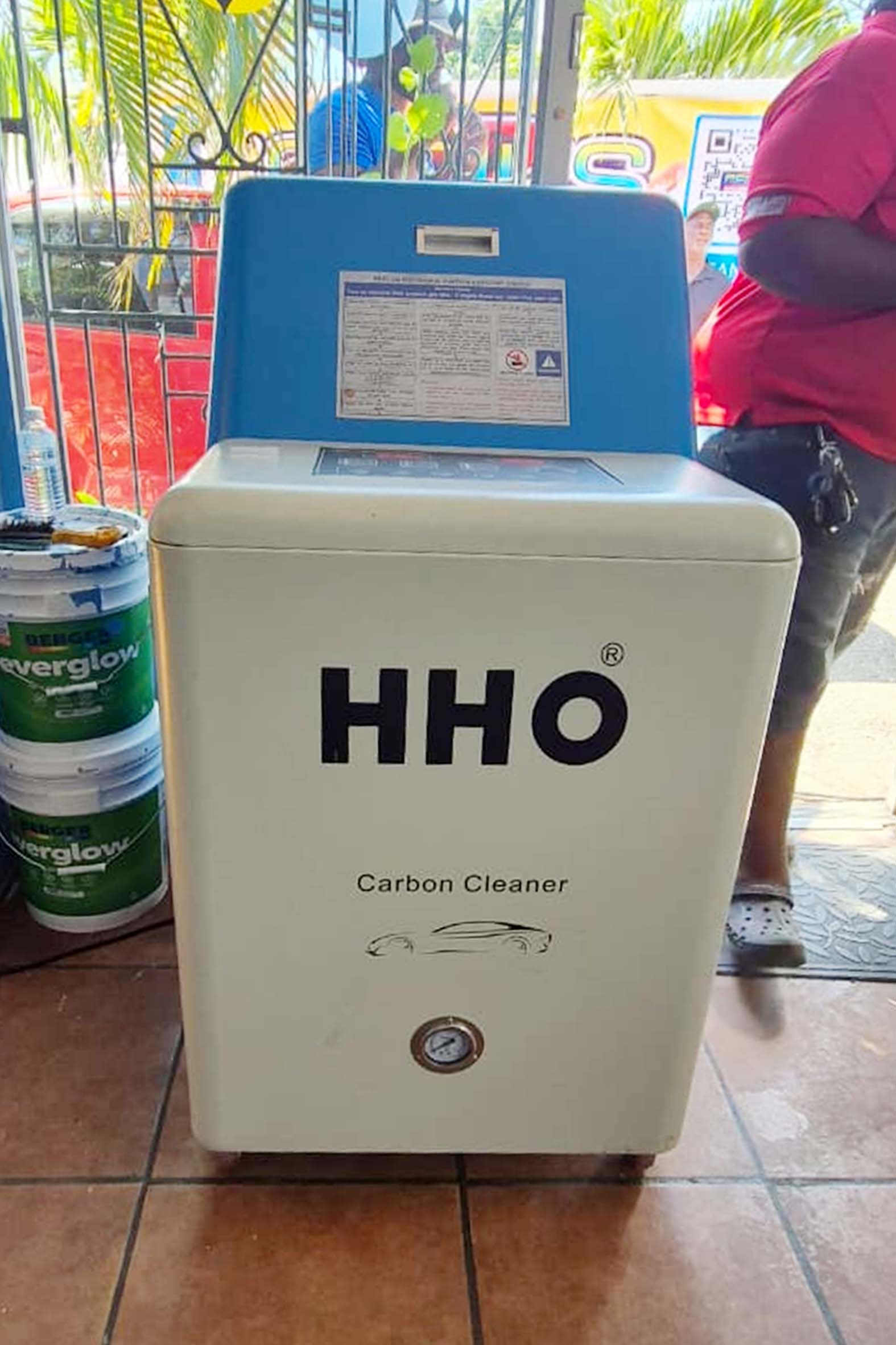
The HHO carbon cleaner
With instability in the Middle East driving up global fuel prices, including in Jamaica, a local company is offering motorists a service aimed at significantly reducing petrol consumption.
Cecil’s Auto Services, which has been operating for about four decades with locations in Montego Bay and Kingston, has been providing a decarbonisation (decarb) process for motor vehicles for more than three years. However, amid rising fuel prices, demand for the service has surged.
Cecil’s Auto is a government-certified garage that services government vehicles.
“It’s called a decarbing process, it’s like an engine detox, it flushes out all the carbon deposit from your vehicle through the exhaust. So, we want to highlight this type of machine, the HHO Carbon cleaning machine, we’re the only garage in Jamaica at this moment,” Darmaine Sinclair of Cecil’s Auto told The Gleaner.
“Basically what this machine does is to break it down; it makes you save on petrol, both gas and diesel. We’re emphasising that because due to gas price increases, right now is the best time to let people know that this machine will help you with your motor vehicle in all aspects, not only to save on gas, but it allows your engine to have a longer life span,” he added.
The decarb process offered by Cecil’s Auto places Jamaica alongside several European countries, as well as Russia, Canada and India, where engine decarbonisation is common practice.
Engine decarbonisation emerged as a formal, specialised maintenance service in the late 1990s to early 2000s, in tandem with the widespread transition to electronic fuel injection systems.
Alternatives to traditional fuel-injection engines, which produce carbon dioxide emissions, include electric vehicles, hydrogen fuel-cell vehicles, advanced biofuels and synthetic e-fuels. Among these, electric vehicles are widely regarded as the preferred option, with emissions said to be reduced by up to three times compared with internal combustion engines.
For motorists who continue to use fuel-injection engines, there are also methods to carry out decarbonisation at home. The simplest is the use of fuel additives, where a cleaning solvent is added directly to the fuel tank. Another method involves cleaning the intake manifold by spraying a cleaner into the intake system. A third option is the water injection method, which requires spraying water into the intake manifold while the engine is hot and running.
Beyond reducing fuel costs, engine decarbonisation also improves overall vehicle performance and benefits the environment.
“We’re cutting down on emissions by 72 per cent because carbon is the key cause of emission in motor vehicles,” Sinclair said. This aligns with international standards, which indicate that decarbonisation can significantly reduce pollutant emissions by up to 70 per cent.
Common signs indicating the need for a decarb include a noticeable decline in fuel efficiency, slower acceleration, increased engine noise, and excessive exhaust smoke.
PROCESS
The process takes approximately 30 minutes for a petrol engine and 40 to 45 minutes for a diesel engine.
“A lot of times the carbon normally builds up on the valve top, on the pistons and so forth … so the machine processes a specific type of solvent which is environmentally friendly, it goes through the machine and into the vehicle.
“It has been proven daily; there’s a magazine on our website that they can go through if they want more in-depth information.”
The cost starts at $25,000 and rises depending on the vehicle, with results said to be immediate.
“As soon as you drive off, you feel it, your vehicle even supposed to feel lighter in every aspect and that’s how you save on gas,” he said.
Sinclair cited the case of a motorist driving a diesel Mitsubishi Pajero who typically refuelled in Montego Bay, travelled to Kingston, completed his errands, and reached halfway back before needing more petrol. After undergoing the decarb process, the driver was able to travel to Kingston, return to Montego Bay, and then make another trip to Kingston before refuelling.
Sinclair added that further details about the process are available in a magazine published on the company’s website for motorists seeking more information.