Basil Jarrett | China will win the AI race. And it’s not for the reason you think
Loading article...
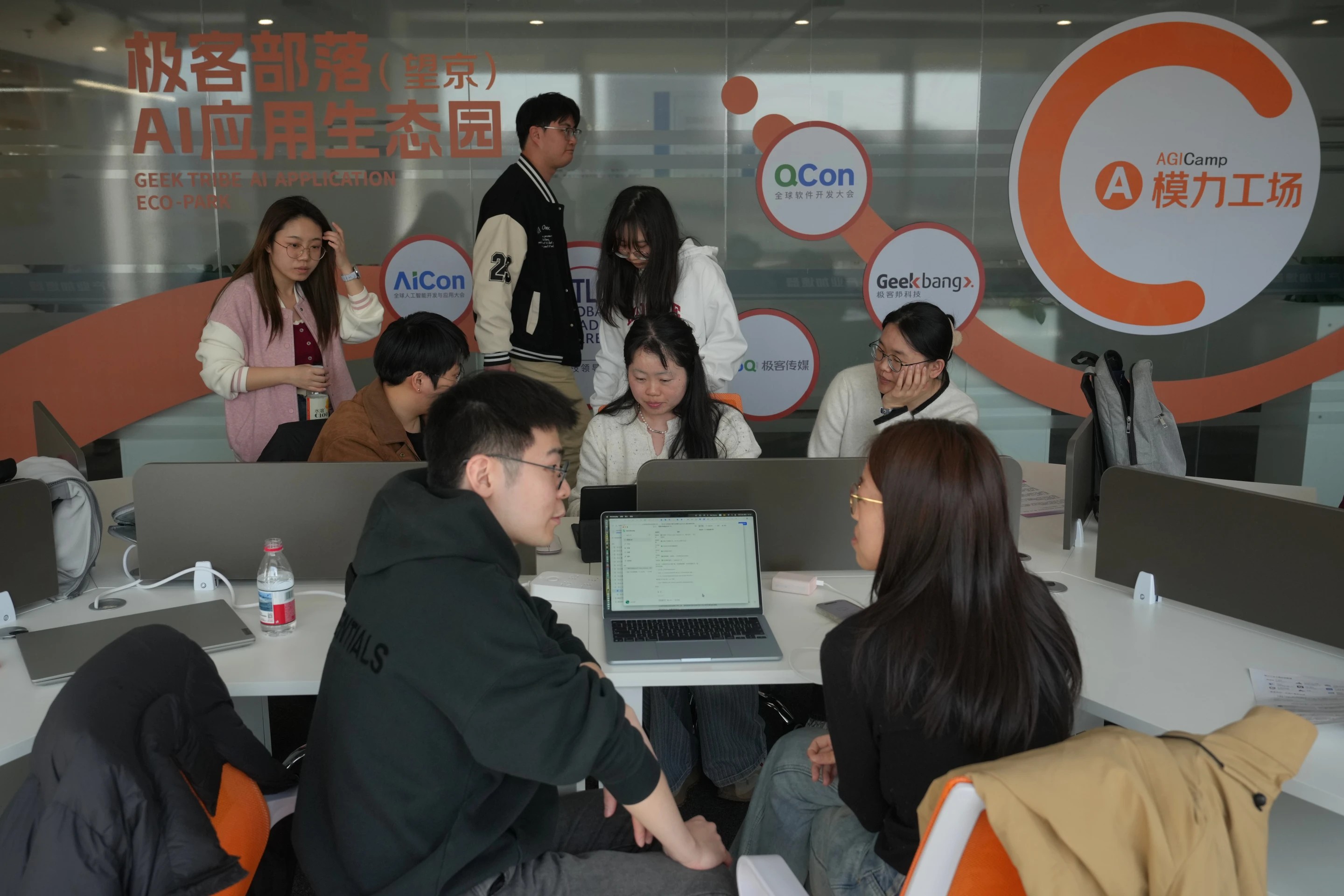

If you’ve been paying attention to developments in geopolitics over the last couple of weeks or perhaps months, you would have no doubt seen the rising tensions between the United States and China, as both countries jostle against each other in the race for AI supremacy.
If you are a gambling man, you’d bet that the outcome of that race will be decided by the usual chest-thumping metrics of who has the most chips, who controls the biggest data centres, who has the smartest models, the cheapest robots and the fattest venture-capital wallets. Yes. All of these things matter. But in the end, the eventual winner is most likely to come down to something a lot less glamorous.
FIGHTING WITH ONE HAND BEHND ITS BACK
If recent events are anything to go by, the US is already hobbled, fighting with one hand behind its back. Already, we are beginning to see pushback from American workers as AI continues to erase and hollow out not just entry-level white-collar jobs, but also middle management careers in fields such as law, finance, coding, design, customer service and media. That backlash has not been mild. Protests have begun to pressure Congress to demand greater checks and balances on Government adoption of AI as society tries to grapple with what is being perceived as an existential threat, quite ironically, the opposite of what it was intended to do. The broader American political environment is not exactly famous these days for patience, social trust, or calm consensus-building and if these protests continue, the US may as well throw in the towel.
And critics would be justified. The old, comforting argument that AI is just another Industrial Revolution, but one that is happening on your phones and laptops, is wearing thin. “Relax, people will adapt and new jobs will emerge” we are told. But whereas blacksmiths became mechanics and typists became administrators, AI is coming for the people who thought they were safe because they wear long sleeves, have university degrees, and write emails with “Kind regards” at the bottom. I have written extensively in these pages about deepening concerns that AI adoption is already driving job losses in the key sectors. Economists estimate that AI was responsible for 5,000 to 10,000 monthly net job losses last year in the most exposed U.S. industries and is already linked to planned U.S. layoffs in the coming months or years. That is not a blacksmith problem. That is a knowledge-worker problem and precisely why those storm clouds are forming as resistance grows.
AI UNREST
At Facebook parent company Meta’s US offices, employees recently staged protests against newly installed mouse-tracking software linked to the company’s AI push, while a petition against the surveillance system gathered more than 1,000 signatures. According to Reuters and the BBC, the backlash came amid layoffs and broader fears that workers were effectively being asked to help train the systems that may eventually replace them.
Now compare this to China where its socio-political system is better built to absorb the social pain that AI is about to unleash. Yes, China has the robots, the state subsidies, the industrial policy and the national mission.
But at the heart of China’s new five-year plan is a focus on AI as the heart of its growth strategy. China’s plan is designed to spread artificial intelligence across manufacturing, healthcare, education and logistics, while pushing breakthroughs in humanoid robots, quantum computing and other frontier technologies. China’s private sector generates about 80 per cent of urban jobs, with private firms accounting for more than 80 per cent of urban employment and over 90 per cent of enterprises. China’s advantage then is that when its leadership decides AI is the future, there are fewer democratic brakes, fewer organised protests and fewer televised ideological fist fights. China also has the factories, ensuring that the AI race is not merely about inventing better models, but also about deploying them at scale, stomaching the disruption they cause, and reorganising the economy around them faster than your rival can. China can therefore direct capital, shape industrial policy, lean on local governments and mobilise infrastructure. More importantly, it can absorb public anger, and simply keep it moving.
THE PROBLEM FOR DEMOCRACY
And that is where US democracy finds itself in a very awkward problem. The US is still world-class at invention. It has the frontier labs, the capital markets, the universities, the talent magnetism, and the corporate giants. But it also has workers, unions, lawsuits, protests, elections and a public that is already suspicious of elites telling them, once again, that a painful transition will somehow be good for them in the long run.
That message is wearing thin, especially because AI is a much different beast. It is not just replacing repetitive hand movements on a factory line. It is eating into cognitive tasks, administrative work, analysis, coding, content, research, scheduling, customer interaction and a whole range of functions that were supposed to be the protected middle ground of the modern educated class.
And if the people being displaced are not only factory workers but graduates, analysts, paralegals, junior marketers, coders and media workers, then the political blowback in a free society will be ferocious.
China, by contrast, can simply decide that the social cost is acceptable. Not because it is painless or morally superior, but because its system is better built to impose a national direction and tell everybody else, in essence, to hold strain.
And that my friend is where this race will be decided. Not merely on who can build the biggest, fastest AI models, but who can most effectively survive the backlash from using it.
Major Basil Jarrett is the director of communications at the Major Organised Crime and Anti-Corruption Agency (MOCA) and crisis communications consultant. Send feedback to columns @gleanerjm.com and follow him on Twitter, Instagram, Threads @IamBasilJarrett and linkedin.com/in/basiljarrett.