Paul Golding | Pope’s AI warning: Who controls the future of humanity?
Loading article...
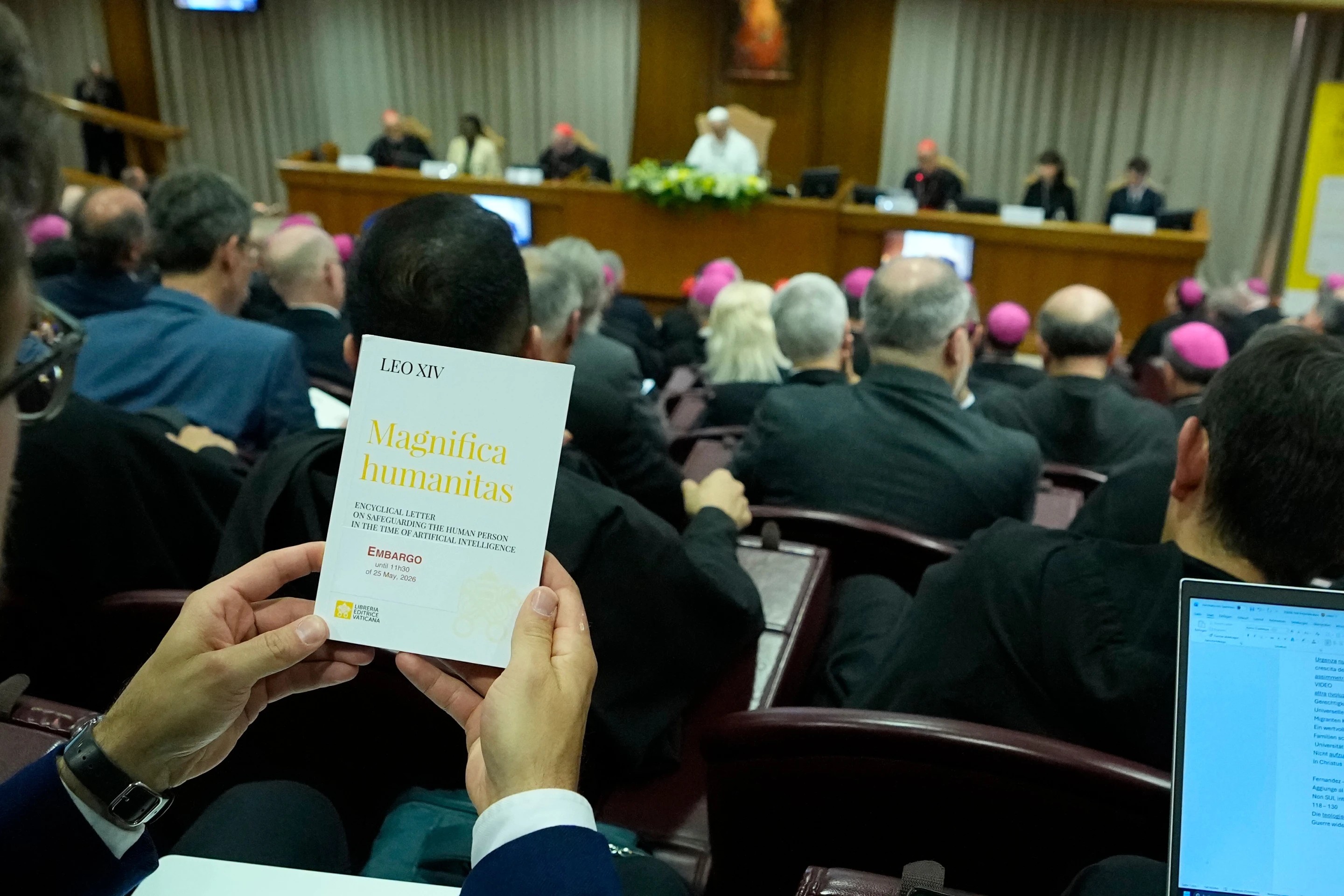
Pope Leo’XIV, on Monday, May 25, published his first encyclical, Magnifica Humanitas (‘Magnificent Humanity’). The Pope argued that “A.I. can be a valuable tool”; however, the technology “tends to amplify the power of those who already possess economic resources, expertise, and access to data.” Without adequate oversight and transparency, he warned, “those who control A.I. will impose their own moral vision, which will become the invisible infrastructure of these systems”.
Let us first deconstruct what Pope Leo XIV is addressing. The specific technology is a branch of artificial intelligence called generative AI. Generative AI enables users to rapidly create new content based on various inputs. These inputs and outputs may include text, images, sounds, animation, 3D models, and other types of data. Examples include ChatGPT, Claude, and Copilot.
Because of the generalised nature of these models, they have few clear boundaries, which is what concerns many experts working in the field. Their potential applications are limited only by imagination. As a result, the technology impacts a wide range of professions, including healthcare, education, religion, the creative industries, business and finance, the legal field, computing, architecture, and engineering, among others. Expectations are that the technology will automate or eliminate some jobs, while others will be augmented — coexisting with humans. It is estimated that approximately 60,000 jobs in the Jamaican labour force could be eliminated.
The technology sector has proposed that individuals displaced by automation receive a universal basic income — regular, unconditional payments to all adult citizens to support economic stability and alleviate poverty. The Pope’s position, however, runs counter to this view. He wrote that “the pursuit of greater profits cannot justify choices that systematically sacrifice jobs”. He made practical recommendations for governments, including the protection of workers, retraining programmes for those whose jobs are threatened, and education to help students think critically about the technology.
It should also be noted that China’s approach to generative AI differs from that of the West. A Chinese court recently ruled in a case where a tech company dismissed a worker after replacing him with AI software, stating: “The development of artificial intelligence technology should be applied to liberating labour, promoting employment, and improving people’s livelihood.”
The Pope spoke about those who control AI but, diplomatically, did not name individuals. However, he implicitly referred to leading figures such as Sam Altman (OpenAI), Dario Amodei (Anthropic), Bill Gates (Microsoft), Demis Hassabis (DeepMind), Elon Musk (xAI), Peter Thiel, and Mark Zuckerberg (Meta), among others. These are among the wealthiest individuals in the world — oligarchs whose influence extends far beyond wealth.
To put this into perspective, the World Inequality Report 2026 indicates that global wealth is extremely concentrated and at an all-time high: the top 10 per cent own three-quarters of global wealth, while the bottom half holds only 2 per cent. In the United States, wealth is even more concentrated. Federal Reserve data show that the richest 1 per cent held about US$55 trillion in assets in the third quarter of 2025 — roughly equal to the wealth of the bottom 90 per cent combined. Within the tech sector, AI and software companies account for roughly one-third of the S&P 500’s total value — approximately US$21 trillion. These tech oligarchs exert disproportionate political influence through campaign financing and media ownership, undermining the democratic principle of equal representation.
Pope Leo XIV warned that “those who control A.I. will impose their own moral vision,” but did not elaborate. The question, then, is: what is that moral vision? Leading technology companies are actively pursuing artificial general intelligence (AGI) — systems with human-level or greater capacity to learn, reason, and apply knowledge across diverse domains. This vision implies that human beings would no longer be the sole centre of intelligence, but would coexist with AI in what could be described as a post-human society.
This vision appears to rest on three transformative pillars:
- Super longevity: The natural lifecycle of birth, development, ageing, and death could be altered through technologies designed to combat ageing, allowing individuals to live indefinitely.
- Super intelligence: A future in which humans integrate with AI or form symbiotic relationships with it, ushering in a period of vastly enhanced cognitive capability.
- Super well-being: The proposed elimination of suffering through genetic modification, removing conditions such as depression, anger, and jealousy — creating a state of permanent happiness.
This vision carries a quasi-messianic quality and diverges significantly from traditional understandings of society, economics, and religion. Some in the industry have even remarked that the race for AGI is, in effect, an attempt to “create gods and become gods”. While Pope Leo XIV did not explicitly frame generative AI as a threat to religious orthodoxy, the technology is already encroaching on spiritual domains. Popular chatbots such as Text With Jesus and Bible.ai offer spiritual guidance to users seeking connection with a higher power. Premium users of Text With Jesus can even converse with Satan.
It is important to note that generative AI platforms are controlled by a small number of major technology companies, as is the cloud infrastructure that powers them. These systems inevitably reflect the values, assumptions, and choices of their creators. The Pope’s concern is that a small group of individuals is making decisions that could shape the future of the entire world. The vision promoted by proponents of AGI is not democratic but oligarchic — concentrating power in the hands of a few who influence media, social systems, economic conditions, and even military development as AI becomes increasingly embedded in defence systems.
Throughout this article, I have interpreted Pope Leo XIV’s position. Let me therefore conclude with his own words: “Work is more than a way of earning income; it is a requirement for the human condition, a normal path toward maturity, development, and personal fulfilment.” He called for “the protection of employment opportunities and the irreplaceable role of the individual”. His message and exhortation in Magnificent Humanity should not be ignored by governments or the general public.
Paul Golding is a professor of management information systems at the University of Technology, Jamaica.