BUILDERS PUSH BACK - Local experts reject skills deficit claims, urge NaRRA to tap J’can talent for major projects
Loading article...
-
 David Cuthbert, president of the Jamaican Institute of Architects. Photo - File
-
David Cuthbert, president of the Jamaican Institute of Architects. Photo - File
-
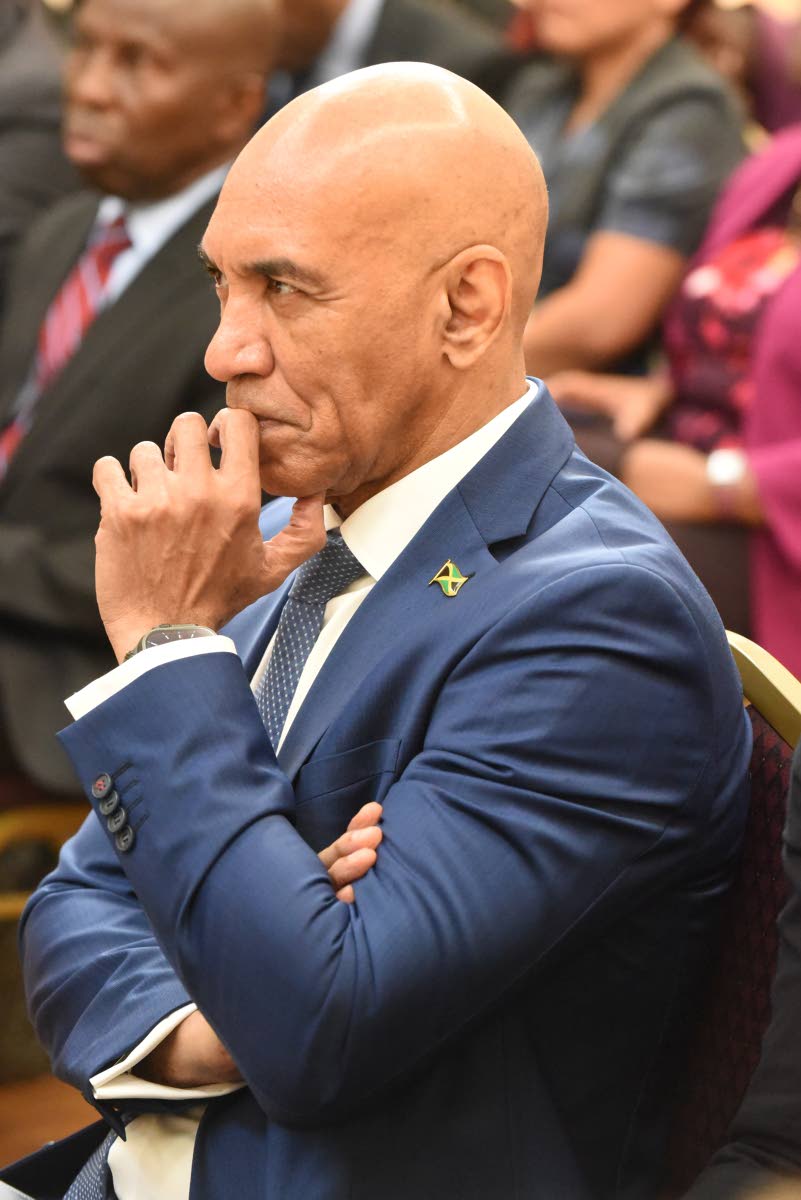 Major General Antony Anderson, CEO of the National Reconstruction and Resilience Authority. Photo - Ian Allen/Photographer
Jamaica’s construction professionals are pushing back against suggestions that the island lacks the capacity to deliver major infrastructure projects as the National Reconstruction and Resilience Authority (NaRRA) prepares to oversee US$6 billion in infrastructure and resilience-building works over the next five years.
The planned projects include hospital construction, water and sewage upgrades, transportation infrastructure, and housing relocation.
David Cuthbert, president of the Jamaican Institute of Architects (JIA), said many of the experts called on at short notice to provide post-disaster redevelopment consultancy across the Caribbean and beyond were based in Jamaica.
“It would be an absolute shame and a bit unfortunate if the same locals we have here in our skill base are not actually being utilised [for NaRRA projects]. We have not identified any major shortage in terms of the professional capacity of architects and the variety of engineers we have in Jamaica as well as our developers,” Cuthbert said.
He was responding to a presentation by NaRRA chief executive officer Major General Antony Anderson during a real estate development webinar hosted by the Jamaica Developers’ Association yesterday.
Cuthbert’s comments follow concerns raised in April by the Incorporated Masterbuilders Association of Jamaica (IMAJ) about what it described as a lack of consultation with local contractors during NaRRA’s establishment.
At the time, IMAJ President Richard Mullings said the association had yet to be engaged in any “genuine” consultation on NaRRA, the legislation for which was then being debated in Parliament.
“When it initially came up, there were specific concerns around procurement, transparency, local participation, which is related to what we’re talking about now in terms of how we prepare ourselves to meet an increase in demand,” he said, while also raising concerns about skills transfer.
“If we’re going to bring people from overseas to help us rebuild, it must at the same time be enabling the people here to take over and to do more over time since it is not going to be an overnight process,” he added.
Yesterday, Cuthbert urged Anderson to engage professional groups in further dialogue to address perceptions of a shortage of qualified personnel or identify and fill any genuine gaps in the construction sector.
Also speaking on the webinar, Dr Christopher Burgess, managing director of SmartHomes by CEAC, questioned what NaRRA had planned for local builders.
He noted that local developers had demonstrated their ability to build at scale about 30 years ago when they constructed 13,000 houses in Greater Portmore over seven years.
“We’ve built over 219,000 homes in the last 60 years, but I haven’t heard anybody in our circle saying Government has approached us to get ready for this massive reconstruction programme,” he said.
Anderson, however, said the pace at which projects were implemented in Jamaica was a concern among both local and overseas investors.
“There has been a complaint across the board, speaking with private developers but also with foreign investors, on the time aspect of things. Dealing with Jamaica is a problem. We are just saying that we can actually do things a little faster,” the NaRRA chief executive said.
Earlier in his presentation, Anderson outlined major projects planned by NaRRA over the next five years, with an estimated cost of US$6 billion, or roughly US$120 million per month.
The projects include four hospitals in Black River, Falmouth, Lucea – to replace Noel Holmes Hospital – and at Kingston Public Hospital.
Other plans include increasing the capacity of the Hermitage Dam and the Yallahs pipeline, developing a multiuse port at Yallahs, constructing water tanks across the island and at STEAM schools, relocating Tinson Pen Aerodrome, and undertaking work at Vernamfield Aerodrome in Clarendon.
The programme also includes upgrades to the sewage systems serving Norman Manley International Airport, work on the Sandy Gully, and improvements in downtown Kingston.
luke.douglas@gleanerjm.com