Workplace inclusion must become part of everyday culture, says labour ministry official
Loading article...
-
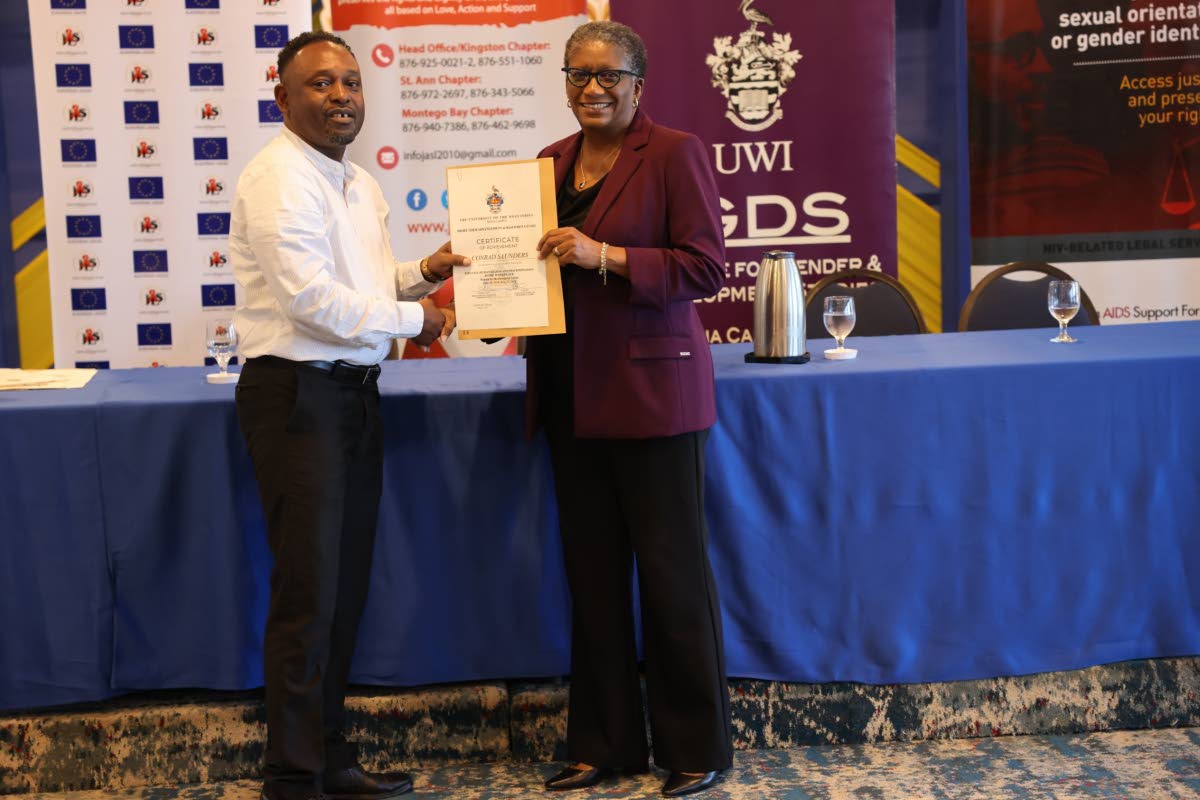 Conrad Saunders, programme coordinator at the Ministry of Labour and Social Security, receives a certificate from Dr Jennifer Brown-Tomlinson, medical director, Jamaica AIDS Support for Life.
-
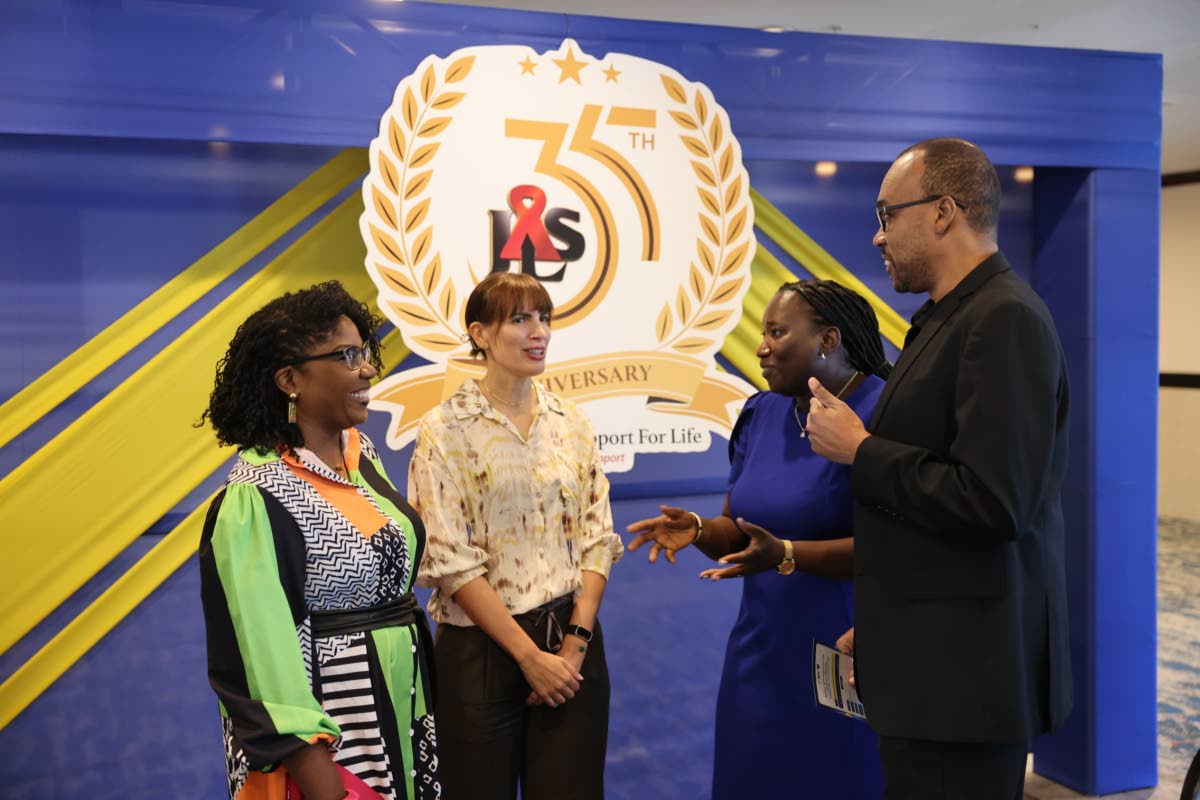 From left: Dr Dalea Bean, senior lecturer and head of the Institute of Gender and Development Studies (IGDS) at The University of the West Indies, Mona; with Layla El Khadraoui of the European Union (EU), representing Ambassador of the EU Delegation to Jamaica, Erja Askola; Kandasi Walton-Levermore, executive director of Jamaica AIDS Support for Life (JASL) ; and Machel Stewart, JASL board chairman, before the start of the certificate ceremony for the graduates of the Human Rights and Discrimination in the Workplace Course - a partnership between JASL and IGDS Mona, funded by the EU. The partnership is part of a five-year memorandum of understanding between JASL and UWI Mona.
Rather than simply being written into workplace policies, Conrad Saunders, programme coordinator in the Ministry of Labour and Social Security’s (MLSS) HIV Unit, says respect, dignity and fairness must be reflected in how workers are treated.
Saunders made the call on Friday at a Jamaica AIDS Support for Life (JASL) certificate presentation ceremony for beneficiaries of a human rights and discrimination in the workplace course.
The course was held under the theme ‘End Workplace Discrimination: From Awareness to Action’.
Saunders, who also benefited from the programme, challenged participants to speak up and confront discrimination when they encounter it.
“Let us therefore move from awareness to action, from policy to practice, and from simply talking about human rights to actively practising and promoting [them],” Saunders urged.
Noting that the MLSS cannot represent clients in such matters because its role is primarily that of a mediator, Saunders said both the public and private sectors have a responsibility to create workplaces that respect human rights.
He indicated that a discrimination-free workplace does not mean ignoring differences among workers.
“We should recognise that creating a discrimination-free workplace does not mean pretending the differences do not exist. In fact, it means recognising and respecting the differences, while ensuring that they do not become barriers to someone’s dignity, participation or opportunity.”
Saunders said workers should be able to contribute their skills and talents without fear of being judged, excluded or treated unfairly because of who they are or due to circumstances beyond their control.
Eighty-six women and 15 men participated in the six-week course, which was delivered through a collaboration with the Institute for Gender and Development Studies at The University of the West Indies, Mona.
The programme forms part of JASL’s work under the European Union-funded project, Promoting Human Rights and Access to Justice for Priority Populations in Jamaica.
The first cohort began training on October 14, 2025, with classes held twice weekly, on Tuesdays and Thursdays.
The programme has since been delivered to multiple cohorts, with a target of approximately 100 trainees.
The course was designed primarily for managers and senior staff across various sectors, recognising the critical role workplace leaders play in shaping organisational culture and ensuring that policies and practices are fair, lawful and respectful.
Despite laws aimed at preventing discrimination, JASL says discriminatory practices remain a reality in Jamaica, particularly for people living with HIV.
Kandasi Walton-Levermore, executive director of JASL, said the course is intended to equip participants to recognise discrimination, question unfair practices, influence policies, and help create workplaces where people are treated with dignity and respect.
The course forms part of JASL’s activities marking its 35th anniversary.
Meanwhile, the organisation also launched its Know Your Rights mobile application.
The app provides simplified information on human rights and legal protections, while directing users to legal and support services that might assist when their rights are violated.
editorial@gleanerjm.com