Cuba says US sanctions blocking efforts to open economy
Loading article...
-
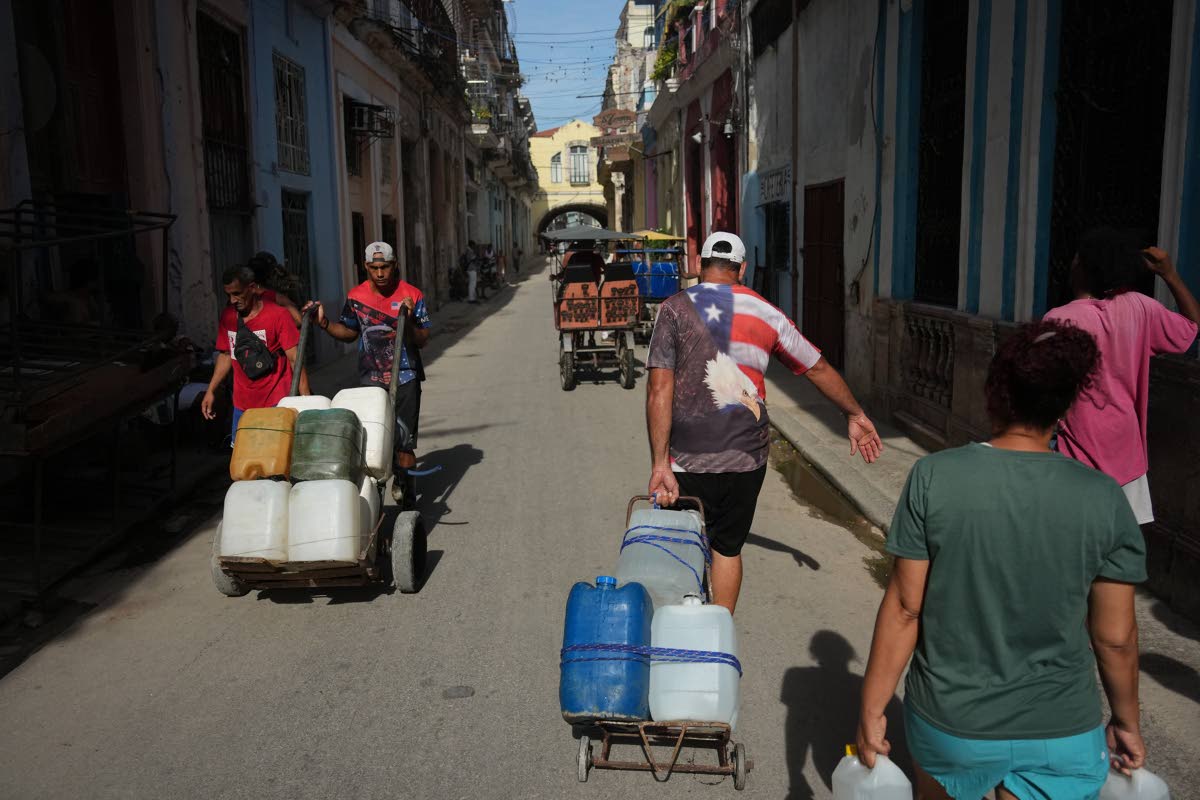 People carry water during a power outage in Havana, Cuba.
-
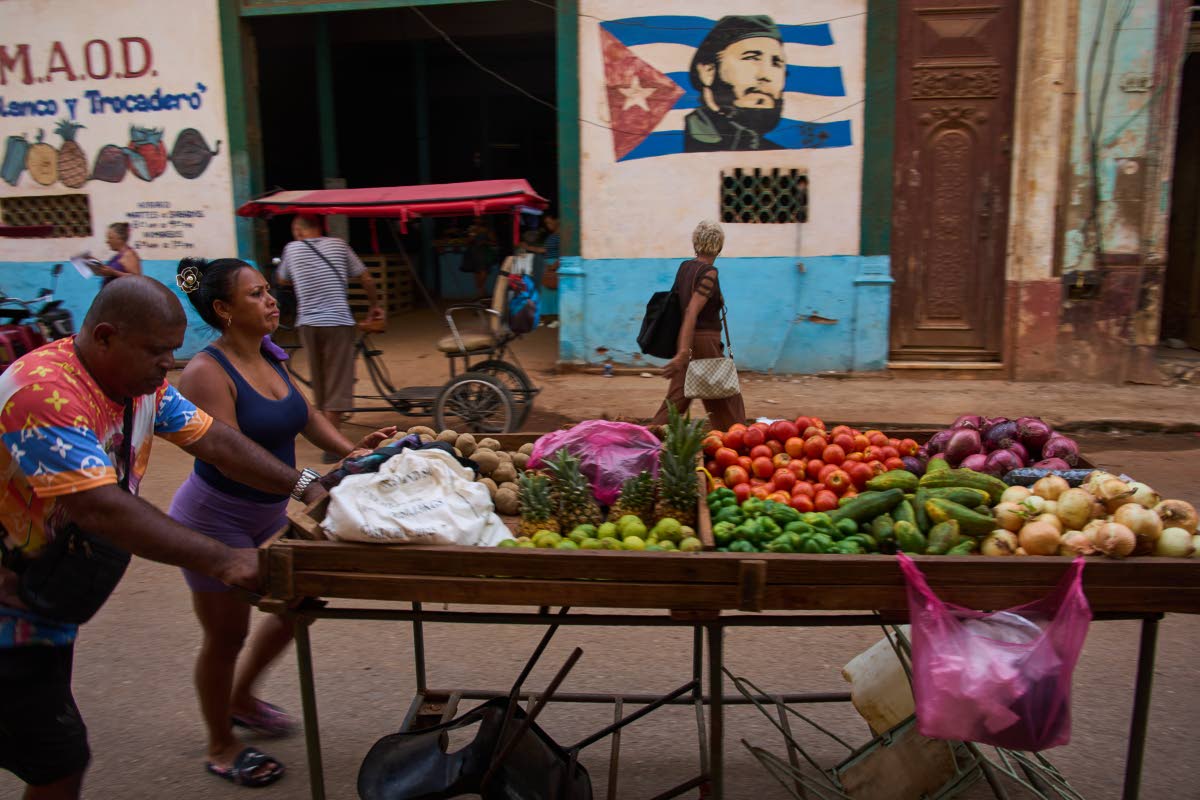 Street vendors push their cart of vegetables past a mural of Fidel Castro in Havana, Cuba.
-
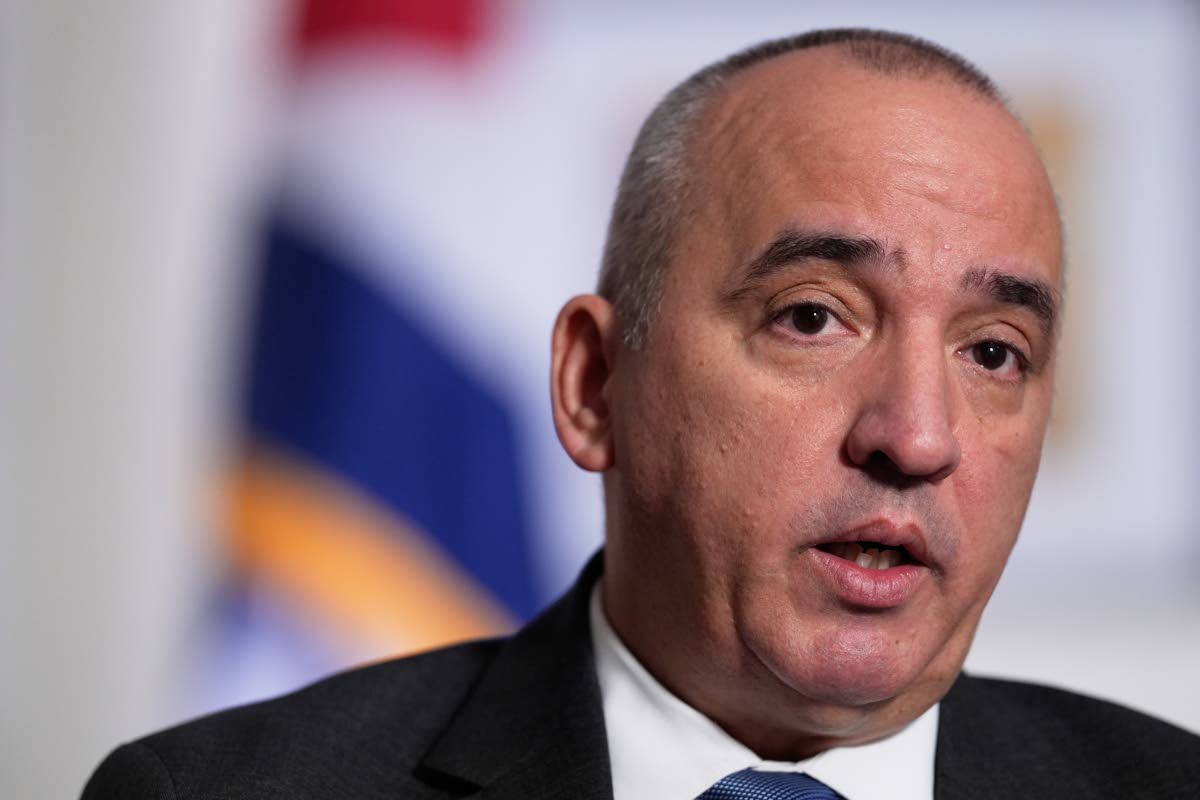 Ernesto Soberón Guzmán, cuban ambassador to the United Nations.
UNITED NATIONS (AP):
The United States has demanded that Cuba open up to private investment, and Cuba has passed sweeping reforms to encourage just that. So Cuba’s UN ambassador says he wants to know why Washington keeps piling on sanctions that stymie the very economic opening it has sought for decades.
Ambassador Ernesto Soberón Guzmán, in an interview this week with The Associated Press, directed his question to US Secretary of State Marco Rubio, the main architect of the Trump administration’s Cuba policy.
“What are you afraid of? If you are so convinced that the Cuban government is an incompetent government, why do you need to implement almost every two weeks new sanctions?”
The US State Department responded to a request for comment with a quote from Rubio, saying new sanctions will continue to be announced every couple of weeks to close off “escape valves that they’re trying to create in every mechanism”.
Then last Thursday, the US imposed more economic penalties on Cuban industries, targeting state-owned mining, metal and construction companies.
Cuba has been pushed to the brink by an oil blockade imposed by the United States in January on top of a decades-old embargo, coupled with the escalating sanctions. The moves by US President Donald Trump’s administration, meant to put pressure on the government by depriving it of funding, have worsened already debilitating blackouts, cut workers off from public transport, crippled infrastructure and deepened shortages in medicine and food in the Caribbean island nation.
Guzmán said the sanctions are the main obstacle to Cuba opening up its economy. He said the impact of the US measures – specifically the shortage of electricity and lack of fuel to run a business or travel – has turned off investors and tourists, a major source of Cuba’s income.
Some companies have pulled out of Cuba, which relied on tourist revenue and cited “significant operational, legal, economic and financial difficulties” in explaining its decision to leave.
“Literally, the United States has done everything imaginable to try to prevent foreign investors,” said William LeoGrande, a professor at American University and a leading expert on US-Cuba relations. “When they say, ‘Well, we want to see Cuba open up to foreign investment’, they’re being disingenuous. ... It’s not possible for them to succeed without some kind of sanctions relief.”
The goal of Trump’s Republican administration, he said, is “not just to open up Cuba economically but to overthrow the Cuban government – to change the nature of the Cuban political system”.
Cuba announces major economic shift
John Kavulich, president of the US-Cuba Trade and Economic Council, said Cuba had to make changes when it lost its economic lifeline with the U.S. ouster in January of Venezuelan leader Nicolás Maduro.
“The result is the Cuban government in the last eight months made more commercial, economic and financial changes to the country than they have as a group since the revolution,” he said.
Nonetheless, the Trump administration keeps ratcheting up sanctions, putting more pressure on Cuba, which is responding by making more changes, Kavulich said.
“But from our standpoint, there are two parts missing: One is Cuba implementing by regulation everything that it’s announced, and secondly, the Trump administration allowing US companies to have more access to the Cuban marketplace while these changes are under way,” he said.
The changes announced by Cuban President Miguel Díaz-Canel in June aim to significantly shift Cuba’s economy and industry, which have been strictly controlled by the socialist government since the 1959 revolution.
They include more space for private businesses, imports and exports without the state as an intermediary, free hiring of personnel, authorization for private banks, investment by Cubans abroad and opportunities for fast-food chains to establish themselves on the island.
Guzmán said there are opportunities for investments in real estate, solar farms and energy to help ease the country’s electricity shortage, as well as in marinas and the tourism industry.
Christopher Hernandez-Roy, acting director of the Americas programme at the Center for Strategic and International Studies, recalled that the last economic opening under President Barack Obama’s Democratic administration “was later throttled by the Cubans themselves, who feared that the opening went too far and appeared to threaten political control”.
Today, he said, it appears the Cubans really do want economic reforms and outside investment. Díaz-Canel’s economic reforms are not impossible, but US sanctions “significantly constrain their prospects for success,” Hernandez-Roy said.
He noted the irony that US pressure “is helping push the Cubans toward greater economic liberalisation out of necessity, while simultaneously limiting the resources and access necessary for those reforms to actually improve the economy”.