David R. Salmon | In defence of robust parliamentary debate
Loading article...
-

David Salmon
-
-
The National Reconstruction and Resilience Authority (NaRRA) bill has rightly stirred much debate in our parliament and society at large. This is expected as ensuring that we rebuild and do so responsibly is of utmost importance to the future of this nation.
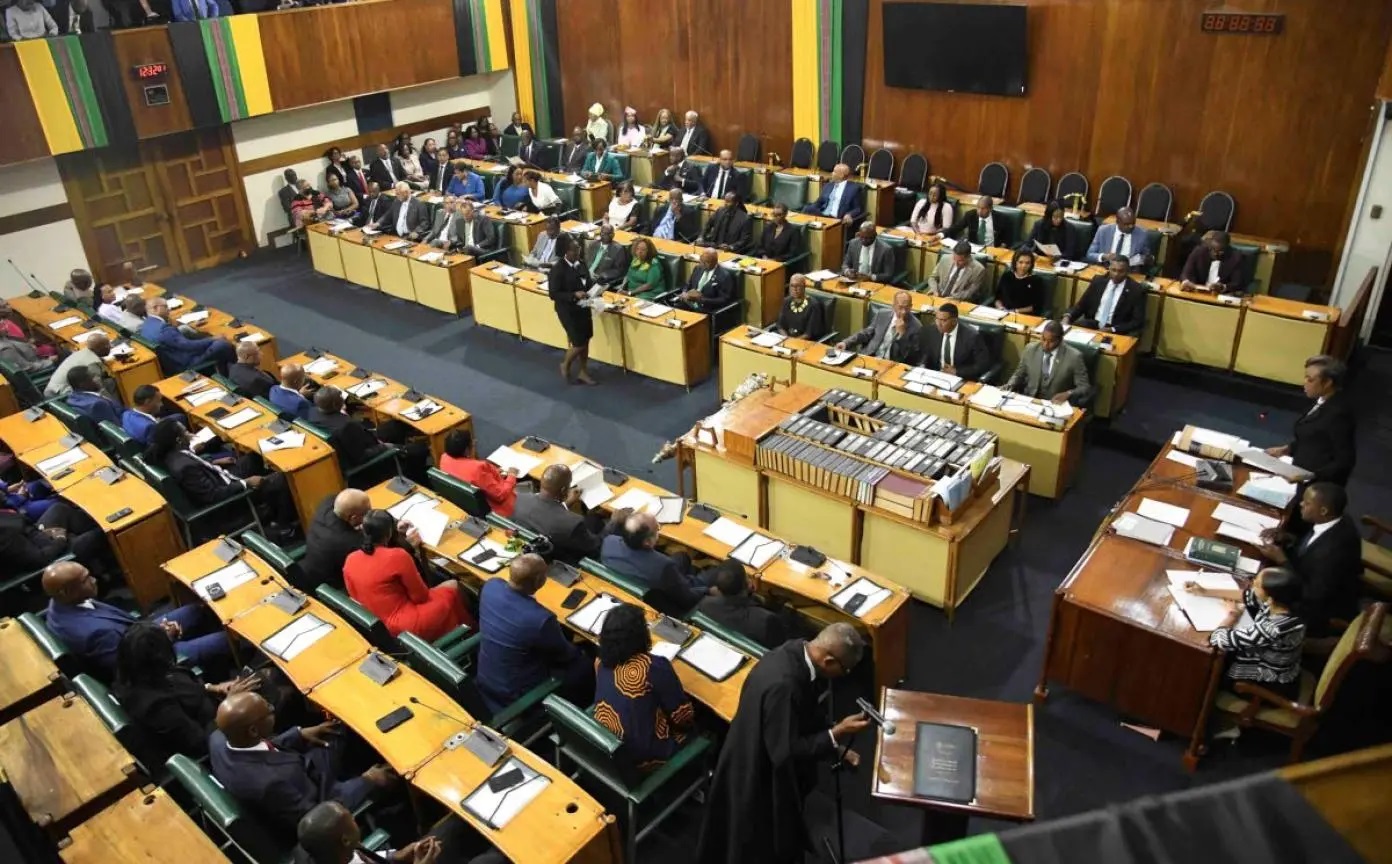
Thorough analysis has already been devoted to the arguments for and against this legislation. Thus, the purpose of this column is not to reiterate points that have already been ventilated in the public. However, it would be remiss of me if I did not point out the problems that arise when political invective is used in lieu of rigorous arguments. This was most recently seen in Friday’s Senate sitting which took an unfortunate turn in its tone and direction.
Gaps in Decency
The purpose of that sitting was to debate the NaRRA legislation but at some point, it devolved into a personal diatribe against the chairman of the Jamaica Reconstruction and Resilience Oversight Committee (JAMROCC). This was best exemplified in the contributions made by Senator Dr Maziki Thame. In her remarks, the learned senator stated:
“The naming of Professor Peter Blair Henry, fellow at the Hoover Institution, a think tank based at the Stanford University, to chair JAMRROC, confirms that the government is wedded to a vision of development that is not about the people.”
Political theatre such as this, is a common feature of parliamentary presentations. If this comment ended there, such exposition could be given a pass or even excused.
But Dr Thame continued with this, “We should be minded that celebrating the success of the JLP and neoliberalism does not make a scholar great.” One would be forgiven to think that this was some sort of inebriated babble said in a university dorm room. After all, what does appointing a professor known for highlighting that emerging economies possess lessons for richer nations have to do with celebrating neoliberalism?
Yet, not satisfied with the already below the belt comment, the senator proceeded to add: “The Hoover Institution is known as among the most right-wing of think tanks in the United States…Surely, Mr. President, we should know that the Clarence Thomases of the world do not support people like the majority who live here in this country…”
Sigh. Where does one even begin with this?
A Convenient Scapegoat
Since we have to resort to defending the character of upstanding members of the Jamaican diaspora, it is important that the public knows who the Senator is describing. Professor Peter Blair Henry is a Kingston-born academic who currently resides in the United States. An accomplished intellectual, Professor Henry received his PhD in economics from the Massachusetts Institute of Technology (MIT) and bachelor’s degrees from both the University of Oxford and the University of North Carolina at Chapel Hill.
His research examines a range of topics such as the impact of institutions and sound macroeconomic policies on the development of poorer nations. Does this sound like the raging conservative that was
being described in the Senate? This is even more incredulous when considering that Professor Henry served as an advisor for President Barack Obama’s 2008 campaign.
He has also devoted his career to helping countries achieve growth including pushing for structural reforms to the International Monetary Fund. This is the professional that was being described in the Senate sitting as “the Clarence Thomases of the world.”
Such comments belie a deeper problem in our political discourse. It reflects a longstanding history of local intellectuals using the cloak of academia to mangle the reputations of Caribbean intellectuals who succeed abroad.
History of Attacks
One major case study can be seen with Sir Arthur Lewis, the first Vice-Chancellor of the University of the West Indies (UWI). While the Saint Lucian economist is widely credited with establishing the field of development economics, in his time, Lewis was savaged by his Caribbean counterparts.
For example, the Abeng newspaper, which was led by left-wing Caribbean intellectuals, noted that, “The understanding of white-hearted blackmen like Lewis, with however many degrees, will remain dim so long as they remain apart from the black masses on the move. Instead, they will be used by white power in its attempts to foul up the movement.” Ouch.
Other intellectuals sought to lump the Nobel Laureate among a group of "visiting consultants” and even deny Lewis’ relationship with the Caribbean altogether. His contributions to regional development were attributed to other scholars and his prescriptions were dismissed with crude and inaccurate oversimplifications.
Frustrated by the collapse of the West Indies Federation, negotiations around securing more funding for the UWI from the Caribbean governments as well as criticism from staff and students about his push to modernise tertiary education, Lewis once again left the region. Although, this time he was plagued with stomach ulcers and high blood pressure that often led to dizzy spells and fainting. Providing service to the region, he called home, basically frustrated the 48-year-old intellectual into professional exile.
The Wrong Approach
Given this history, it is surprising to see the latest manifestation of local intellectuals attempting to belittle the achievements of one of Jamaica’s own sons. It is further baffling as the country boasts of a talented diaspora that possess leading figures in a number of fields. We are keen to rely on said diaspora to help support the development of this nation. Hence, it is perplexing to see the wisdom of using the platform of the Senate to denigrate the same kind of individual that we are interested in encouraging to give service to Jamaica.
Therefore, deploying such personal barbs in parliamentary debate is downright disappointing. It is also inconsistent. For example, the extremely decorated Jamaican-born Harvard Professor, Orlando Patterson, was appointed to chair the Jamaica Education Transformation Commission by this same administration. Such service was not framed as an effort to support the ruling party. It was described as an experienced academic providing assistance to Jamaica.
Professor Patterson, himself, outlined the folly of using disparaging rhetoric when attempting to guide the country. Reflecting on his time as an advisor for then Prime Minister Michael Manley during the 1970s, Professor Patterson shared in his book, The Confounding Island: “Our failures, however, were
largely self-inflicted…The tragedy of radical change is that you can’t implement it without able managers; but such reform, accompanied by reckless revolutionary rhetoric, is exactly what is guaranteed to send the bureaucrats fleeing.”
As this underscores, disagreement should not be used as a veiled excuse to deploy ad hominem attacks on someone’s character. This should not be the direction in which parliamentary debate proceeds. Taunts like this should be relegated to high school sociology classes.
David R. Salmon is Jamaica’s 2023 Rhodes Scholar and a PhD student in Public Policy at Oxford’s Blavatnik School of Government. His research examines economic diversification in small island developing states.