‘Spirited’ NCOJ concert enthusiastically received
Loading article...
-
 Michael Sutherland, the National Chorale of Jamaica’s new musical director, conducts the choir during his debut concert, ‘Songs of Faith & Freedom’, at the University Chapel, The University of the West Indies, Mona, on Sunday. Photo - Ian Allen
-
Michael Sutherland, the National Chorale of Jamaica’s new musical director, conducts the choir during his debut concert, ‘Songs of Faith & Freedom’, at the University Chapel, The University of the West Indies, Mona, on Sunday. Photo - Ian Allen
-
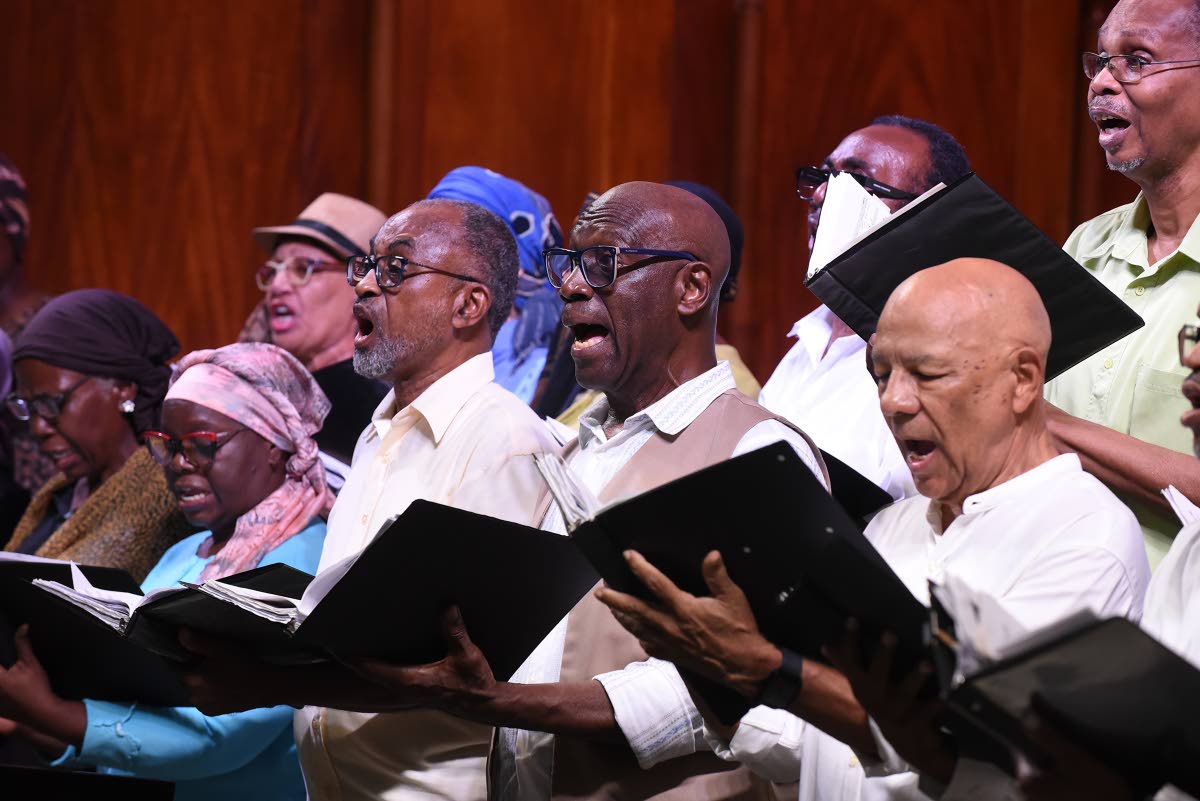 Members of the National Chorale of Jamaica perform during 'Songs of Faith & Freedom'. Photo - Ian Allen
Sunday evening’s concert by the National Chorale of Jamaica (NCOJ) was doubly “spirited”, with a programme devoted entirely to Negro spirituals and an equally spirited delivery. The audience at the University Chapel, at The University of the West Indies, Mona, responded with equal enthusiasm.
Titled ‘Songs of Faith & Freedom’ and described as “a celebration of beloved Negro spirituals”, the concert was conducted by the NCOJ’s new musical director, Michael Sutherland. It marked his first full concert since taking up the position earlier this year, succeeding longtime musical director Winston A.G. Ewart.
Accompanied by pianist Livingston Burnett, the 30-strong chorale delighted the nearly full house with 24 songs, which were carefully structured into two main parts. Each was subdivided into captioned sections reflecting the themes of their songs.
Part One, The Earthly Journey, comprised two sections, the first titled A People, A Voice, A Hope and described as “The opening proclamation: identity, heritage and the promise of freedom.” The second section, titled The Pilgrim’s Walk, featured the men’s ensemble and was described as “A journey of faith, determination and spiritual discovery”.
Part Two, From Assurance to Glory, comprised four sections. Its first section, The Cry of The Soul, was termed “Humility, prayer, suffering and the longing for God’s presence.” Its second section, Faith That Will Not Fail, was described as “Assurance, endurance and the certainty of God’s promise.”
Its third section, The Promise of Glory, had the elaboration, “The approaching day of deliverance, resurrection and eternal life.” Its fourth section, The Great Celebration, focused on “Victory, jubilation and the final affirmation”.
The arrangement of both the sections and the hymns themselves suggested a movement from Earth to heaven. Jester Hairston’s spiritual, Amen, appropriately ended the two-hour concert with a climactic intensity.
Musical director Sutherland, who also sings bass-baritone in the chorale, said he was particularly excited about the theme of the concert and the opportunity to explore the historical and emotional depth of the spiritual.
“These songs were born out of tremendous hardship, but they also speak profoundly to faith, courage, resistance, and an unshakeable belief in freedom,” he said. “That emotional journey is what I want the audience to experience through the music.”
He told The Gleaner that while the chorale usually performed European classical music for their annual concerts, he decided to start his tenure “with something out of the norm”, namely, an evening of spirituals. People told of his desire were “excited about the new approach,” and “the choir members were willing to try something new”.
He added, ”One of the things I did when introducing a new spiritual was to give the background, the history of the piece. People appreciated it more.” A student of music history, he used to teach Jamaican music history in high school and found that “the children loved it”.
He pointed out that he hoped audiences would look below the surface of the songs for their “hidden meanings”.
He was referring to the belief of some scholars that many spirituals contain coded messages about freedom. He said that Ewart gave his full support to the venture and provided some of the pieces performed.
While every item was applauded, some got a bit more than others, perhaps because there was some extra bounce or sweeter harmony. The favoured items included Ain’t That Good News (composed by William Dawson); My Soul’s Been Anchored in the Lord (Moses Hogan); My Lord, What a Mornin’ (H.T. Burleigh); and In Dat Great Getting Up Mornin’ (Hairston).
As the concert ended, the power of Amen pulled a few members of the audience to their feet for that superlative sign of approval, a standing ovation. The patrons were former Governor General Sir Kenneth Hall and Lady Rheima Hall.
entertainment@gleanerjm.com