Movie Review | In Christopher Nolan’s ‘The Odyssey’, an ancient epic is reborn
Loading article...
-
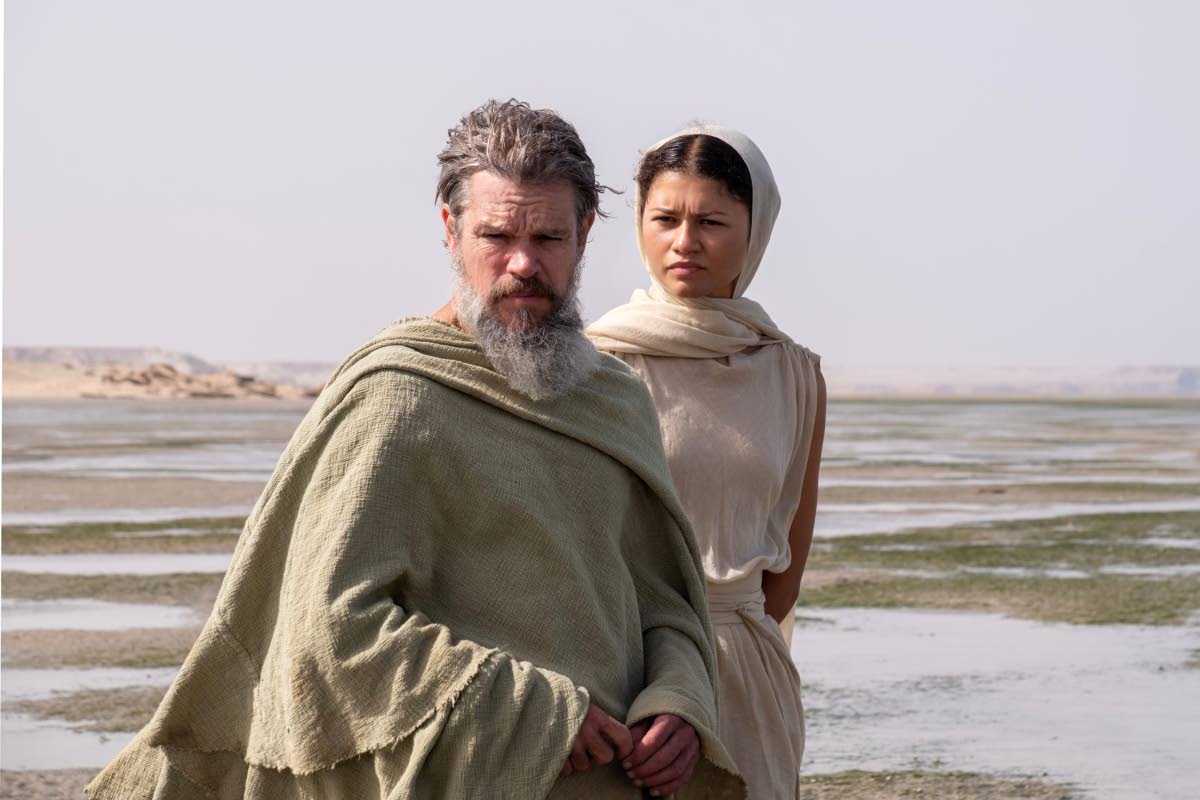 This image, released by Universal Pictures, shows Matt Damon as Odysseus and Zendaya as Athena, in a scene from ‘The Odyssey’.
-
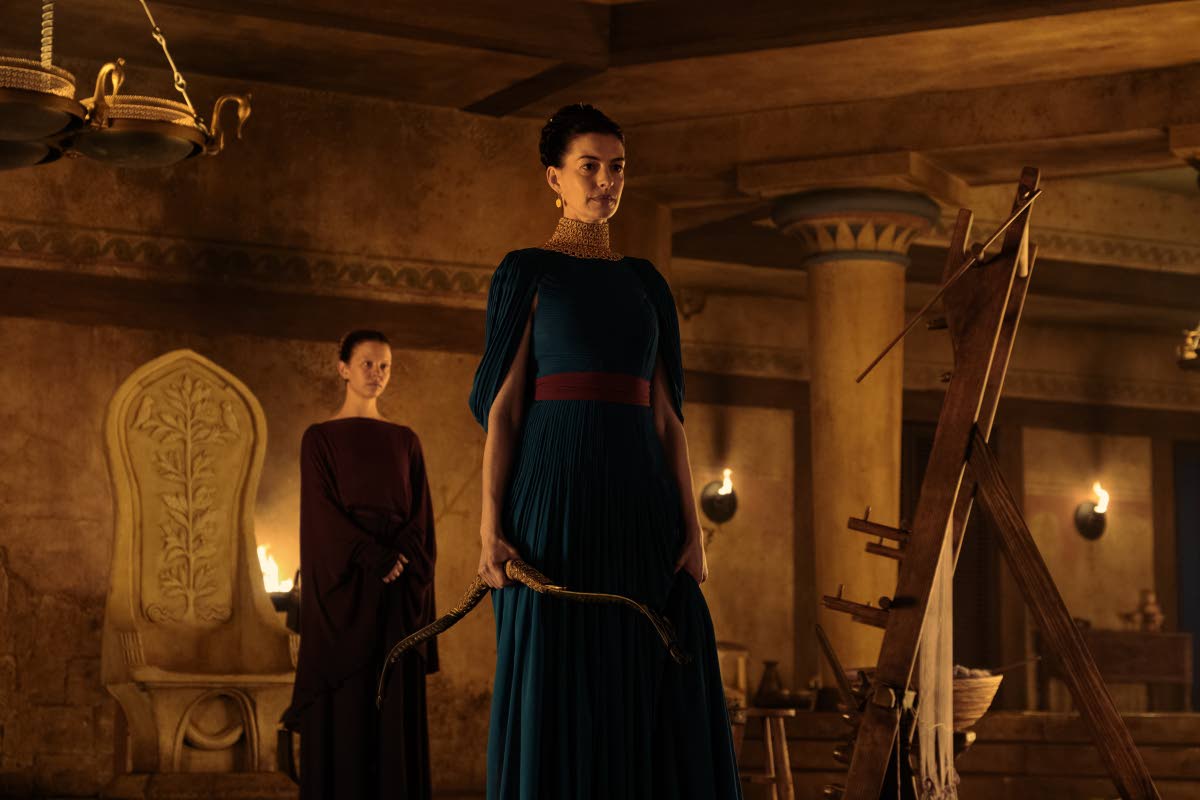
This image released by Universal Pictures shows Mia Goth (left) as Melantho and Anne Hathaway as Penelope.
AP:
Getting home, and turning back the clock, has long been at the root of Christopher Nolan’s films. The astronauts of Interstellar painstakingly lose 23 years in space travel, almost the same length of time Odysseus is away from home in The Odyssey: a decade fighting the Trojan War, a decade trying to return to Ithaca.
So, to a remarkable degree, Nolan’s The Odyssey – faithful as it is to Homer’s epic poem – feels, down to its non-linear DNA, like a Nolan movie. The authorship of the epic poem, dated to the 7th or 8th century BC, is complex. But no one could question the maker of this ‘Odyssey’, an earthy, existential epic that ravishingly melds the storytelling of antiquity with contemporary IMAX-sized bravado.
As a story about a man whose cunning offends the gods, the film feels very much like a companion piece, if not a downright sequel, to Oppenheimer. Odysseus (Matt Damon, in the role of his life) is increasingly racked with guilt for the violence and death he’s wrought after his ingenuity led to the sacking of Troy.
The arrival of any new Nolan spectacle inevitably leads to its own kind of assault, and avalanches of “masterpiece” proclamations. But while The Odyssey, Nolan’s first film shot entirely with IMAX cameras, doesn’t skimp on grandiosity, it works surprisingly well as a simpler, human-size tale.
The journey – you may have heard, it’s about the journey – is sometimes a little clunky, and the sheer Nolan-ness of the production, not to mention the historic nature of the tale, inevitably saps it of some freshness. You could make a credible case that Nolan has already made a movie about a guy trying to reach his family through strata of mind-warping illusion, and it’s called “Inception”. Such is the trouble with urtexts.
But The Odyssey is rarely not transfixing, and it’s a ripping adventure story, besides. At the least, it’s the definitive big-screen adaptation of one of literature’s oldest tales – a not-too-shabby accomplishment for a filmmaker of restless ambition.
It’s not until Book 5 that Odysseus enters Homer’s poem, and Nolan, who also wrote the screenplay, likewise begins in Ithaca. There, Odysseus’ home is overrun by feasting suitors in pursuit of his wife, Penelope (Anne Hathaway). Foremost among them is Antinous, who’s played with sleazy perfection by Robert Pattinson. For an actor often (pleasingly) at odds with the movies around him, Pattinson has never slid more seamlessly into a part.
Telemachus (Tom Holland, also well cast), the youthful son of Penelope and Odysseus, resolves to go in search of his father. Meanwhile, we catch up with Odysseus, weathered and white-bearded, following the fall of Troy. His forced conscription by Agamemnon is shown in flashbacks. Agamemnon is depicted with an imposing Darth Vader-like presence and played by Benny Safdie, but the real star is his hulking, mohawked helmet.
Such vivid details abound in Nolan’s richly textured film. The simple rocking of Odysseus’ longship, off the Mediterranean coast, is glorious. Some of Nolan’s and cinematographer Hoyte van Hoytema’s most impressive work has come when they’re faced with the elements (as in Dunkirk). And The Odyssey is flooded with stormy seas and enchanted isles. If anything, the movie could have gone further; I was promised rosy-fingered dawns.
The first line of Homer’s poem, as translated by Emily Wilson (the version Nolan leaned on), refers to Odysseus as “a complicated man”. James Joyce, whose Ulysses was based on The Odyssey, once noted that while Hamlet is merely a son, Ulysses, or Odysseus, is a father, a husband, a lover and a warrior. In short, he’s an Everyman, albeit an especially smart one. And Damon, the most amiable of Everymen, proves especially attuned to the multifaceted nature of the archetypal hero.
We meet him first as a soldier, leading a small group of ships away from Agamemnon’s fleet, setting a southerly course with his second-in-command Eurylochus (an excellent Himesh Patel). Their route takes them on a series of episodic quests: a cave encounter with Polyphemus, the Cyclops; a pine forest attack by the man-eating giants, the Laestrygonians; a meal with the witch Circe (Samantha Morton); and Odysseus’ seven-year interlude with the sea nymph Calypso (a beguilingly sincere Charlize Theron).
You could argue that the movie can feel like a series of sketched-together set pieces, but what set pieces! That includes the tale of the Trojan horse, a fleeting mention in the poem but here a centrepiece. You can tell that Nolan, who nearly made Troy more than two decades ago, has had the sequence – beginning with the Trojan horse sunk in the sand and leading to the burning of Troy –on his mind for years.
Each stop on Odysseus’ journey gives Nolan a mythic playground to explore imagery that verges on the stuff of horror. I was most intoxicated by The Odyssey in its most surreal moments: the sight of a giant hand emerging out of the shadows, the meeting with the “shades” of Odysseus’ dead army, risen from the black soil of Hades.
The Odyssey, a Universal Pictures release, is rated A-18.
Read the full review online
Running time: 172 minutes.
Rating: Three and a half stars
out of four.