Donna Hope celebrates 20 years of ‘Inna Di Dancehall’
Loading article...
-
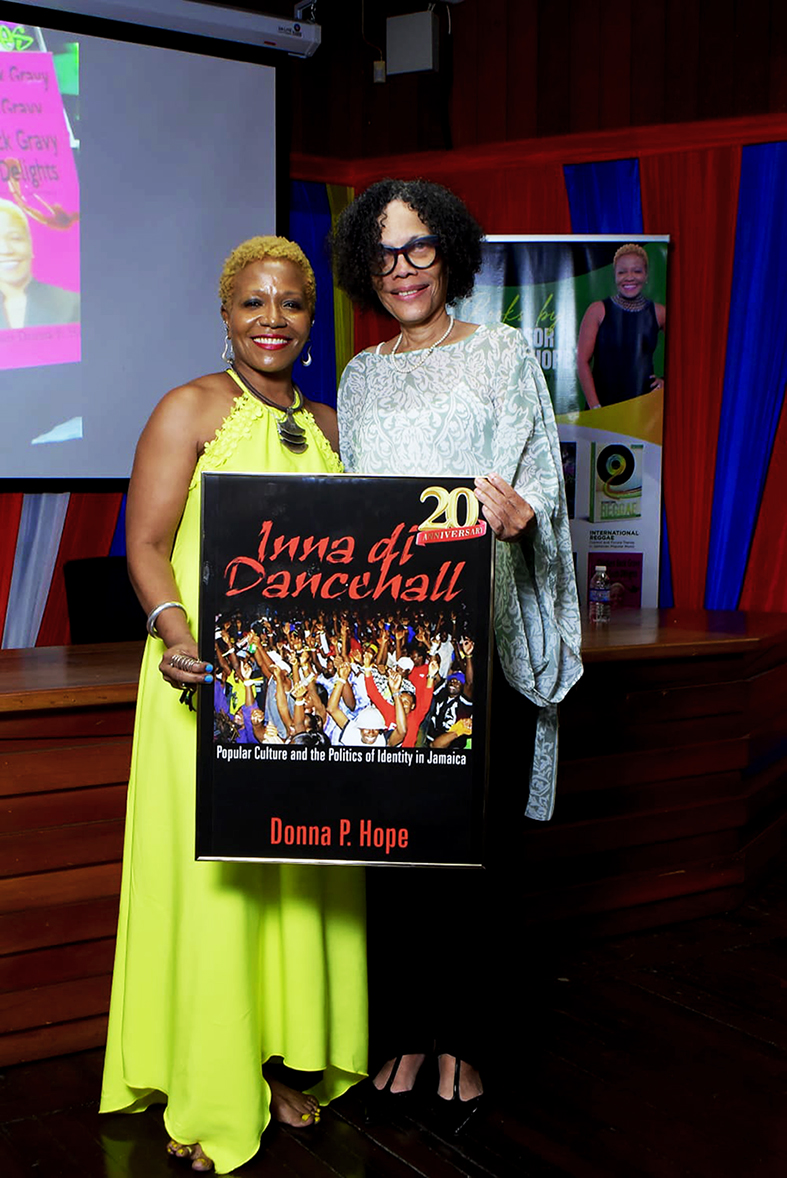
Donna Muirhead (right), former publication manager of UWI Press, presented Dr Donna Hope with an 'Inna Di Dancehall' plaque from UWI Press.
-
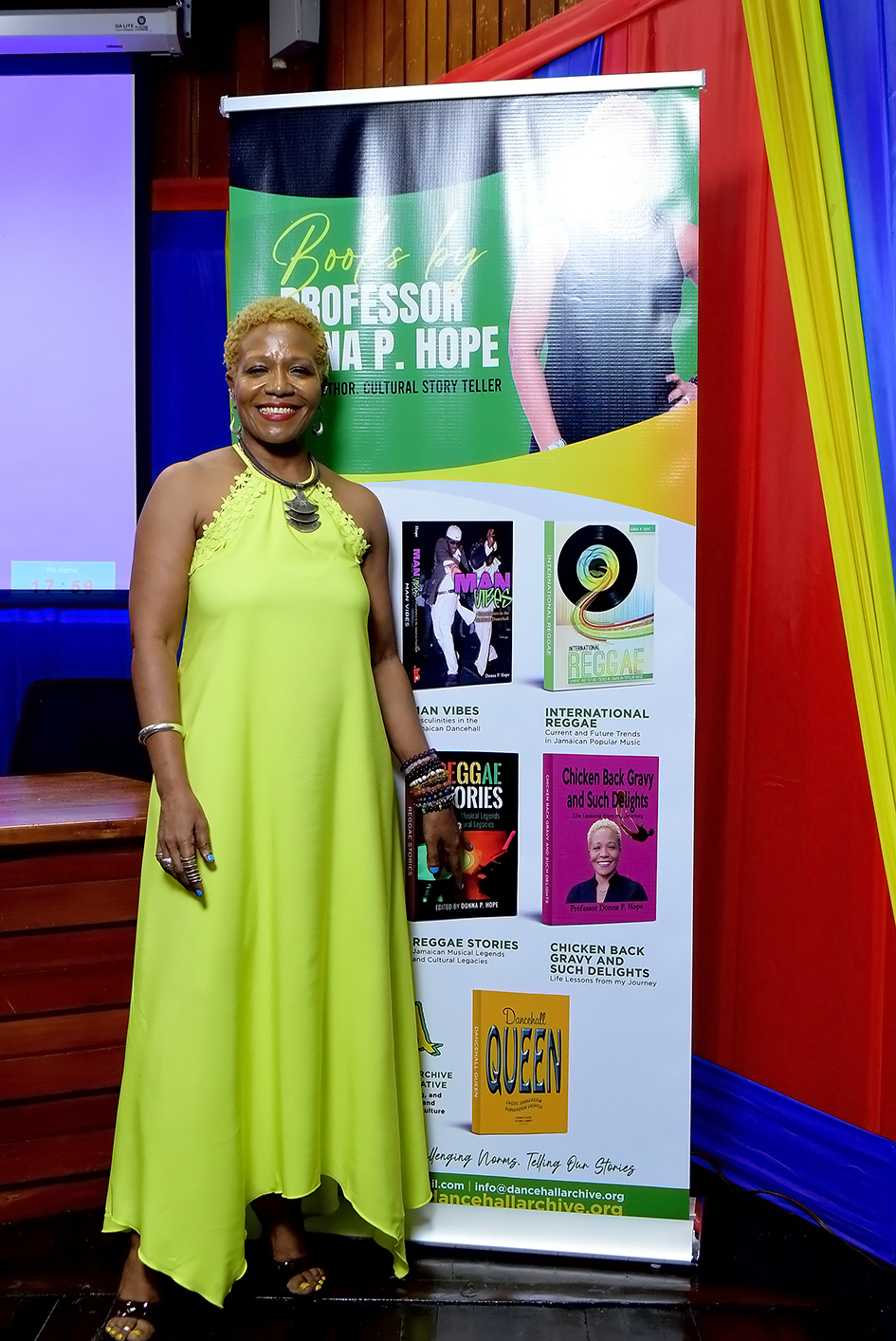
Dr Donna Hope celebrates 20 years of the publication of her first book, ‘Inna Di Dancehall’.
-
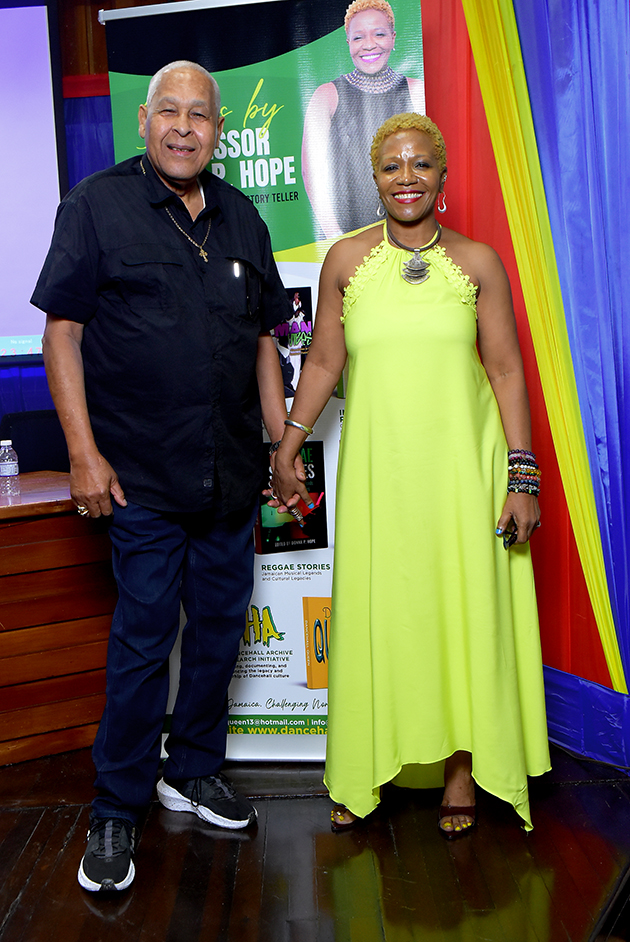
Veteran music producer King Jammy and Dr Donna Hope.
As Inna Di Dancehall, the publication which explored dancehall music and its cultural, psychological and financial influence on society, marked 20 years, Dr Donna Hope hosted a special anniversary celebration at The University of the West Indies’ Neville Hall Lecture Theatre.
The event brought together members of academia, dancehall artistes, music industry icons and key players in the book industry to commemorate Hope’s first book, which went on to become both an academic and cultural success.
In speaking to The Gleaner, Hope shared that her love for sharing knowledge led to the creation of her first book. “To have your first book still trending after being released 20 years ago is big for me. The actual date of the launch in 2006 was April 6. So, when I saw the date coming up, I decided to do an event because a book that is an academic work that is 20 years old and still selling, still popular, and is a bestseller in many ways, is a major milestone,” said Hope, adding that while the local public isn’t generally known for book buying, Inna Di Dancehall has seen consistent sales.
“Yes, we don’t typically buy books, but remember our culture is also loved by foreigners, and those people buy books. So, once you have a book about our culture, it’s going to sell. My books are bought mostly by Europeans who want to do research and by Latin and South Americans,” she shared.
Inna Di Dancehall, she said, was her attempt to understand, as a budding academic, the important culture of dancehall in a society that shunned it in many ways. “I was looking at the people who were creating and consuming it and how connected it was to the society. The book has allowed them to understand what dancehall is and to process the power dynamic in Jamaica and how people work around it.”
She spoke of the importance of dancehall in society. “It’s like a stress buster or pressure relief valve, because Jamaica is stressful. You know, garrison life nuh easy, that’s why, as daylight, you see people outside. So sometimes you have to give and take, as that is a section of our society that we still have not built out adequate resources for. So dancehall allow them to earn a living, have status and become superstars in their own right,” said Hope.
A lot of empirical research, she emphasised, went into its compilation. “I’m coming to Kingston, where dancehall is centralised, and going to all sorts of places like Skateland and House of Leo. I had to go to the locations where dancehall people thrive. There was a nail salon in Central Plaza in Half-Way Tree where people like D’Angel went and did their nails, and you hear them talk about the party they went to the night before. So I went and did a lot of observations and also a lot of interviews,” shared Hope about her process.
Currently, the professor of culture, gender and society at The University of the West Indies, Hope has since gone on to write six other books, including Man Vibes: Masculinities in Jamaican Dancehall and Dancehall Queen.
To those who lament about the current state of dancehall descending into a quagmire, glorifying negative behaviour like scamming, she shared that dancehall and, to an extent, reggae has always been the outlet for the young to sing about what they know best: how to hustle. “Remember that dancehall, in its different manifestations, is really youth culture, so the materialism and the quick and fast money has always been there. The music has always glorified hustling, women, sex and guns, so it is still saying the same thing, but it sounds a little different, and the musicality of it has changed. It used to be ganja hustling, and now the scamming is the big hustle, because this is what they are seeing around them. So people have to make sure that other messages are coming from other parts of the society, so it won’t just be about glorifying badness, but also getting a job or seeking an education,” she said.
When asked to share what would make up her ideal dancehall album compilation, Hope said she would include many artistes from the ‘80s onwards, making it an eclectic mix of new and veterans. “Shabba (Ranks), Popcaan, Bounty (Killer), General B, Mavado, Admiral Bailey, (Vybz) Kartel, Munga Honorable, Nesbeth, Sizzla, Capleton from before him tun Rasta, dancehall Buju (Banton) and Rasta Buju (Banton), Mad Cobra, Patra, Shelly Thunder, Lady G, Queen Paula and how I could forget my brother Ninja Man. Plenty people leave off, I just hope them forgive me.”
Pointing to the difference between new and old dancehall, she spoke of veteran acts and their lyricism and aptitude for freestyling.
“A lot of the ‘80s and ‘90s artistes have a lyrical dexterity that some of the current young artistes don’t possess, as they would grab a mic and just spontaneously build lyrics on the spot, and that’s what people don’t understand. Back then, clash culture was not about violence; it was about lyrical dexterity, and then, to top it off, they would just throw a gospel song in the middle of it to spice it up. These were not people who went to school to learn about music. They did it because they loved it, and it provided an opportunity to escape poverty,” said Hope.
nicola.cunningham@gleanerjm.com