Tony Deyal | Where do we go from here?
Loading article...
-
 Photo - Pexels
-
Photo - Pexels
-
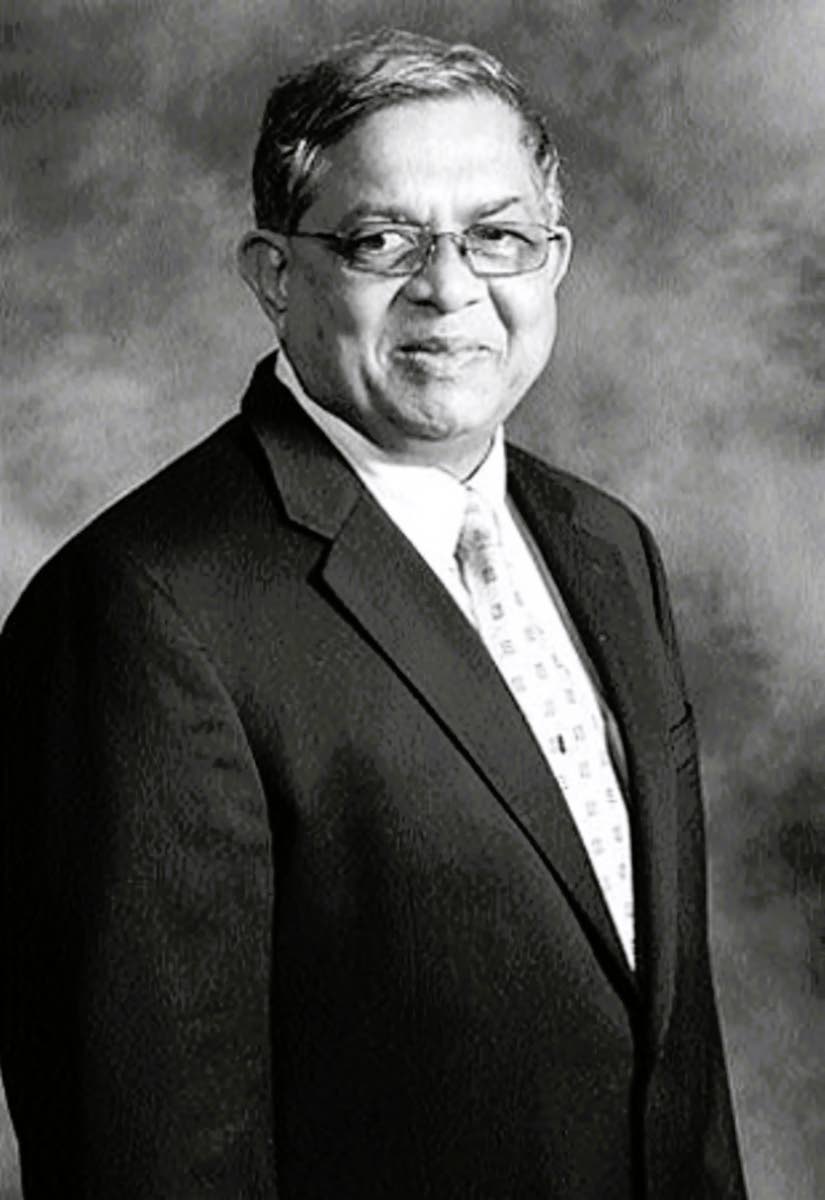 Tony Deyal. Photo - File
(This is to thank Ms Reetoo Deonarinesingh for working with “My Trinidad - Yesterday, Today and Tomorrow.”)
Keeping with us tonight to look ahead at where we plan to go from here, I feel that we should start with Mohandas K. Gandhi, an Indian lawyer and political ethicist, who made it clear, “I suppose leadership at one time meant muscles; but today it means getting along with people.”
What is also very different is that leadership is not only about one job, worker, leader or manager. Leaders rely on distinct core roles and flexible styles to guide teams and deliver results.
Then there are some leaders who give us a sense of where we should “go”. For instance, Dwight Eisenhower, the 34th president of the United States, who served from 1953 to 1961, said: “You do not lead by hitting people over the head, that’s assault, not leadership.” I think many of us, especially when we were young, were not just assaulted, but also got “battered”.
We are also told very often: “First rule of leadership: everything is your fault.” Then there were two others who are clear to all of us when we screw up, make a mistake, do something very badly, or spoil a plan, task or situation. We always hear: “Success in almost any field depends more on energy and drive than it does on intelligence. This explains why we have so many stupid leaders.” Another put it differently: “I must follow the people. Am I not their leader?”
In the United States (US), and even in places like Trinidad and the Caribbean, people aspire to move into leadership positions. However, with this transition come even more challenges, especially from bosses in charge. One worker said that his boss told him to aim higher, so he raised the desk chair as high as he could. Another said that leaders do not lose control; they delegate the blame.
Better yet, one told them all, “I’m not bossy, I have executive volume.” He also said, “I don’t give orders, I give suggestions with authority!” And then the leader told them all: “My door is always open ... mostly because the latch is broken.”
In a way, the PEAR Model and peer-to-peer leadership represent a powerful combination for teams through collaboration, psychological safety and influence rather than formal authority. They have “P - Pause”, which means creating space for a thoughtful response. Then there are “E - Explicitly”, “A - Ask Questions”, and “R - Reflect”.
For many people who are trying to understand “P”, instead of “Pause”, they lead with positivity until their coffee wears off. You also miss 100 per cent of the tasks you forget to see or schedule. Then you might try again after lunch. If you are at a higher level, do not give up; delegate the work.
Having reached this far, it is time to learn. First, observe and learn what new managers need to be confident in their promotions and know that it is possible to assimilate everyone successfully. They are said to have the mindset. “I’m ready and willing to learn.” That way, you will become a new manager on a path towards a thriving managerial journey.
But that is for some. The best thing a new manager can do is go with what they call “intentional environment scanning”. In other words, think of environment scanning like a captain taking over a ship. You need to check the weather, look at the map and understand the crew before you try to change course.
Or you say things like: “I lead by example because examples never call in sick,” or “Great leaders never drift. They captain every opportunity.” Or, as one made it clear: “Leadership is my lane, and I stay in command of traffic.”
In fact, he said that his vision board asked for a promotion. However, as they said: “Teamwork makes the dream work, but leadership sets the alarm.” That way, he manages pressure so well that diamonds ask for advice.
Then you must observe the operations of the team, regardless of the job, through the lens of a manager, not a peer, take notes, and learn the inner workings. The worst thing to do is to try to make your mark and prove you were deserving of the promotion by making changes.
What many do not know is that substantial changes can also create a newfound fear of the unknown, which leads to a lack of trust. The best thing a new manager can do is observe the operations of the team through the lens of a manager, not a peer, take notes and learn the inner workings.
However, as Benjamin Hooks, the American civil rights leader, said: “If you think you are leading and turn around to see no one following, then you are just taking a walk.”
Then there is the “Right Track” with: “Even if you’re on the right track, you’ll get run over if you sit there.” But if you are in the Looking Back mode, you are told: “A leader is someone who helps you look back to see how far you’ve come - mostly because they forgot where they were walking.”
And then there is a “follower” who was clear: “What is a leader’s favourite game?” He then said, “Ah yes! Follow the leader!”
Next comes the worst and toughest time, when members become a team and develop a plan for the group. The new manager must understand what you and your staff will either do or die over. There are several things to consider, such as: “How are you measured?”
In other words, how do you define success for the boss and the team? First, you define success for the leader and the team, and then determine whether you will be considered successful or even measured at all.
Then you ask, “Are they changing the definition of success for me and the team?” If you lack clarity on what is going on and how to move forward, your team will not trust you, and they will not follow you. In that case, you are gone and a new colleague will become an asset to your boss.
In other words, “Thought leadership is like being the first egg in the omelette.” As the boss said, “I do not need to be prodded. If anything, I’m the prod.”
And a prod is something used to poke someone or something with a finger or a pointed object.
Worse is when the boss and good leader take people where they want to go, or when the big leader takes them where they do not want to go, but must.
Or, as Lao-Tzu, a central figure in Chinese culture, said, “A leader is best when people barely know he exists; not so good when people obey and acclaim him; worse when they despise him. But of a good leader who talks little, when his work is done and his aim fulfilled, they will say: We did it ourselves.”
Tony Deyal, after so many years, knows: “Power and thought leadership are like being a leader. If you must tell people you are, then you aren’t.” Send feedback to columns@gleanerjm.com