Mickel Jackson | Let’s strike the balance on the Firearms Act
Loading article...
-
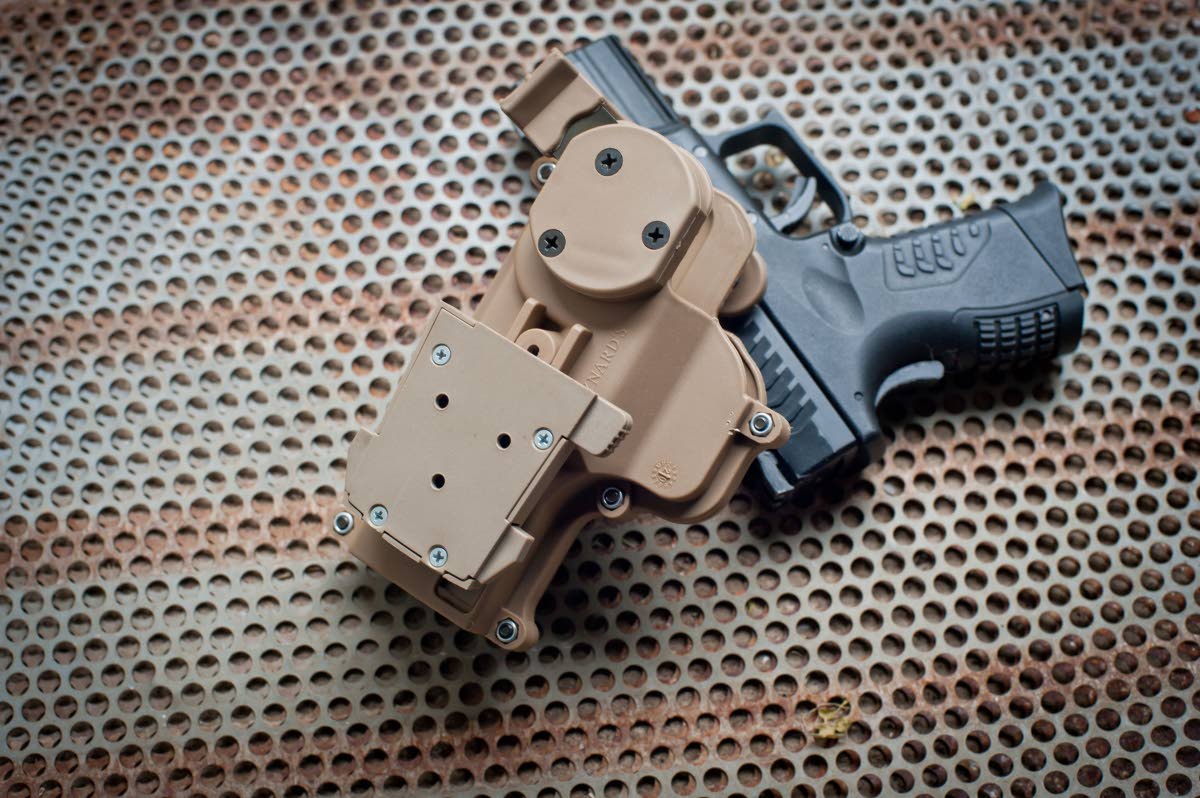 Photo - Dan Galvani Sommavilla / Pexels
-
Photo - Dan Galvani Sommavilla / Pexels
-
 Mickel Jackson, executive director of Jamaicans for Justice.
In 2022, Jamaicans for Justice submitted its proposals to the members of the Firearms Joint Select Committee. We raised concerns then, and again before the wider Parliament once the bill left the committee, about the mandatory minima, judicial discretion, guilty pleas, and implications for children. The Children’s Advocate and others raised similar points. Some of the gaps were foreseeable.
One remains sympathetic to the Government and the need to address crime. It is with that in mind that we should strike the right balance and debate the issue in good faith.
Since the withdrawal of services by the legal fraternity, the public argument has often answered a different case from the one being made about striking a balance, with some intimating that the narrow set of drafting proposals on judicial discretion amounts to a demand to go soft on criminals. That is not the case.
Prime Minister Dr Andrew Holness recently indicated that while he is open to review, weakening the legislation would send the wrong signal to criminals, saying that he finds some of the discussions insensitive to members of the security forces. Justice Minister Delroy Chuck, after meeting with the Bar Association, said the Government would look at exceptional cases, imitation firearms, and situations in which the gun was not in play when it was found, and then asked: “But what about those cases where a man is caught having fired, having robbed, having raped?”
Those statements and questions lead to misconceptions. Sections 14 and 15 already deal with the gun or imitation weapon that is used. Use and intent to injure already carry penalties ranging from 20 years to life imprisonment. The man who has done serious harm is not the case being put forward for a departure from the prescribed minimum. The balance is to retain those penalties while examining matters in which grave injustices could occur.
IGNORES THE REALITY
Some also argue that attorneys and advocates are making much ado about nothing, because a reasonable person does not look at a toy gun, or a piece of cardboard cut into the shape of one, and treat it as the thing the act was passed to suppress. The challenge with that narrative is that it ignores the reality that people are already before the courts, and in custody, for toy and cardboard guns. Ballistics examinations have reportedly been ordered on both the toy gun and the cardboard replica. Whether those matters end in conviction, time will tell. What is already certain is months of stress and exorbitant legal fees over an object that cannot discharge a round.
If the person is convicted, the answer often offered is that Section 42K of the Criminal Justice (Administration) Act exists. It also requires the sentencing judge, who has heard the evidence and formed the view that the minimum is manifestly excessive, to impose that minimum anyway, certify the case, and send it to the Court of Appeal, which may then go below the statutory floor. In the meantime, the Bail Act shuts the door on post-conviction bail for a firearm-related offence, so the months in custody continue and a second set of legal fees begins.
A guilty plea does not fix the problem either. Mere possession of an imitation firearm falls within a part of another act to which the ordinary plea discount does not apply, unless the defendant is giving evidence for the Crown. On other counts, the judge can apply a discount, but the floor is so high, life imprisonment in some cases, that a plea at the earliest stage still results in 15 years. The rational defendant takes a chance at trial. That should be fixed.
DEFINITIONAL CLARITY
Some sections of the Firearms Act need definitional clarity. An imitation firearm is defined as not being a firearm and then pulled back in as a prohibited weapon. It is not clear that the permit provisions, which are written for firearms, and one of which expressly states that prohibited weapons are not included, can authorise a prop or imitation used for educational purposes at all. Administrative practice at Customs or the ministry does not amend the act.
A licensed firearm holder who misses a renewal deadline may also face real difficulty. Provisions of the old Firearms Act, including Section 20, which has implications for Section 20 of the Gun Court Act, were not carried forward in the limited consequential amendments contained in the new act. Failure to renew is not itself an offence. Lesser provisions could arguably cover a breach of a licence condition or a failure to surrender a firearm if the authorisation is revoked, but nothing guides the police or the prosecution on which section a lapsed licence holder should be charged under.
Once the five years have expired, that lapsed holder can be charged as though he had never been authorised and, if the charge is laid in the Circuit Court, the penalty is life imprisonment, with 15 years before parole eligibility. The law needs review.
Some say ignorance of the law, or failure to act within its bounds, is no excuse. However, proportionality is a key principle of justice. A person may have failed to obtain a permit for a video production, purchased a toy gun, or committed some other careless breach. The question is whether 15 years for mere possession or breach, with no violence and no criminal intent, is a just answer to that failure.
On Friday, October 2, the prime minister met with the Bar Association and the Advocates Association and directed the justice minister to convene the legal reform committee, with stakeholders in the justice system, to review the concerns and to consider how the act may be both refined and strengthened. He indicated that the work should come ahead of the review already set for next year, and that it should not be adversarial. That is the balance available now. It does not follow that every gap must wait on the full review. Parliament can amend Section 42K so that the sentencing judge, after trial or on a plea, may depart from a prescribed minimum where exceptional circumstances would make that minimum manifestly excessive and unjust. A timeline is needed for that amendment.
The position is not soft on crime. Strengthening the law against the gun that is used, and refining it so that an innocent person is not caught, is how the balance is struck.
Mickel Jackson is the executive director of Jamaicans for Justice. Send feedback to communications@jamaicansforjustice.org.