Editorial | Sobers: Cricket, gods and politics
Loading article...
-
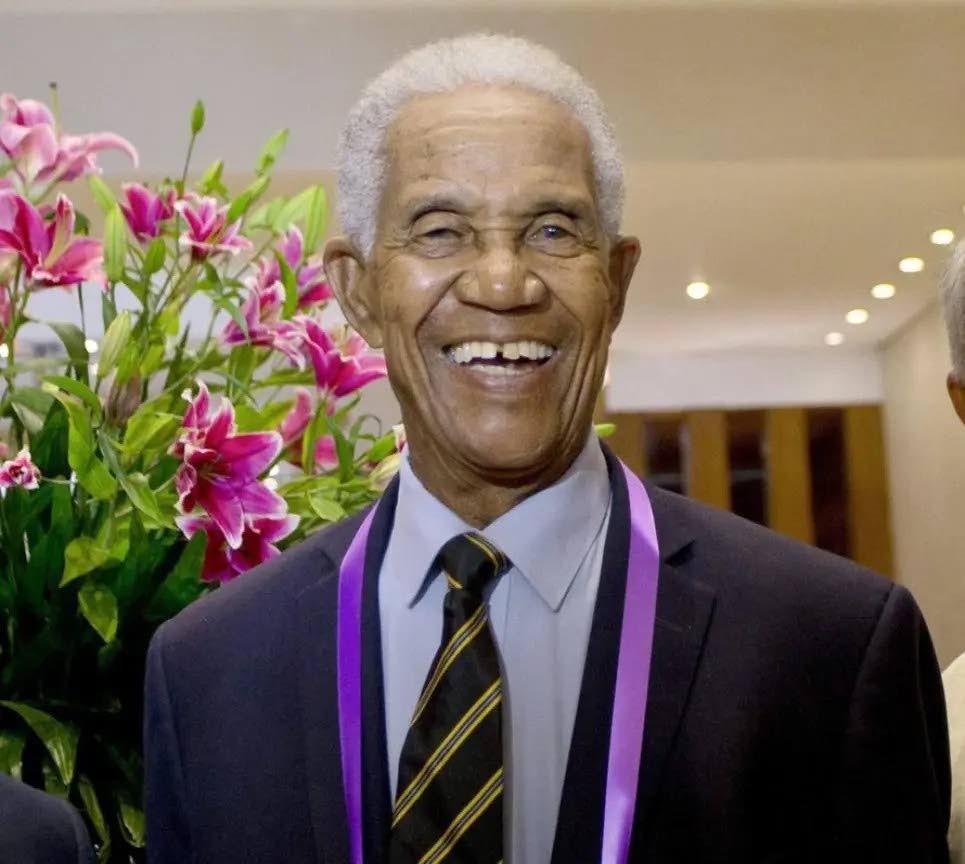 Sir Garfield Sobers
-
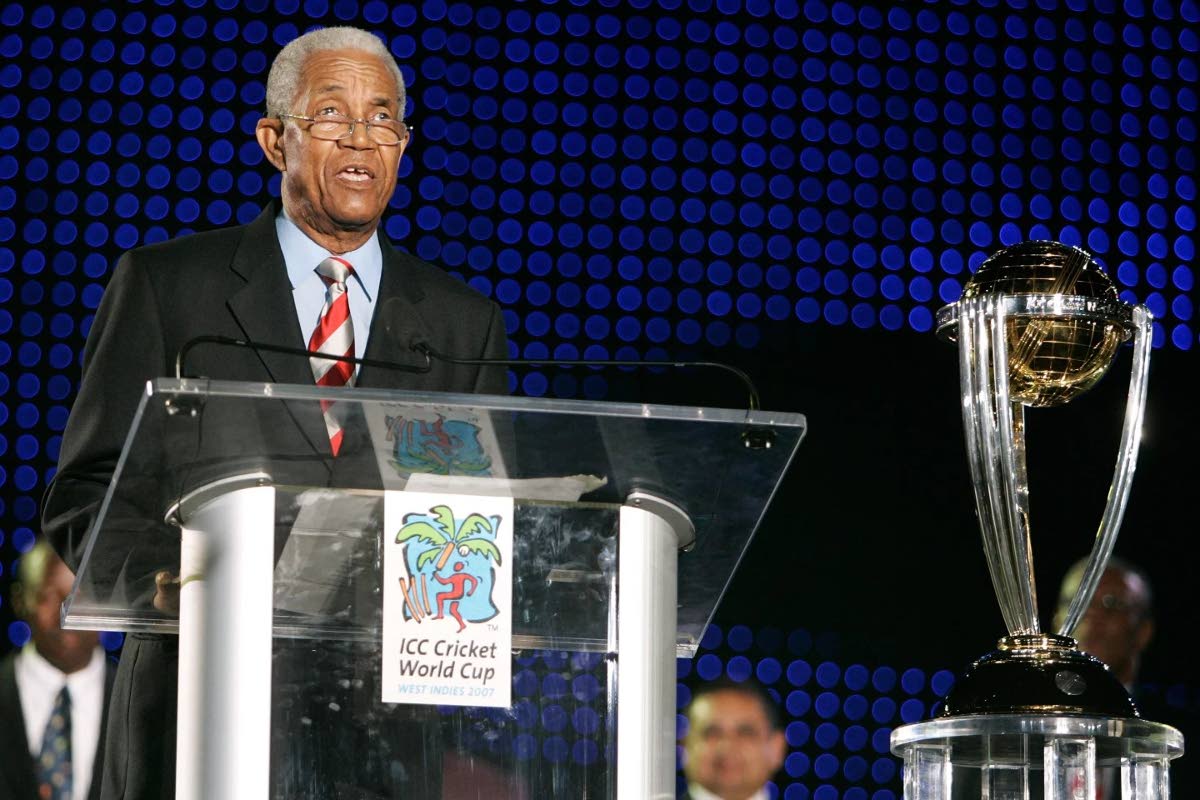 West Indies’ cricket legend Sir Garfield Sobers speaks during the opening ceremony of the ICC Cricket World Cup at Trelawny Multi-Purpose Stadium, Jamaica, on March 11, 2007.
Even the gods and near-saints are prone to the occasional error, from which, with the appropriate effort, they recover.
Psyche’s curiosity about her husband Cupid’s appearance led to her abandonment — at least until she earned their reconciliation with Zeus’ help. Gandhi evolved from his early 20th-century views on Black South Africans, and the movement he spawned to overthrow the Indian Raj helped galvanise anti-colonial struggles elsewhere. Gandhi’s philosophy and tactics also inspired Martin Luther King Jr’s civil rights campaign in the United States.
Garfield Sobers’ blemish was his politically naïve, fleeting visit to white-minority-ruled Rhodesia in 1970, which gave succour to Ian Smith’s apartheid regime. Unlike the West Indian rebel cricketers who played in South Africa a dozen years later, Sobers appropriately recanted when confronted with the gravity of his action.
That blemish was neither permanent nor defining. Nor is it disqualifying of Garfield Sobers’ place at the helm of the cricketing gods or in the pantheon of Caribbean heroes — not merely as a Barbadian national hero.
Sobers’ claim to the title of the greatest cricketer who ever lived resonates in, but transcends, the statistics. He played 93 Tests, scored 8,032 runs — including a record 365 not out that stood for more than three decades — and maintained a batting average of 57.78. Only a handful of batters have recorded higher averages. Yet, Sobers also took 235 wickets at 34.03 apiece and held 109 catches.
While it is difficult to compare cricketers across eras, Sobers’ closest comparable all-rounder is South Africa’s Jacques Kallis, whose career spanned 1995 to 2014. In 166 Tests, in which he batted 280 times, Kallis scored 13,289 runs at an average of 55.37 and took 292 wickets at 32.65. He had the better bowling average but, notably, the 24 per cent more wickets he claimed came across nearly twice as many matches.
But, in Sobers, there was a convergence of art and utility. Kallis bowled brisk medium pace. Sobers bowled medium-fast, but he could have played in any Test team as a great specialist batsman, a fast bowler, an orthodox left-arm spinner — the discipline in which he first represented the West Indies as a 17-year-old — or a chinaman and googly bowler. Some captains might even have been tempted to draft him into their teams solely for his fielding in the slips or at short leg. Sobers was a virtual one-man team whose cricket expanded strategic possibilities.
Of the West Indian batsmen who succeeded Sir Gary, the great Viv Richards inflicted psychological violence on opposing bowlers and captains. The swagger with which he entered the field and his domineering confidence at the crease belied the excellence of his technique and the effortless power with which he struck the ball.
Sobers had a similarly debilitating effect on opponents, but his was anchored in a different foundation. His genius lay in the seeming absence of aggressive intent in his destruction. Opponents might even have assumed that Sobers was apologetic about their deliberate annihilation.
unique giftsThe joy of Sobers’ cricket might, in another place and at another time, have been sufficient. But Garfield Sobers was born on a small West Indian island in 1936, amid the cauldron of unrest in the British West Indies, much of it driven by people from the social class from which he emerged:
• Sugar workers’ strikes in Trinidad and Guyana in 1934;
• Labour unrest in St Kitts, St Vincent and St Lucia in 1935;
• The oilfield workers’ uprising in Trinidad in 1937; and
• The Frome sugar riots in Jamaica in 1938.
These upheavals prompted the Chamberlain government in Britain to dispatch the Moyne Commission to assess and recommend improvements to labour and social conditions in the West Indies. The period is widely acknowledged as the beginning of the modern political movement in the Caribbean.
Between those upheavals and Sobers’ birth, the first great West Indian batsman, George Headley, announced his arrival with a score of 176 in his second Test during England’s 1930 tour of the region. In the third Test, in Barbados, Headley scored a century in each innings — a feat he repeated at Lord’s in 1939, before the Second World War brought international cricket to a halt.
It need not have been explicitly stated, but George Headley’s achievements were important statements against the assumptions and conduct of colonialism. Given a level playing field, people who looked like Headley, or who colonial society deemed inferior, could perform just as well as, or better than, those who assumed their own exceptionalism.
Worrell, Weekes and Walcott were Headley’s inheritors as cricket’s champions in the West Indies’ social and political evolution. West Indians lived vicariously through their feats. Cricket was not merely a sport; it was life — an important part of the region’s narrative about itself and its capabilities.
Garfield Sobers did not need to be overtly political. His unique gifts made him transcendental. West Indians took pride in the fact that the world, especially the former dominions, admired his cricket, secure in the knowledge that he belonged to them. Every run from his bat, every wicket and every catch was as much a political statement as it was a source of pure joy.