Jennifer Nunes | CARICOM secretary-general controversy and the future of regional unity
Loading article...
-
Jennifer Nunes
-
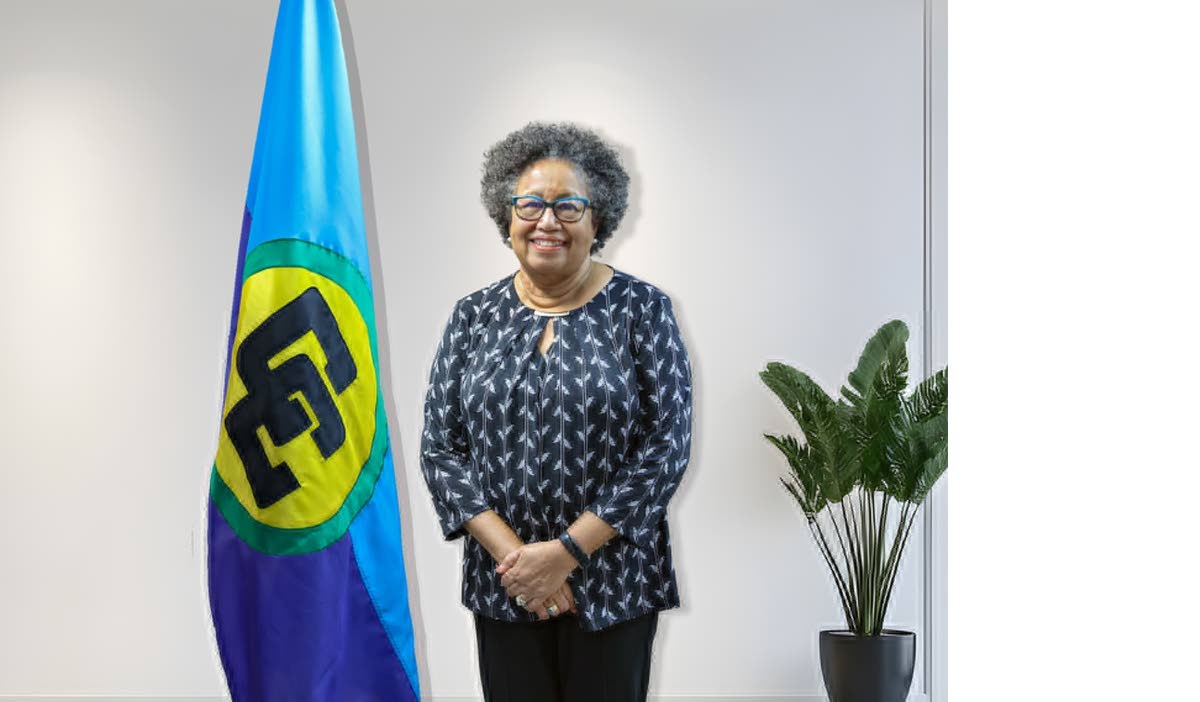
CARICOM Secretary-General Dr Carla Barnett.
Professor Rajendra Ramlogan’s thesis, however impressively framed in law, does not register in any practical sense when applied to the realities of Caribbean governance.
The argument – commissioned by whom, one must ask – reads less like an independent legal analysis and more like a document in search of a predetermined conclusion. Forty-eight pages of legal scaffolding cannot disguise the fact that someone, somewhere, went in search of a crime. That, as we are seeing all over the world today, is becoming a familiar pattern.
One cannot, however, ignore the optics of who is making this argument and why. Neutrality is the key to any unbiased proclamation about the CARICOM Secretariat’s business. While proof of neutrality can sometimes be established even where bias appears to exist, Professor Ramlogan’s conclusions give the impression – whether intended or not – that this matter is less about institutional governance and more about a score being settled. It is always easy to find someone to boil bush for someone else’s fever, especially in today’s global space.
It is alleged – and these allegations were made publicly on social media – that the Trinidad and Tobago prime minister has carried a historical grievance against Dr Barnett, stemming from a perceived failure to respond to a communication regarding the deportation of a Trinidadian national from Barbados. If this is the root of the current rancor, then the entire legal argument, however puerile at its core, is merely the dressed-up version of a personal grudge. The Guyanese president appears to have distanced himself from this position. The Jamaican prime minister, for his part, has remained on the periphery – neither committing fully nor stepping back.
The Trinidad and Tobago delegation’s reasons for missing the vote in St Kitts reflect not merely an administrative lapse but a level of disdain and disingenuousness towards the rest of the regional body. This, sadly, is not out of character. T&T has been historically dismissive, and, at times, outright disrespectful towards other CARICOM member states – from immigration treatment of Caribbean nationals at their borders to the prime minister’s public utterances about not serving as the region’s ATM. Such posturing has done significant damage to the spirit of CARICOM unity.
I remember Edwin Carrington’s dynamism fondly. Many charged that he was always on a plane, spending the people’s money. Yet he gave CARICOM its highest level of regional and international visibility, and in the process, elevated individual island profiles. I hold no special admiration for Dr Barnett or her methods, but that is not the point. The point is that the process by which her reappointment has been challenged reeks of partisanship – and institutional credibility cannot survive that.
Given Professor Ramlogan’s stated commitment to legal process and the Revised CARICOM Treaty, he should go further: interrogate the process for dissolving or reforming this treaty.
It is crucial to note here that the architects of this esteemed agreement were a combination of Caribbean scholars, politicians, and statesmen. Some in this group might have had personal, operational, and/or cultural disagreements. Nonetheless, they cooperated and produced this historical, life-altering template – at times referred to as a “regional referendum experiment” . The Caribbean regional integration process of the 1960s, which gave birth to the CARICOM Treaty of Chaguaramas, was so artfully crafted that it may be useful to mention, “despite its shortcomings, however many, the union remains the original, the template, the exemplar, after which even the EU sought out its best practices for emulation“.
CARICOM today, sadly, only sees merit in outside forces leveraging their power of divide and conquer. Perhaps this can be attributed to a lingering vestige, perhaps of our historic, painful past. Many of us, at this point, do not wish to remain bound to Trinidad in the current arrangement. If Prof Ramlogan is truly independent, another rigorous legal perspective – this time examining exit or restructuring mechanisms – could do a great service to the region.
More broadly, we need a regional referendum on the continued relevance of this binding instrument. Is the treaty still fit for purpose? If it is to survive, let it be reimagined as a guiding framework for regional financial cooperation, health, and sustainability — not a mechanism that allows one member that constantly levies financial and decibel “dominance” to (potentially) destabilise the rest. That is a clarion call, a critical call to action, in these times of neo-colonial posturing from within our own borders.
Jennifer M Nunes is a business management coach and communications & human resource consultant. Send feedback to gtac1761@gmail.com.