Ruthlyn James | Masculinity under pressure: The hidden curriculum of violence
Loading article...
-
 Ruthlyn James
-
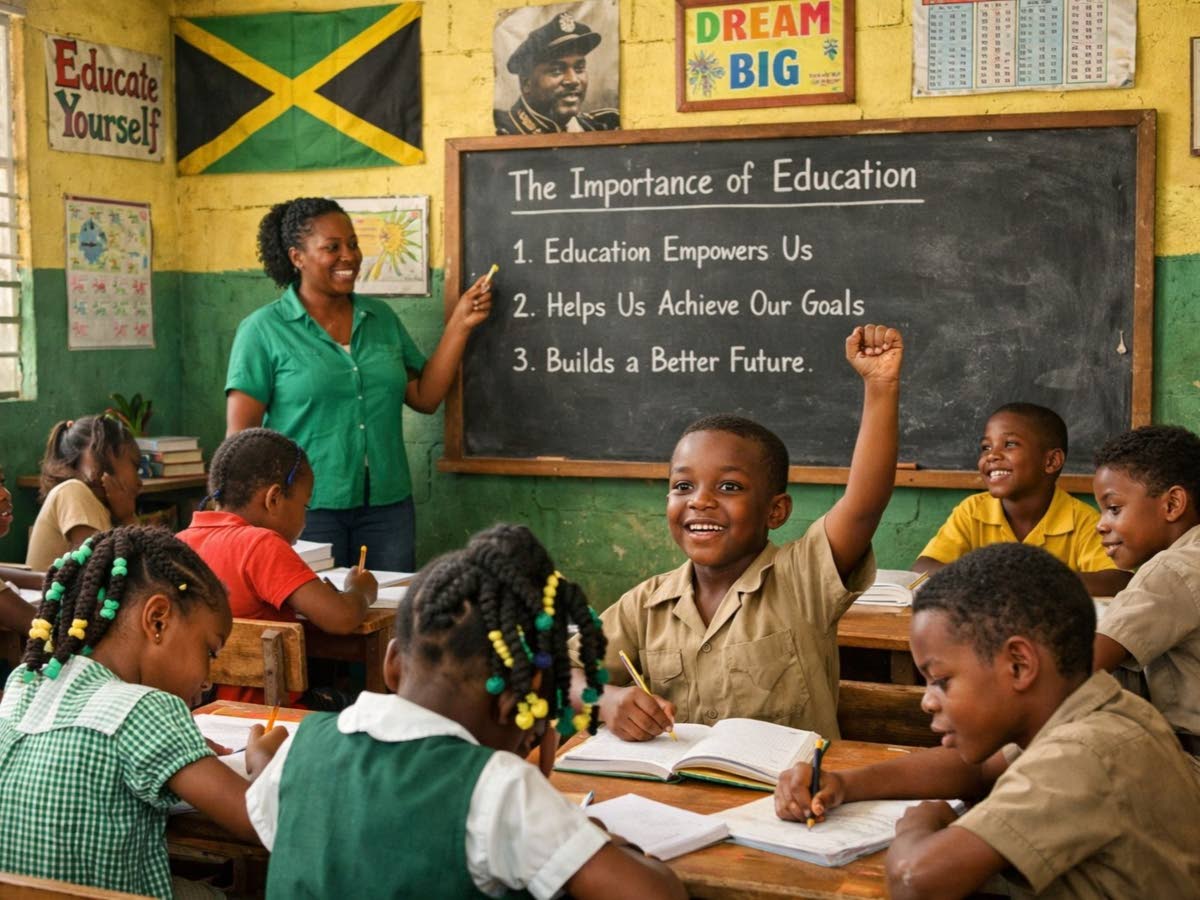 Children carry into schools what they see modelled around them: how to handle conflict, how to defend themselves and how to prove worth.
A recent school incident unsettled the country, not only because a boy was physically assaulted on camera, but because of what the explanation seemed to permit. In the school’s public statement, the assaulted student was said to have admitted taking items from a group of boys, and the matter was described as having led to “an altercation”. That wording matters. When a child is beaten by peers and the conversation quickly pivots to what he allegedly stole, Jamaica is no longer simply discussing school discipline. We are witnessing how easily harm is rationalised once wrongdoing is alleged.
What disturbed many people was not only the violence itself, but the moral sequence it revealed. First comes accusation. Then public humiliation. Then punishment by peers. Then adult language that sounds procedural, even when what occurred was clearly degrading. The issue is not whether theft should be ignored. It should not. The issue is whether a schoolboy may be physically and socially punished by other schoolboys as though they have authority to judge, sentence and enforce. Once society becomes comfortable with that chain, it begins to teach children that force is not a breakdown of order, but part of order itself. That is a dangerous lesson, especially for boys already being socialised to see dominance as credibility.
CULTURE OF HARDNESS
This is why the matter cannot be dismissed as a single school scandal. Jamaican researchers and educators have long argued that violence in schools mirrors violence in the wider community. Children carry into schools what they see modelled around them: how to handle conflict, how to defend themselves, and how to prove worth. When those models rely on force, schools become sites of rehearsal rather than correction.
The data should remove any temptation to romanticise what is happening among boys. More than three in four Jamaican youth report experiencing some form of violence in their lifetime. A majority of males report exposure to physical violence. Significant proportions of adolescents report both physical and emotional bullying within the school environment. These are not isolated experiences. They form a social climate.
That climate is deeply gendered. Rigid ideas of manhood continue to shape how boys interpret strength, respect and survival. Boys who internalise these norms are more likely to use violence, more likely to accept physical punishment as necessary, and more likely to suppress emotional expression. The cost is not only external harm, but internal fracture. The culture of hardness produces isolation, aggression and emotional illiteracy, even as it is celebrated as strength.
Caribbean scholarship named this long ago. Violence and crime have functioned as rites of passage to manhood, particularly in peer spaces. The so-called badman is not simply a criminal figure; he is a social symbol, representing power, retaliation and immunity from softness. Boys learn quickly that to be embarrassed and not respond is weakness, to dominate is safety, and to show restraint risks ridicule. Under that logic, a slap is not just assault. It becomes theatre – a performance of hierarchy.
CULTURAL SHORTENING
This is also why the school conversation connects uncomfortably with wider public responses to alleged offenders and police killings. Once wrongdoing is alleged, many Jamaicans begin from the premise that harsh force is understandable, perhaps even deserved. That is not justice. That is a cultural shortening of due process. Boys are watching that shortening every day.
The public discussion has also widened, with recent calls to “blame the Ministry” for weakened discipline, weapons in schools, gang presence, attacks on teachers and poor parenting. These concerns cannot be dismissed. Governance, safety and accountability matter. But discipline without regulation is only containment. A child who carries a weapon is not only breaking a rule; he is also signalling a breakdown in emotional development, supervision, belonging, conflict processing and adult modelling. The response must therefore extend beyond punishment. Jamaica requires school-based threat assessment, structured parent conferencing, counselling, restorative repair, clear consequences, teacher protection and behaviour-support systems that teach regulation before violence becomes identity.
Emotional intelligence is not consistently taught. Emotional reactivity is rarely checked. Conflict resolution may be spoken of as a principle, but reactive violence is often what is practised and reinforced. When children begin life in environments where physical punishment is used to stop behaviour or force compliance, violence becomes their first language of correction. It becomes conditioned, endorsed and normalised as resolution.
APPROPRIATE CONSEQUENCES
Hurting a child does not teach discipline. It teaches fear, deception and avoidance. It teaches that power belongs to the one who can inflict pain. It does not build understanding, reflection or change. In contrast, appropriate consequences, clearly communicated and consistently applied, support rehabilitation. They allow children to connect action with outcome, to repair harm and to develop internal regulation rather than external fear.
We must be clear about what we are modelling. When we hurt, we are not correcting; we are reinforcing the very behaviour we claim to reject. Violence breeds violence, not discipline. The distinction lies in our capacity to choose restraint, to communicate, to understand and to guide. Not choosing violence, especially towards our children, is not softness. It is civilisation. It is the foundation of a healthy, stable and emotionally literate society.
The real question, then, is not whether schools will discipline — they must. The harder question is whether Jamaica is ready to confront the social order those boys were imitating. We cannot preach peace while celebrating domination. We cannot condemn school violence while normalising street justice. We cannot ask boys to become better men while surrounding them with models of manhood built on force, silence and shame.
If school is the mirror, then the face looking back at us is national. And, if we do not like what we see, we must admit that the violence did not begin in that moment. It began long before, in the culture that taught those boys what power looks like.
Ruthlyn James is the founding director of Adonijah Group of Schools Therapy and Assessment Centre. Send feedback to columns@gleanerjm.com.