Editorial | Interlocutor for Kamla
Loading article...
-
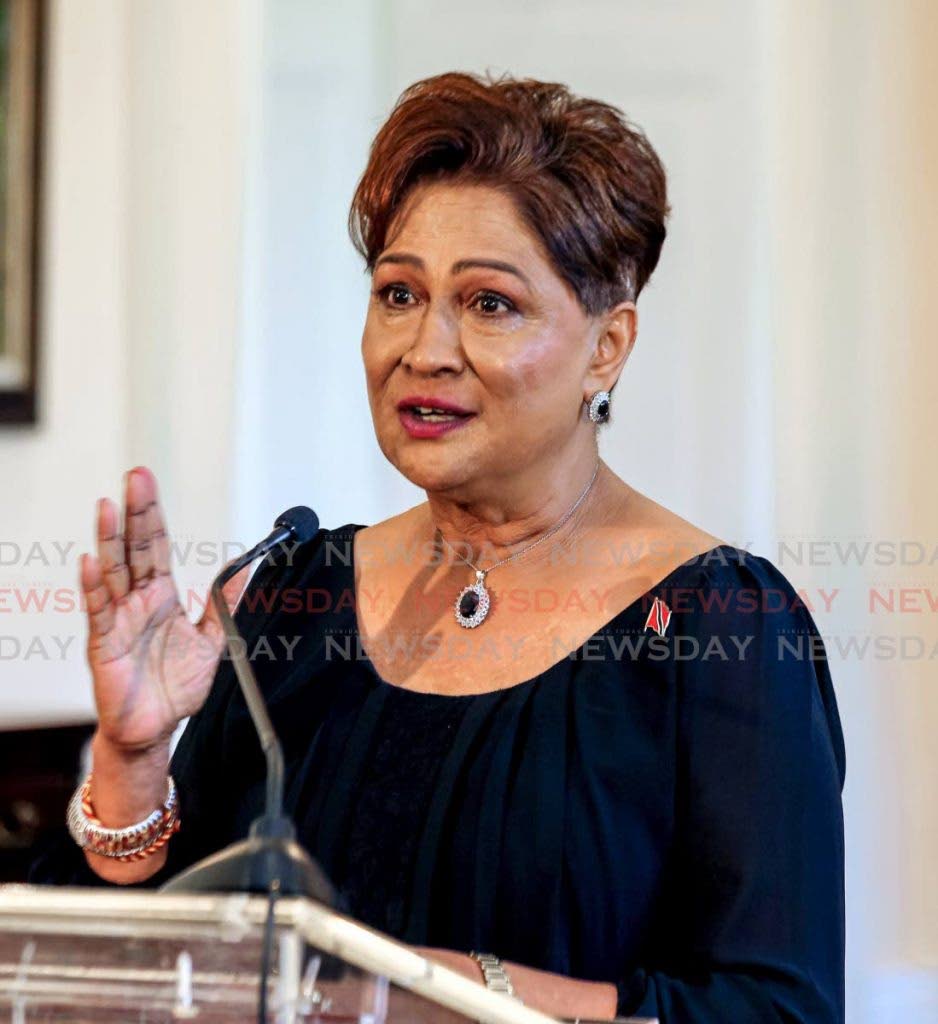
Trinidad and Tobago’s Prime Minister, Kamla Persad-Bissessar.
-
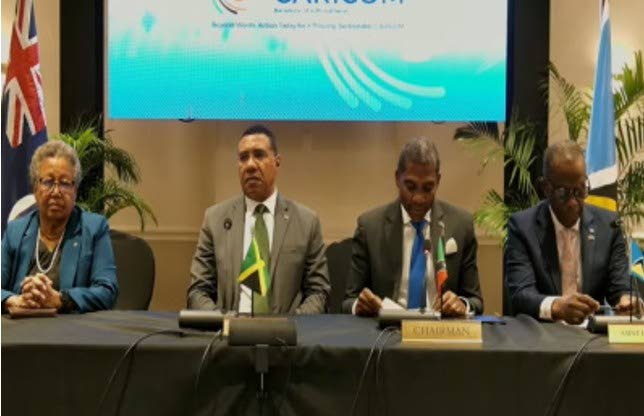 CARICOM Chairman and St Kitts and Nevis Prime Minister Dr. Terrance Drew, second from right, flanked by St Lucia’s Prime Minister Phillip J Pierre, Jamaica’s Prime Minister Dr Andrew Holness and CARICOM Secretary General Dr Carla Barnett at an end-out-summit news conference on February 27.
-
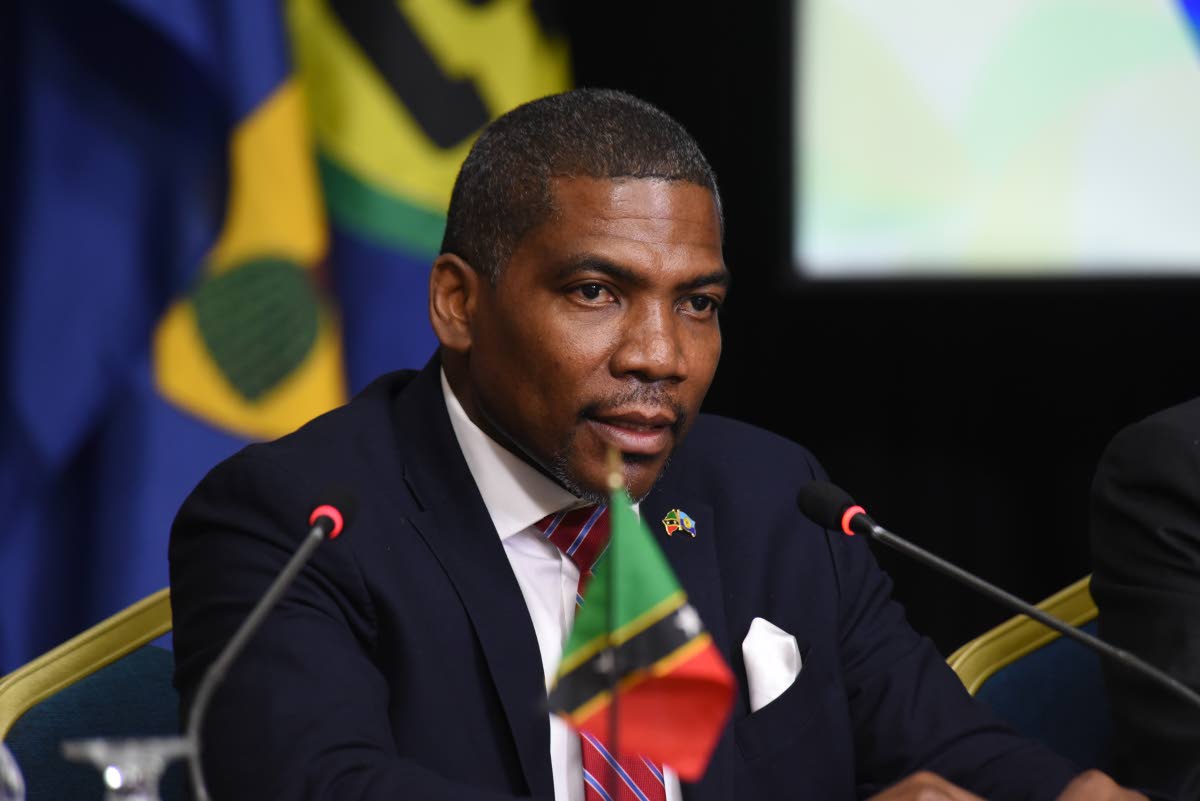 Prime Minister Dr. Terrance Drew, CARICOM chair.
For supporters of regional integration, as expressed by the Caribbean Community (CARICOM), 2025 was, as Queen Elizabeth II characterised 1992, an annus horribilis.
Trinidad and Tobago’s Prime Minister, Kamla Persad-Bissessar, branded CARICOM a failing institution and an unreliable partner that was partial to dictators. She did not attend meetings of the community, mocked member states hit with United States visa sanctions – suggesting these were recompense for “bad-mouthing” America – and rejected CARICOM’s assertion of the Caribbean as a zone of peace. Ms Persad-Bissessar also fully embraced Donald Trump’s Caribbean policies, including the push to remove Venezuela’s President Nicolás Maduro, the oil blockade of Cuba, and the American military’s blowing up of vessels in the Caribbean Sea suspected of involvement in drug smuggling.
The year 2026 has begun just as badly – perhaps worse — for CARICOM. The community faces its gravest crisis in over 40 years, destabilised by a rift with Trinidad and Tobago over the procedures followed in the reappointment of Carla Barnett as secretary general. Trinidad and Tobago has objected to the process and protested that its foreign minister, Sean Sobers, acting as head of delegation, was “disinvited” from a retreat of heads of government at the February CARICOM Summit, where the decision was taken. Ms Persad-Bissessar had left the meeting early.
CARICOM explained Mr Sobers’ absence by stating that he had pleaded the likelihood of seasickness if he were to make the 10-minute sea crossing from St Kitts to Nevis for the retreat.
The issues raised by this fiasco are simultaneously administrative, political, and legal. They encompass the validity of the procedural arrangements for the meeting, the adequacy of background documents provided to heads of government ahead of the decision on the secretary general, and the interpretation of CARICOM’s decision-making rules under Articles 24–29 of the CARICOM Treaty – particularly Article 28, which governs voting by the Conference of Heads of Government.
The existential dangers of the current stand-off are compounded by global crises that are especially debilitating for the small and vulnerable states that comprise CARICOM: the war in the Middle East, which has driven up oil prices and threatens the community’s energy-deficient members; America’s upending of the international order and assertion of hegemony over the Western Hemisphere; and the mounting stresses created by global warming and climate change.
PATHWAYS TO RESOLVE
Short of a disastrous break-up, several pathways present themselves for CARICOM to resolve the impasse.
First, Dr Barnett – on the grounds that she does not wish to become a distraction from CARICOM’s need to manage profound internal and external challenges – could announce that, notwithstanding the vote of confidence from heads of government, she will leave the secretariat at the end of her current term in August. This option, however, may not satisfy all member states.
Alternatively, Dr Barnett, in her capacity as secretary general, and after consultation with CARICOM’s chair, St Kitts and Nevis Prime Minister Terrance Drew, could seek an advisory opinion from the Caribbean Court of Justice (CCJ) on the proper procedures for the appointment or reappointment of a secretary general. Such a request could also clarify the application of Article 28, particularly paragraph three, which addresses what constitutes an “omission by a member state to vote” and the circumstances in which this amounts to an abstention.
Given Dr Barnett’s personal involvement in the matter, she may be disinclined to invoke her office to seek such guidance from the CCJ, which, in its original jurisdiction, is the final arbiter of the CARICOM Treaty.
Conversely, Trinidad and Tobago, viewing itself as the aggrieved party, could bring a case before the CCJ seeking a declaration that the procedures under which Dr Barnett was reappointed violated conference regulations and breached Article 28. Such a ruling would render the reappointment null and void.
Whatever the outcome, a judicial ruling would enhance the court’s jurisprudence and deepen the body of community law, in the tradition of the Shanique Myrie case, which firmly established the right of CARICOM citizens to hassle-free movement within the community and the obligation of governments to uphold that right.
Still, some may argue that although a legal challenge could yield long-term institutional value, the timing is inopportune. Given the fraught nature of the dispute, resorting now to litigation may exacerbate tensions and push CARICOM closer to the brink.
URGENT NEED OF A RESET
As The Gleaner’s Editorial Board recently noted in endorsing P.J. Patterson’s defence of, and call for, deeper integration – along with his prescriptions for a future-proof CARICOM – the community is in urgent need of a reset.
In these circumstances, our preferred course is a political or diplomatic intervention that first cools tempers, allowing heads of government to address the question of the secretary general’s appointment, and CARICOM’s broader challenges, in a less febrile atmosphere. Such engagement could also enable a clearer assessment, outside the rigid setting of a formal conference, of how much of Ms Persad-Bissessar’s still largely unstructured critique of CARICOM is substantive, and how much is performative.
In this regard, Prime Minister Drew, as CARICOM chair, might consider appointing – drawn from eminent and respected regional figures – a ‘good offices’ interlocutor or an Eminent Persons Group, akin to the previous panel comprising Kenny Anthony of Saint Lucia, Bruce Golding of Jamaica, and Perry Christie of The Bahamas, to engage Prime Minister Persad-Bissessar. Mr Patterson readily comes to mind.