JN Foundation helping communities move from relief to resilience
Loading article...
-
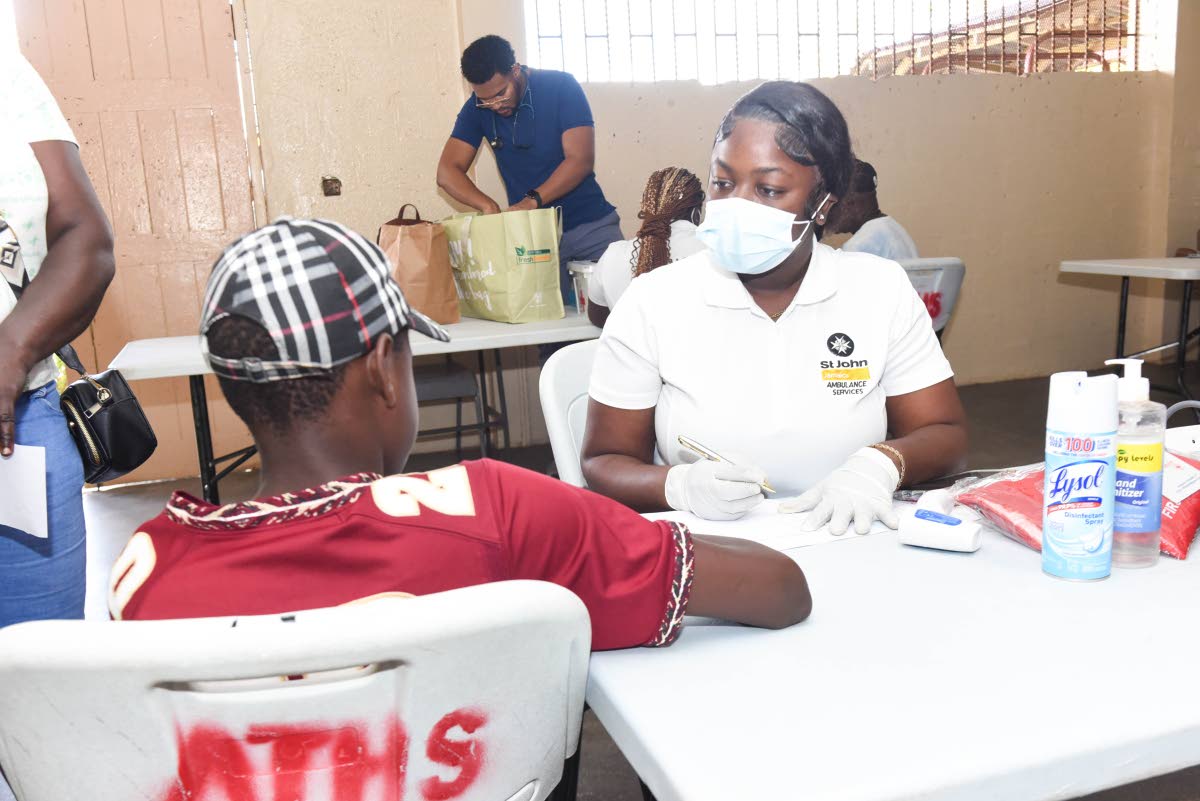 A boy in Albert Town, Trelawny receives a checkup by a St John Ambulance Jamaica medical volunteer in this November 2025 photo as Hurricane Melissa survivors of the rural community attempt to reassemble their lives following the hurricane’s landfall on October 28. The community was among those directly devastated by the category 5 storm that killed more than 40 people in Jamaica. In partnership with St John Ambulance, the JN Foundation has, to date, conducted 27 medical missions reaching more than 1,400 people in nearly 50 communities, especially those in western parishes where the storm’s impact was most severe. Photo - Contributed
-
A boy in Albert Town, Trelawny receives a checkup by a St John Ambulance Jamaica medical volunteer in this November 2025 photo as Hurricane Melissa survivors of the rural community attempt to reassemble their lives following the hurricane’s landfall on October 28. The community was among those directly devastated by the category 5 storm that killed more than 40 people in Jamaica. In partnership with St John Ambulance, the JN Foundation has, to date, conducted 27 medical missions reaching more than 1,400 people in nearly 50 communities, especially those in western parishes where the storm’s impact was most severe. Photo - Contributed
-
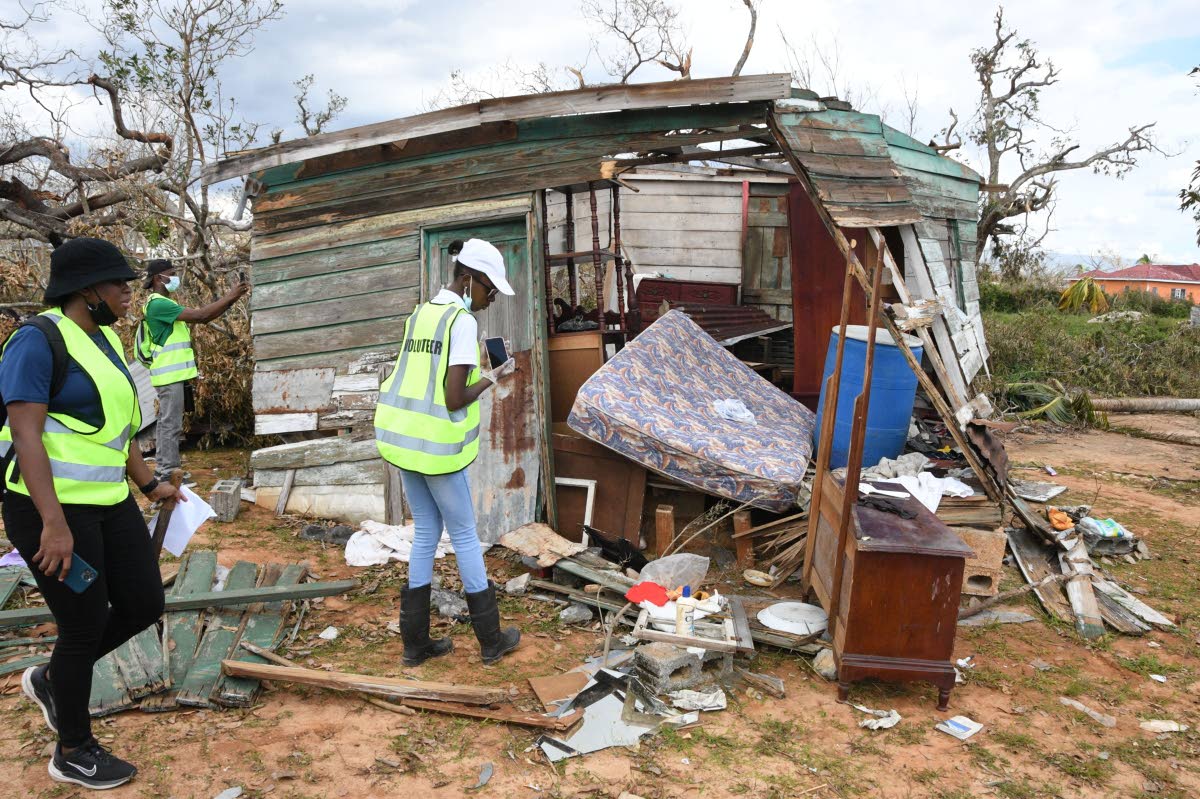 In this November 2, 2025 photo- five days after Hurricane Melissa- JN employee volunteers survey the rubble that was once the home of Vincent Wilson an elderly man, living alone, who was rescued by neighbours in Barton Wharf, Lacovia, St Elizabeth as the hurricane lashed homes in the community. With no access to health facilities, through the efforts of the volunteers and St John Ambulance Jamaica, Wilson and several other residents, many of them elderly, were provided with emergency medical care. Photo - Contributed
-
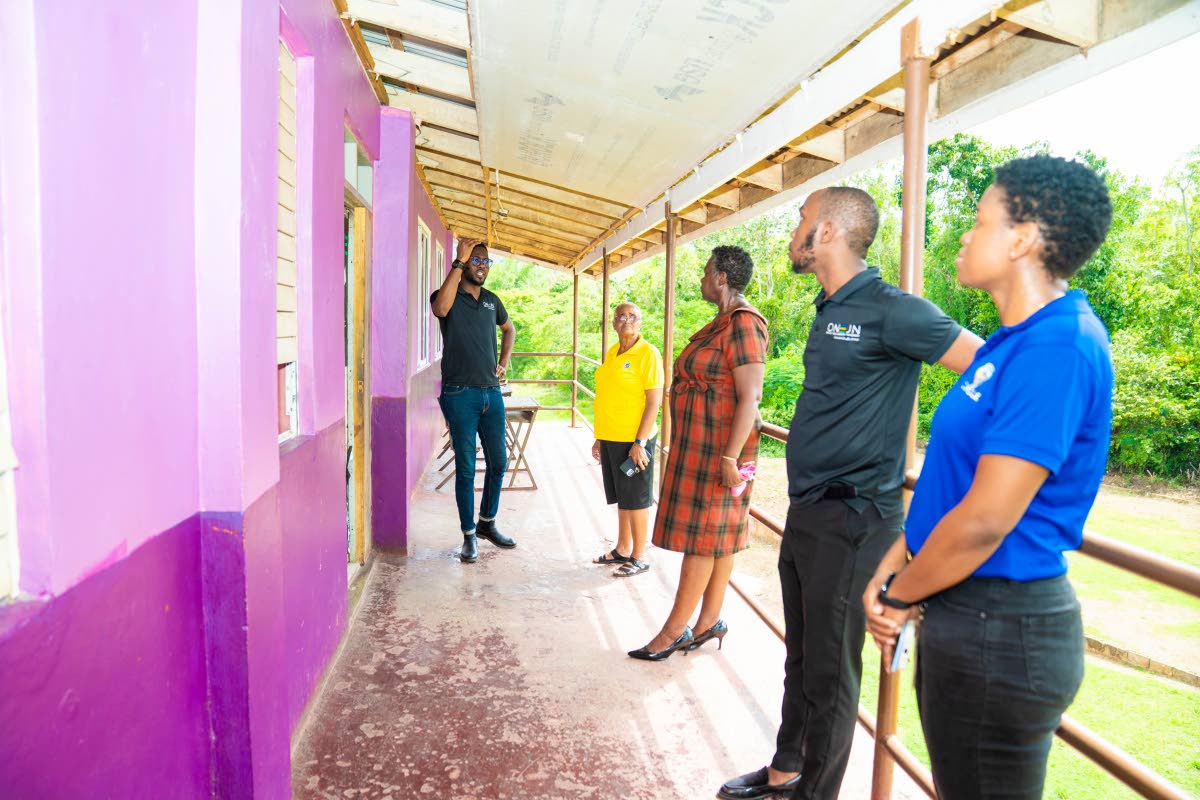 Omar Wright (left), lead for environment and community development initiatives at the JN Foundation, inspects a section of the boxed eave that was damaged by Hurricane Melissa at the Kendal Primary School in Manchester. Inspecting the eave along with him is (from left) Mildred Rattary, treasurer for JN Circle Mandeville; Maxine Headley, principal of Kendal Primary and Infant, and member relations officers at the JN Group De’Ante Livingston and Pilar Ellington. Photo - Contributed
-
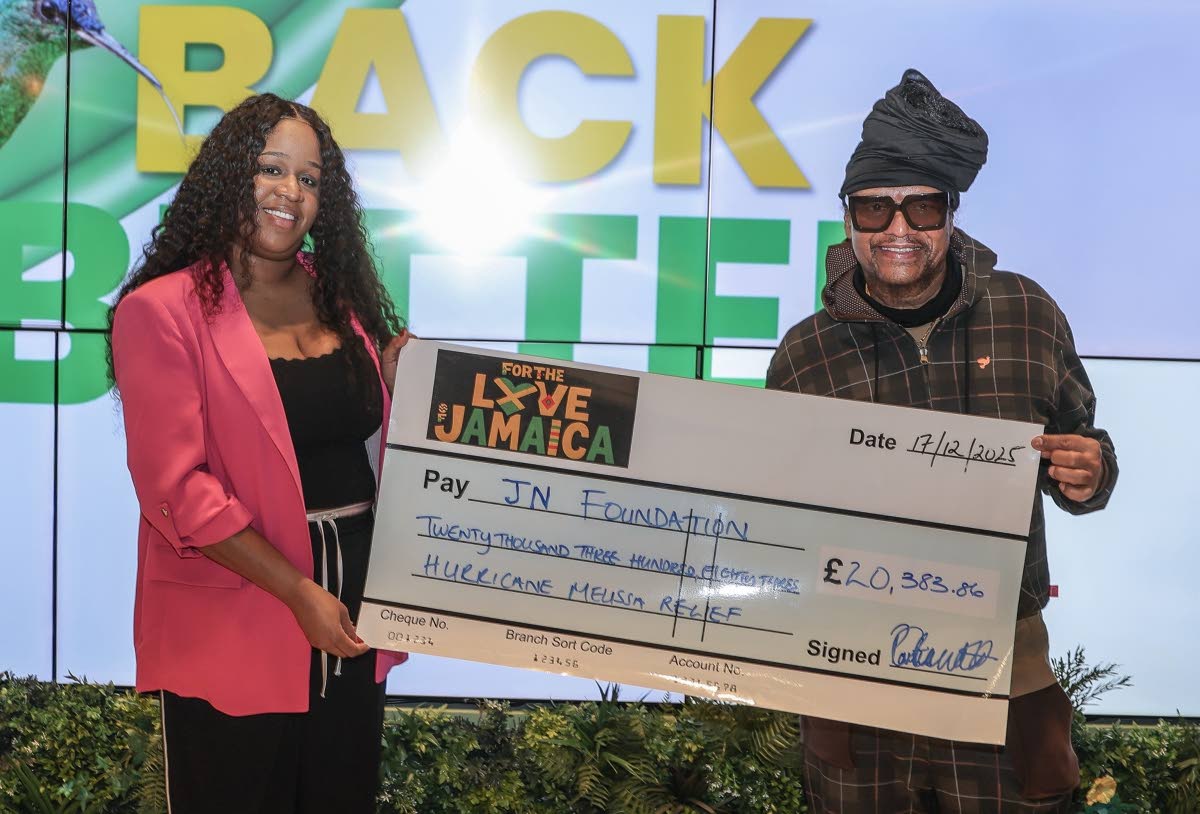 Music executive Portia Clarke-Mellanaise and reggae and R&B star, Maxi Priest, display a symbolic cheque made out to the JN Foundation to assist in its Hurricane Melissa relief efforts. The presentation was made in London, December 2025. The funds were raised through the staging of the ‘For the Love of Jamaica’ Concert held at the Boxpark Wembley in London in November. Priest was among those who performed to some 1,800 people who gathered inside the venue. The event was organised by Clarke-Mellanaise, in partnership with Rampage Sound, Fiona Ramsay, JN Money and the JN Foundation. The Foundation used the funds to support children’s homes, early childhood institutions, homes for the elderly and persons with disabilities, community groups, and first responders in areas most affected by Hurricane Melissa. Photo - Contributed
-
When Hurricane Melissa ripped through mainly western Jamaica on October 28, 2025, Richard Ruddock lost both his home and the small Westmoreland cookshop that supported his family.
Months later, a grant through the JN Foundation gave the father of six an opportunity to restart.
“I can start the business again,” he declared. “I feel happy. I can do something for my youth now.”
Ruddock’s restart is a reflection of the wider journey the JN Foundation has made with hurricane-affected communities over the past year. From meeting urgent needs for food, medical care and basic supplies to helping families, schools and small businesses regain stability, the Foundation has helped to restore livelihoods and prepare people and their communities for future shocks.
As the country observes the first anniversary of the impactful Category 5 hurricane, the Foundation’s response has continued to evolve as it assesses the needs on the ground. To date, 27 medical missions have been conducted reaching more than 1,400 patients across nearly 50 communities, particularly in western parishes where the storm’s impact was most severe.
Immediately after landfall
The work started before survivors could even begin to assess what they had lost. Through the reactivated ISupportJamaica Fund, the Foundation with the help of the JN Group’s UK and Canada teams and JN Money, rallied Jamaicans overseas, friends of Jamaica and corporate partners to contribute cash and relief items. Leveraging its relationships, JN Money, for instance, collaborated with Lloyd Allen’s Soul Session who staged the One Love Jamaica Hurricane Relief Concert in November 2026 in London that was supported by UK-based comedian White Yardie, to raise £7,485 for relief efforts. At the same time, the Jamaican remittance company also collaborated with UK music executive, Portia Clarke-Millanaise who partnered with Rampage
Sound and Fiona Ramsay, to stage for the concert ‘For the Love of Jamaica’ in London featuring renowned UK reggae and R&B singer Maxi Priest. Some 1,800 patrons supported the event which raised a further £20,000, and later in May 2026, JN Money partnered with HYPHNT footwear also in the UK, where proceeds amounting to £5,000 from its one-day footwear customization experience ‘Sole Intent’ were also donated to JN’s relief efforts.
In the end, approximately J$14 million was raised through JN’s and its partners’ efforts, which was mobilised for hurricane relief activities to include medical assistance, food distribution and to support institutions such as the Mustard Seed Communities, which serve vulnerable people.
“The response demanded collaboration and careful planning so that aid was efficiently and safely distributed,” Claudine Allen, general manager, JN Foundation, recalled as she paid homage to early collaborators St John Ambulance Jamaica, which mobilised doctors and other health professionals to serve remote and undeserved communities. Together, JN Foundation and St John journeyed to the hardest hit areas, to help clear roadways, and tend to cuts, bruises and emergencies immediately after the storm.
“As our efforts continued, we noted that the demand for medical services increased with the significant impact on public and private health facilities. However, sustainable measures were needed to keep aid flowing over time,” Allen recounted therefore, the Foundation deepened its partnerships to extend both its reach and strength of its support.
Evolving from relief to recovery
Omar Wright, lead for environment and community development programmes at the JN Foundation, said the response evolved as needs became clearer. Pointing to heightened health risks and the loss of medication and other essentials, he noted that the Foundation pursued partnerships that would expand the mobile medical missions to serve the most vulnerable.
Lutheran World Relief and its humanitarian arm, CORUS, provided funding for additional mobile medical missions and more than US$1 million in material resources, which included toiletries, adult and baby clothing, toiletries, personal hygiene supplies, as well as school supplies.
“We collaborated with the Poor Relief Department, Ministry of Education, Mustard Seed Communities and other groups to facilitate the islandwide distribution of the items,” Wright said, noting “some partners, like the Jamaica Red Cross, offered an established distribution network to further help the assistance reach vulnerable families and children.”
Through the JN Foundation’s efforts, affected entrepreneurs like Ruddock received the opportunity to rebuild their income streams on which their households depended. He recalled the night Melissa wiped out his livelihood.
“Everything blew out in the night. We had a little restaurant, and all of that is gone.” For 67-year-old ginger farmer Dorothy Angus of Point Hill, St Catherine, the storm destroyed crops and her water catchment.
“There is no income coming in, nothing at all,” she said prior to receiving assistance. “Normally, I would be selling ginger and pepper now. But Melissa stopped everything.” She received a grant from the Foundation that has helped her to rebuild the catchment and line her pond so cultivation could resume.
Recovery has also meant making community institutions safe again. In Kendal, Manchester, JN Foundation-funded repairs restored damaged roofs at two early childhood institutions. At Kendal Shiloh Early Childhood Institution, one of the two schools, teacher Denisa Mollison saw the help as a chance to catch up with the curriculum and provide her students with the right foundation despite the circumstances.
“It has been a great help because we can go back to normal, teach them in the best way,” she said, while at neighbouring Kendal Primary and Infant School, Principal Maxine Headley welcomed repairs to loose box eaves that were endangering students.
“For our project to be selected and the box eaves to get fixed, I am very happy, and the school is much safer now,” she said.
“For us at the JN Foundation, the lesson of the past year is that recovery is strongest when assistance restores agency,” Allen summed up the Foundation’s intervention. “There is still much work to be done to help our communities– initiatives now being introduced must focus not only on replacing what was lost, but on helping people recover in ways that allow them to support themselves, strengthen their communities and be better positioned for the next challenge.”