SPARK hits main roads - Next phase to cost $25b, address routes across 11 parishes
Loading article...
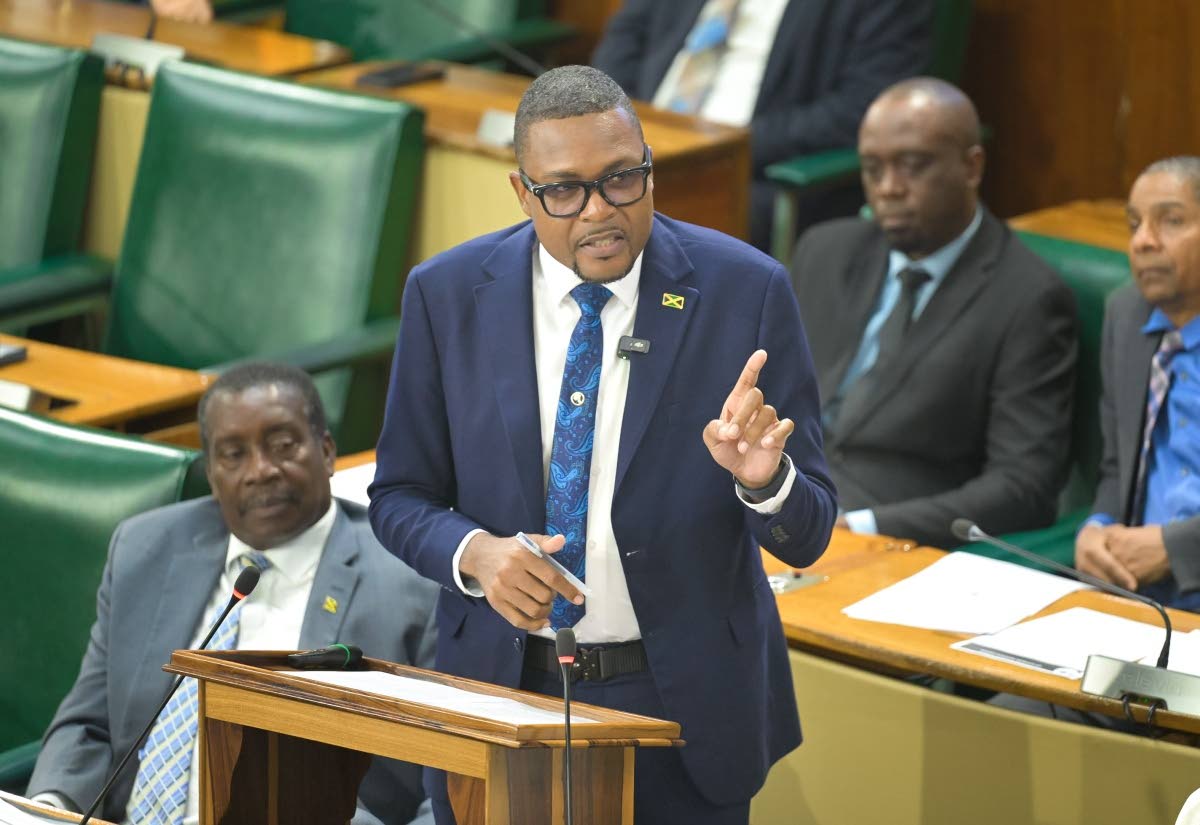
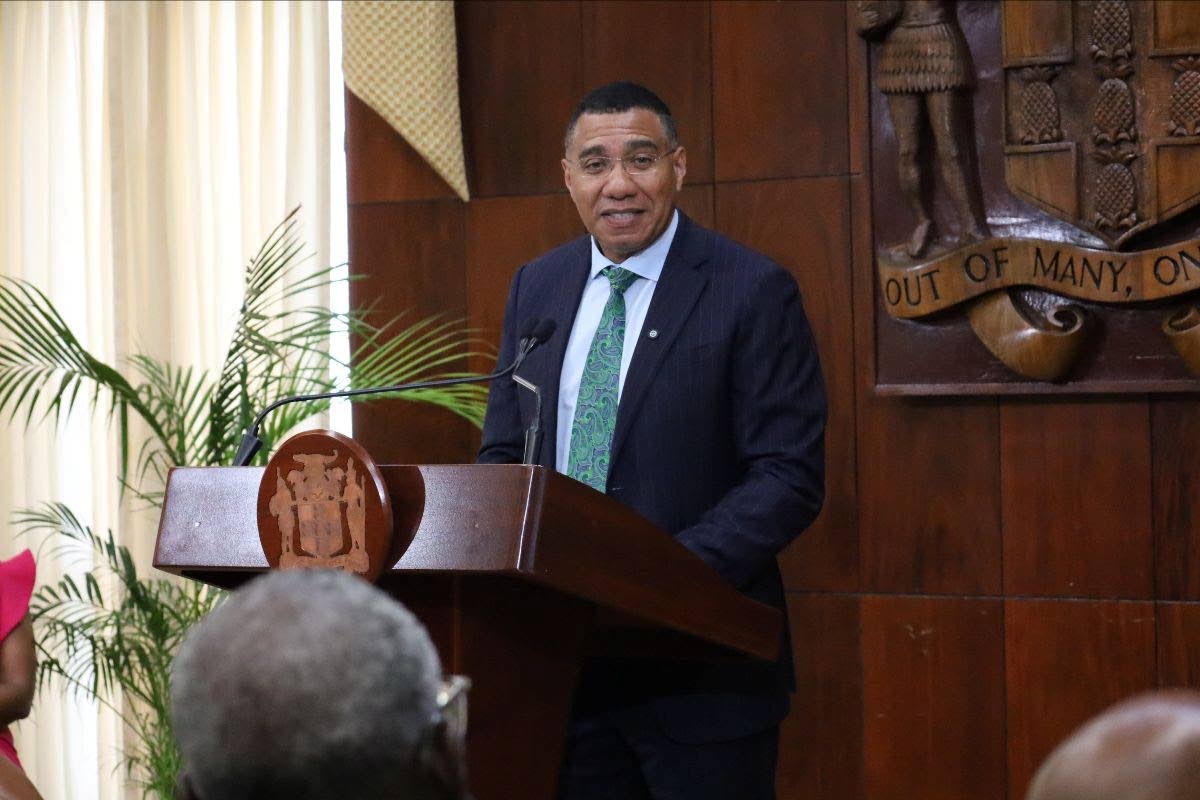
It will cost taxpayers around $25 billion to execute the next phase of the Shared Prosperity through Accelerated Improvement to our Road Network (SPARK) project.
Amid growing discontent over the state of the island’s road network, the Government, yesterday, launched the main road component of the SPARK programme.
The transition into SPARK’s next phase follows the initial iteration, which is still ongoing and focuses on community roads.
Under this phase, 37 main roads are earmarked for significant overhaul, but both Prime Minister Dr Andrew Holness and Robert Morgan, minister with responsibility for works, insisted that the move was not a response to growing protests and public discontent.
The main roads phase addresses critical arterial routes across 11 parishes and will include bridges and gullies along those thoroughfares.
The phase will also include six major roads in St Andrew: Molynes Road (Half-Way Tree to Washington Boulevard), Seaward Drive to Olympic Way, Red Hills Road (Perkins Boulevard to Swain Spring Road), Stony Hill Road to Golden Spring, Cooperidge to Gordon Town to Mavis Bank Road, and Oxford Road.
Among the major roads in St James and Hanover, focus is being placed on the North Coast Highway and sections connecting Montego Bay to Lucea, and in St Ann and St Mary, major rehabilitation is slated for the corridors linking Ocho Rios to Port Maria.
In Clarendon and Manchester, arterial routes leading into May Pen and Mandeville are being prioritised, including Spalding to Cave Valley and Greenvale to Spur Tree.
Nine major roads in St Catherine, including the Spanish Town Bypass (Twickenham Park to Old Harbour Round-a-bout to Brunswick), are on the list for rehabilitation.
Speaking at Jamaica House during the launch, Morgan noted that the roads selected serve a high volume of commuters daily.
“For the first time in Jamaica’s history, more than 300 community roads and 37 main road projects have been identified and presented publicly as priority roads for rehabilitation. In addition, two major grade-separated interventions will address critical congestion points in the Corporate Area.”
With concerns that after millions are spent the roads quickly fall into disrepair, the works minister stressed that accountability would form a crucial part of the programme’s continued execution.
“Where the foundation has failed, it must be corrected. Where drainage is inadequate, it must be corrected. Where waterlines must be replaced, that work must be coordinated before the final surface is applied,” Morgan said.
“The programme must also address culverts, retaining structures, sidewalks, road markings, and other safety features required to deliver a complete road. We are not merely placing black asphalt over existing problems. We are addressing the underlying conditions that caused the roads to fail.
“That is the difference between a quick fix and an enduring investment. The National Works Agency, the contractor, and the consultants, therefore, have a clear responsibility. The work must be properly designed, carefully supervised, independently tested, and delivered to the required standard.”
The prime minister once again emphasised that instead of spending billions on “patching”, the Government is investing heavily in full road infrastructure, with China Harbour Engineering Company as the primary contractor for the project.
Holness, who is also the member of parliament for West Central St Andrew, acknowledged the complaints he has received about poor roads but emphasised that fully repairing Jamaica’s road network would cost between $5 trillion and $7 trillion, an amount equivalent to using the country’s entire budget for five consecutive years.
Work is expected to be completed within the next 15 months, but Holness admitted that the country is being stymied by resource constraints.
“One of the main things for us to be able to fix all the roads in Jamaica, we need contractors. One of the challenges we are facing with the current SPARK programme is that we simply don’t have the horsepower to manage all the roads at once, and the Government is considering how we develop the contractors,” the prime minister said.
“We need to move away from one-man engagements on a short-term basis and operating out of their van to the contractor who is a corporate entity that is invested, with a balance sheet that can fund, finance, and carry out the works they are contracted to undertake and to move them to a higher professional contractor.
“We do have some contractors who are exercising professionalism at that level, but there are some who are not there yet, and we will have to address that.”
The $45-billion SPARK programme was first launched in December 2024.
karen.madden@gleanerjm.com