Huon Wardle | ‘It’s complicated’ can be the start of a richer conversation
Loading article...
-
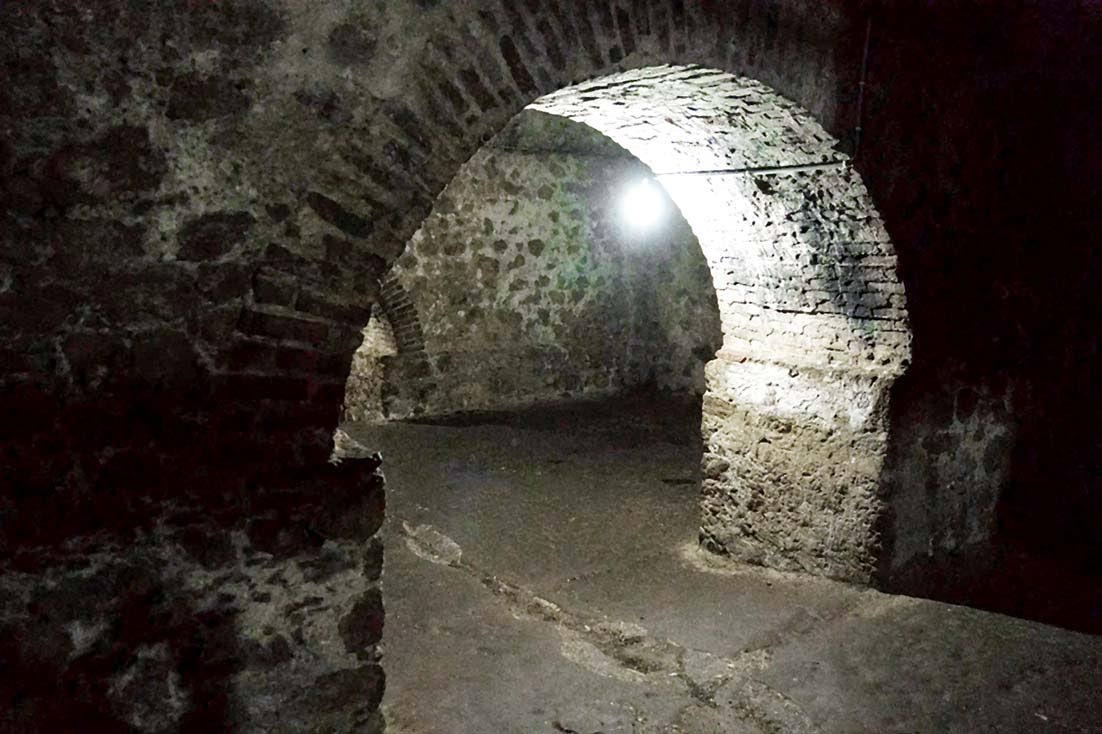 A dungeon at Cape Coast Castle, a “slave castle” used in the trans-Atlantic Slave Trade, is seen in Cape Coast, Ghana. Photo - AP
-
A dungeon at Cape Coast Castle, a “slave castle” used in the trans-Atlantic Slave Trade, is seen in Cape Coast, Ghana. Photo - AP
-
 Huon Wardle. Photo - Contributed
The phrase ‘it’s complicated’ is often used to end difficult conversations. But when it comes to understanding the afterlives of slavery and trying to capture attention to the international reparations agenda, I want to suggest that ‘it’s complicated’ may be where genuine conversation, and a more generous way of listening, begins.
As someone who has been visiting Jamaica for more than 35 years, life on this island keeps reminding me that the histories at stake in the reparations debate don’t reduce to simple slogans. That said, as a British academic visitor, arguing that ‘it’s complicated’ may sound like a delaying tactic. So I had better be careful how I proceed. As people say here: ‘when you have your hand in the lion mouth, sling slow and draw it out’. Let me give three examples of what I have in mind.
On my most recent visit to Jamaica, I dropped in to visit an old friend. I encountered him in some pain with a swollen foot, being advised to drink a preparation of bisi to bring down the swelling. When I first heard that word years ago, my anglophone ears filed it mentally as ‘Busy’ (there is an English garden flower called the ‘Busy Lizzie’). But there is a story hidden here because bisi is the Akan name for the kola nut. In West Africa, not only have kola nuts traditionally been used as medicine, but they were also high-prestige gifts suitable for chiefs and scholars. In Creole languages like Jamaican, the African source is often concealed but continues to exert an influence. So bisi in Jamaica carries centuries of cultural significance that those using the word may not be aware of. Embedded in a small practical act of care are memories of enslavement, forced migration, social and linguistic transformation, and human persistence against the odds. A remedy for a sore foot offers a tiny keyhole glimpse, then, onto the vast history of the Atlantic after Columbus: survivals and reinventions of an African world that slavery and colonialism never entirely erased.
Jumping back three decades to the 1990s, a chance dialogue introduced a different layer of complexity. One evening I was approached on the street by a man who wanted to tell me about his grandfather, who had served in the West India Regiment, travelled to the Gold Coast (now Ghana) in the early twentieth century, and returned to Jamaica with a wife who family memory remembered as an ‘Ashante princess’. Of course, I had no way of confirming the genealogical details before he disappeared into the twilight, but these are anyway less important than that story’s challenge to any simple historical geography. Here was a family history linking Jamaica and West Africa not, this time, through the routes of enslavement alone, but through entangled paths of military service, imperial mobility, marriage, and return.
Finally, this brings to mind another occasion when a Jamaican acquaintance described the trajectory taken by his Maroon forebears from Westmoreland, Jamaica to Nova Scotia then to Sierra Leone, and this was what amazed me most, eventually, full circle, back to Jamaica. Here was my acquaintance, sitting in an office of the Jamaican Ministry of Agriculture, casually recounting one of the most extraordinary multigenerational family journeys I had ever heard! Historically, it confirmed for me that Jamaica was never just a site where slavery happened. Ever since Cromwell annexed the island in 1655, Jamaicans have been people in motion, participating in multiple migrations that have connected and entangled the Caribbean with North America, Europe, and Africa over many generations.
These are only a few of the myriad moments where the vast history of the Atlantic world enters everyday life as word and story. Perhaps we could think of them as a kind of instruction manual for how to make sense of this mind-bogglingly complicated place called the Caribbean.
But how do stories like these add to or change the reparations conversation? They don’t challenge fundamental claims, certainly. The large historical facts remain what they are. As Walter Rodney argued in the 1960s, and the facts keep mounting up, the net effect of the slave trade and colonialism was that Africa and the Caribbean lost out on centuries of potential human development while Europe and North America accrued enduring advantages that remain literally built into infrastructures and institutions. Instead, these personal tales remind us that the consequences of slavery and colonialism were lived through countless individual and family histories, each marked by its own distinct mix of happenstance, suffering, creativity, hope, and adaptation. So the appearance of history in personal stories does not complicate the moral case so much as it makes us pay attention to what has been at stake. Because if we want to repair historical harms, then it matters that these harms don’t simply enter discussion in the abstract as some kind of grand balance sheet of losses and gains. We need to be able to recognise them in human experiences carried forward in memory, symbols, and language, as well as through the often entangled pathways people take through life.
So the question I would ask is this: Once we have laid out the bold facts, how do we keep people engaged in the practice of historical repair? One answer, I would suggest, is to be found in the craft of storytelling itself. As Sylvia Wynter showed, not only is the capacity to tell stories distinctly human, it is through listening to each other’s stories that we come to recognise the humanity in each other. And this is partly because the stories humans tell are never simple. On the contrary, they are how we make sense of the complication that life brings. It is this recognition that human lives are complex, that there are no simple answers for what life throws at us, that keeps us wanting to listen. In turn, listening carefully prompts us to ask more difficult questions.
When we hear intergenerational histories appearing in everyday narratives, we find ourselves asking: ‘What was life truly like for those people at that time?’ ‘How did all this affect the lives and chances of the people who came afterwards?’ ‘What forms of loss and gain, need and obligation are still present in the way these stories are told and heard now?’ ‘How would I have acted in that situation?’ So often, ‘it is complicated’ can be the hook that makes us engage, that prompts us to go on listening with care.
Huon Wardle teaches anthropology at the University of St Andrews. Send feedback to columns@gleanerjm.com