Gordon Robinson | Propaganda in pictures
Loading article...
-
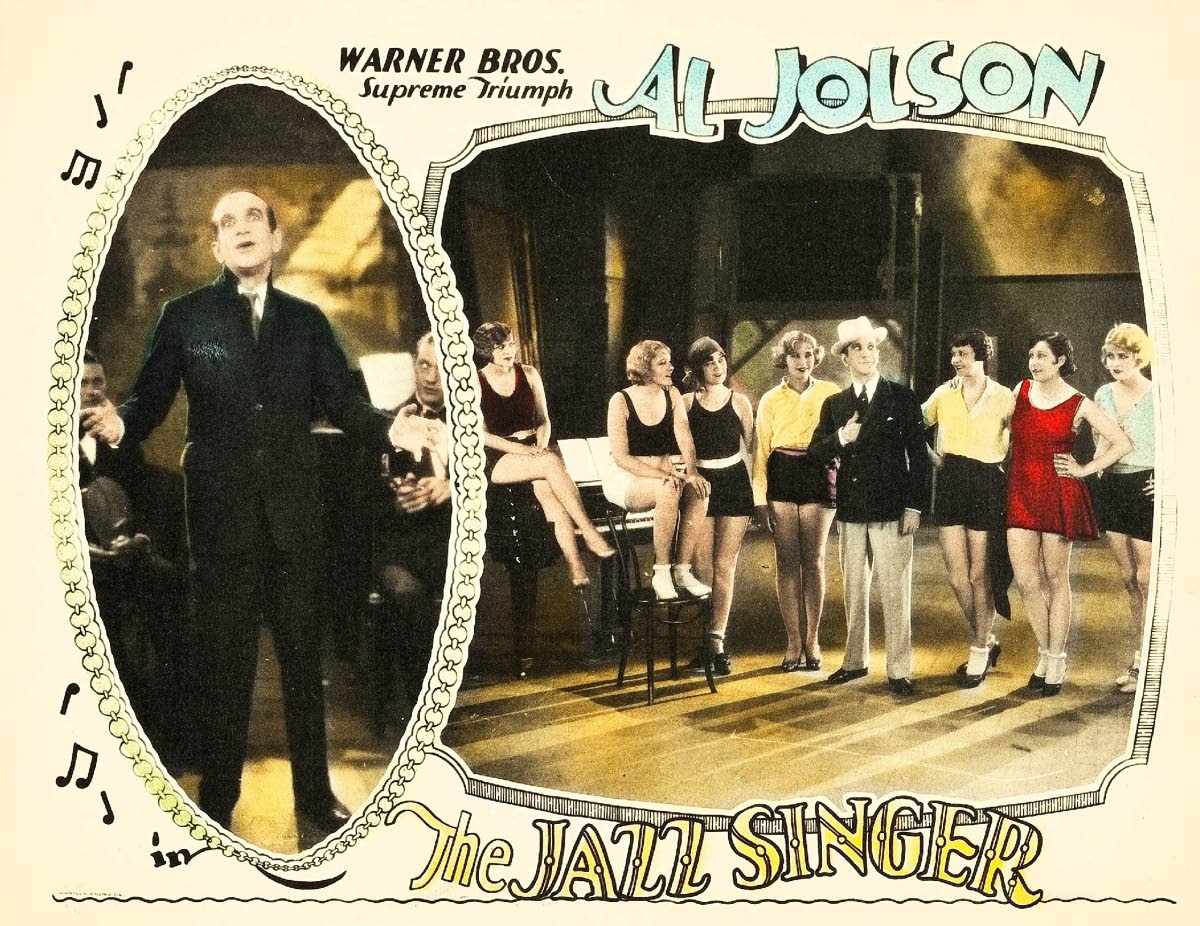 Photo - Warner Brothers / Wikimedia Commons
-
Photo - Warner Brothers / Wikimedia Commons
-
 Gordon Robinson. Photo - Contributed
With apologies to the late, great Charlie Hyatt, when I was a bwoy, movies were exciting events.
Going to the movies, especially drive-in movies, was like a road trip and hotel stay all in one. I remember Boulevard Drive-in where our mother would dress us in pajamas and carry pillows and blankets to go see a movie. I vividly recall one night when, after the movie was over and we were in a slow moving line heading out, her ancient car broke down.
Flap!! Cell phones weren’t invented. There was no internet. She had two young children in the back. But, as has been my lifelong experience, somehow, the Lord always provides. Two cars behind us was her brother.
Her family grew up in circumstances far from privilege next door to Abbie Grannum’s racehorse stables on Arnold Road. She often ate breakfast with the grooms and her brother actually groomed horses for Abbie. The siblings were close.
So he saw our difficulty; stopped and sorted us out quick sticks. To us children it was just another adventure.
We loved the movies. The Old Ball and Chain and Old Grey Balls continued the tradition as we’d regularly take her three terrorists to the drive-in and Carib. I’m happy to announce that the strategy worked as all three are movie buffs. From they were teenagers, with close friend Damion Whyte, SkullDougery (a.k.a. The Computer Wiz; a.k.a. Skullhead III) and The Ampersand co-hosted a long running movie podcast called TUMP ( The Unnamed Movie Podcast) where they talk about movies.
But my most memorable movie moment was listening to my mother tell the story of how she had to peep through bushes from adjacent property to watch the first ever talking movie The Jazz Singer starring Al Jolson.
She was only three when the movie was first released on October 6, 1927, so I suspect that, like most overseas artistic work in those days, the movie took a while to arrive in Jamaica.
Things won’t seem so lovely
when you’re far from home
Here’s what you’ll keep saying
when you’re all alone
Mammy, Mammy
The sun shines east, the sun shines west
but I know where the sun shines best
No, Al wasn’t singing about his mother. A [Domi]No Prize if you can tell me who “Mammy” is. No googling now!
Today’s social media addicts can’t possibly appreciate how thrilling the 1927 premiere in New York City was to audiences who had never heard an actor speak, much less sing, in a movie before. The concept, not only of a movie with audio (a “talkie”) but audio that lined up almost exactly with the image on screen was magic to audiences accustomed to large subtitles set to mostly piano music using specific keys to empathize with the movie’s mood but often in F Sharp.
Movie pianists, who played live in the cinema, often had to improvise quickly while watching the screen so the black keys (including F Sharp major) were easier to get to. F Sharp often became a favourite background to villains doing villainy things like threatening to saw young ladies in half.
I flopped down in my easy chair and turned on channel 2
A bad gunslinger called Salty Sam was a chasin’ poor sweet Sue
‘If you don’t give me the deed to your ranch, I’ll saw you all in half’
And then he grabbed her (and then?)
He tied her up (and then?)
And then along came Jones
Tall, thin Jones
Slow-walkin’ Jones
Slow-talkin’ Jones
Along came long, lean, lanky Jones
Generally speaking, silent movies used a musical theme/motif for villains known as the Mysterioso Pizzicato usually played in a minor key (not specifically F). Along Came Jones by the Coasters was mostly done in A-Flat Minor but they used two specific arrangement techniques to create an illusion of key change
1. The Spoken-Word “Suspense” Bridges: when the narrator says “And then” repeatedly; the instrumentation drops out; and is replaced by a rising chromatic progression of diminished chords.
2. King Curtis’s Saxophone Solo: The legendary King Curtis’s blazing saxophone solo ramps up the energy of the track significantly while the underlying rhythm section keeps the exact same chord pattern and key as the chorus
Thus the song perfectly captures the mood of the old silent movies.
The Jazz Singer was a huge box office success. However, it was another inadvertent exposé of true American values. The film’s prominent use of “blackface”, crudely caricaturing Black Americans would be frowned upon today. Yet Americans continue to use it and USA society ignores this until forced to postpone their standard “see and blind” tactic. Examples abound:
• Jimmy Kimmel: He was forced to issue a public apology after old clips of The Man Show resurfaced, showing him wearing full-body makeup to impersonate NBA star Karl Malone and media mogul Oprah Winfrey.
• Julianne Hough: The dancer/actress faced public backlash after wearing blackface as part of a 2013 Halloween costume to dress up as “Crazy Eyes” - one of my favourite characters from Orange Is the New Black brilliantly portrayed by Uzo Aduba.
• Jimmy Fallon: In 2020, an old Saturday Night Live sketch from 2000 resurfaced on social media showing Fallon wearing dark makeup to impersonate comedian Chris Rock. Fallon issued a public apology.
• Megyn Kelly: NBC cancelled her talk show in 2018 after she defended the use of blackface in Halloween costumes during a live broadcast, asking “what’s racist?” about it.
So you can stop your obsessive castigation of Donald Trump. He may be stupid, racist and narcissistic. But, if so, he’s only the average American. Nothing has changed in America since 1927 when The Jazz Singer was released. At that time America’s racist, jingoistic mindset had driven public policy since 1776.
In the 1960s Martin Luther King led a civil rights movement that achieved legislative success. It didn’t change one single mainstream American mind. Now that their narrow, antediluvian attitudes are proved to be in the majority and can affect national policy, they won’t stop until they’ve erased every single one of the movement’s successes. The genie is out of the bottle and can’t be returned by any future election result.
America the great is back baby. And don’t you ever forget it!
Hollywood experimented with “talkies” long before The Jazz Singer. Warner Brothers already released some 150 movie shorts as well as one feature, Don Juan (1926) that used the Vitaphone system enabling synchronized sound. The Jazz Singer added synchronized singing and spoken dialogue in a feature-length movie.
But it’s a little acknowledged fact that only a quarter of that film had speaking audio. Most of the dialogue was still delivered in the written inter-titles that were silent films’ hallmark. The first genuinely all-talkie feature, Lights of New York, wasn’t released until the following July.
Don’t believe the making of talking movies was just for entertainment. It was also a more effective way for Hollywood to broadcast American propaganda worldwide. So movies portrayed natives as bad “Indians” (although none came from India) and genocidal, land-capturing descendants of Pilgrims as “Cowboys” and good guys.
Spend some time away from your Magic Rectangle. Watch John Ford’s Stagecoach (1939); or Raoul Walsh’s They Died with their Boots on (1941). Unprovoked invasions as cruel and unreasoned as Russia’s of Ukraine; massacres of land owners; and seizing their lands were “campaigns”. The invaders then kindly offered the conquered natives “reservations” to occupy. By 2023 some American filmmakers were trying to correct the record in films like Killers of the Flower Moon (2023; Martin Scorsese).
The Jazz Singer was forward-thinking in its technical aspects but socially backward and unwittingly exposed immoral American values and attitudes which glorified discrimination. Oh, and btw, “Mammy” was sweet home Alabama (a.k.a. “Bammy”) which, in 1927, was only 38% black.
Peace and Love.
Gordon Robinson is an attorney-at-law. Send feedback to columns@gleanerjm.com