Growth & Jobs | Caribbean port leaders bring home European lessons on shore power, electrification and port investment
Loading article...
-
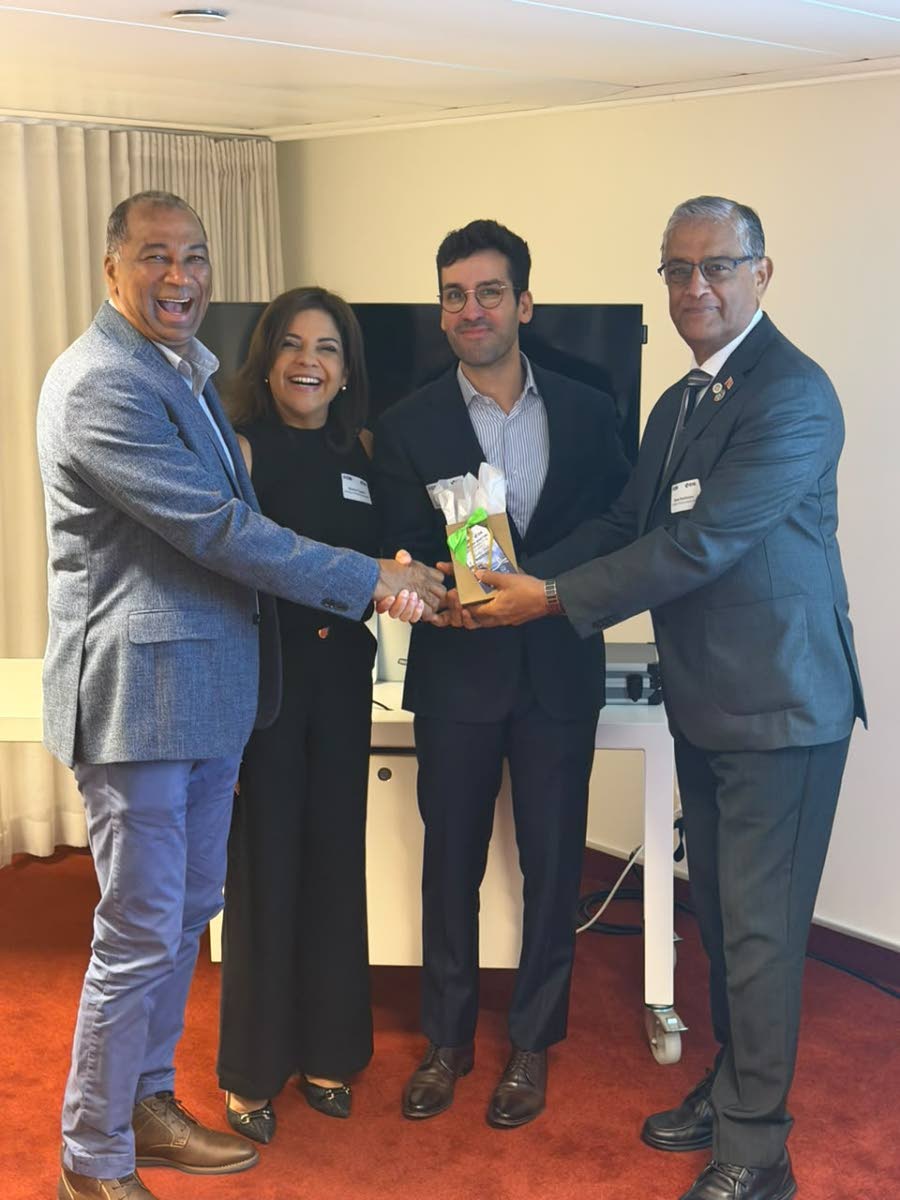 From left: William Brown, president, Caribbean Shipping Association (CSA); Milaika Capella Ras, general manager, CSA; Alexandre Robinet, Zero Emission Port Alliance; and Capt Rawle Baddaloo, chair of the CSA’s sustainability committee, during the CSA–IDB study visit to European ports, September 2026. Photo - Contributed
-
From left: William Brown, president, Caribbean Shipping Association (CSA); Milaika Capella Ras, general manager, CSA; Alexandre Robinet, Zero Emission Port Alliance; and Capt Rawle Baddaloo, chair of the CSA’s sustainability committee, during the CSA–IDB study visit to European ports, September 2026. Photo - Contributed
-
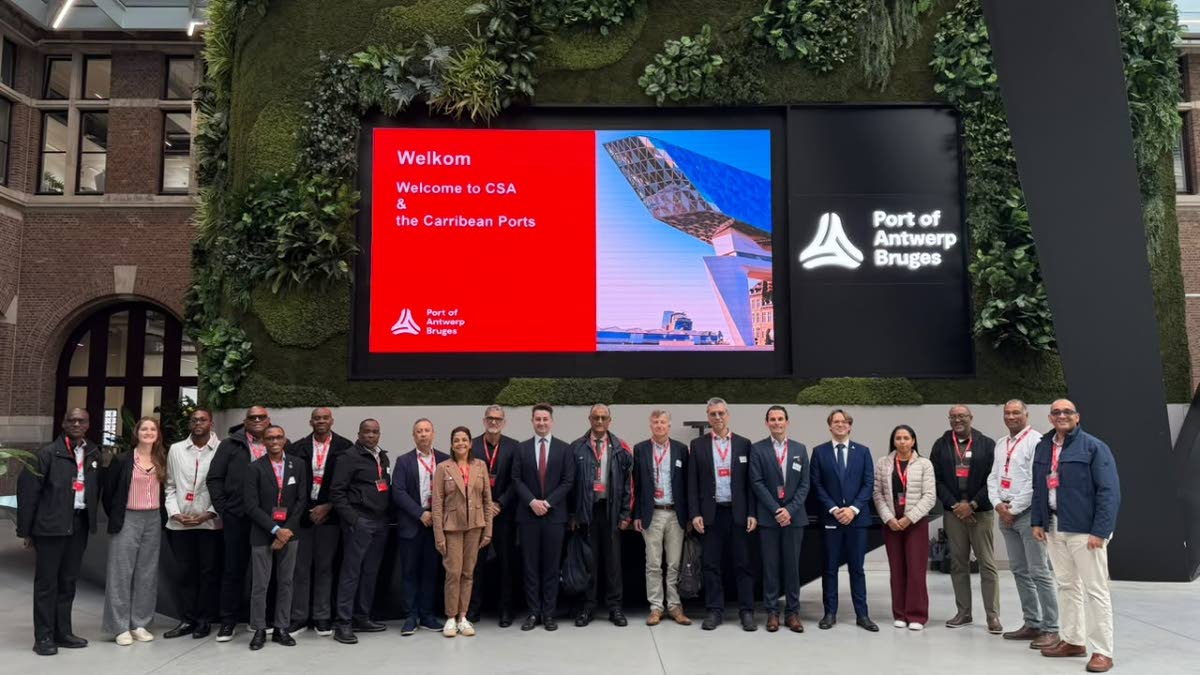 Caribbean port and maritime leaders, with representatives of the Caribbean Shipping Association (CSA) and the Inter-American Development Bank (IDB), at the Port of Antwerp-Bruges during the CSA–IDB study visit to ports in the Netherlands and Belgium, September 20–25, 2026. Photo - Contributed
ANTWERP, Belgium:
Port leaders from six Caribbean countries have identified potential priorities for cleaner, more resilient and more competitive operations following a five-day study visit to three of Europe’s leading ports, organised by the Caribbean Shipping Association (CSA) and the Inter-American Development Bank (IDB).
Caribbean ports face increasing pressure to improve operational efficiency, reduce emissions, strengthen resilience to natural hazards, and remain competitive in a rapidly evolving global maritime industry. The visit examined how European ports are responding to the same pressures, and which of their approaches could work at Caribbean scale.
The delegation’s findings will inform a report by the Caribbean Maritime Sustainability and Resilience Study Group: The Role of Ports, a joint CSA–IDB initiative, and will help shape the next phase of regional cooperation on sustainable port development. At the closing session, participants reviewed the lessons of the week and identified potential priorities for follow-up at their home ports.
“The value of this visit was seeing how ports move from ambition to implementation,” said Milaika Capella Ras, general manager of the CSA. “We saw how projects are planned in stages, how partners work through energy and financing constraints, and how sustainability can be built into everyday port decisions. Our task now is to identify what is practical for each of our ports and transform these insights into actionable initiatives when we return home.”
powerful engines of trade
In Rotterdam, the delegation examined how port authorities support growth and private investment, alongside hydrogen and carbon capture infrastructure and the electrification of cargo- and container-handling equipment. At North Sea Port, which spans the Dutch–Belgian border, discussions covered cross-border governance, digital terminal operations, and shore power, which allows docked ships to draw electricity from the grid instead of running their engines. In Antwerp, meetings focused on terminal energy programmes, circular economy projects, workforce development, environmental benchmarking, and green shipping corridors, trade routes on which ports and carriers work together to introduce low- and zero-emission vessels.
“The visit highlighted that the future of ports and energy systems are increasingly interconnected,” said Roberto Aiello, Caribbean Energy Coordinator at the IDB. “Whether discussing shore power, electrification, hydrogen, alternative fuels, or energy efficiency, it is essential to align port development with energy planning. Building resilient and sustainable energy systems will be key to the future competitiveness of Caribbean ports.”
“Modern port authorities do more than manage infrastructure — they shape markets, unlock investment, and drive innovation,” said Pablo Guerrero, Group Head for Caribbean Countries and Lead Transport Specialist at the IDB. “This study tour showed how world-leading port authorities treat land as a strategic asset, plan for the long term, and create the conditions for private operators and private investment. That model can help Caribbean ports build stronger growth ecosystems, become more competitive, and serve as powerful engines of trade and economic growth.”
changing maritime industry
Delegates from Barbados, Curaçao, the Dominican Republic, Jamaica, Saint Lucia, and Suriname took part, alongside representatives of the CSA and the IDB. The delegation also met the European Sea Ports Organisation (ESPO), terminal operators, technology providers, and technical organizations. The three host ports brought in specialists from other cities in the Netherlands and Belgium and from elsewhere in Europe, some of whom travelled specifically to meet the Caribbean delegation. GrayShip BV coordinated the European itinerary.
“Caribbean ports operate at different scales and under different conditions, but we share the need to prepare for a changing maritime industry,” said William Brown, President of the CSA.
“We have to be realistic about what each port can take on,” said Capt Rawle Baddaloo, chair of the CSA’s sustainability committee. “The most effective starting point is a clear understanding of local needs and capacity, followed by projects that can be phased, funded, operated, and maintained over time. That is how the lessons from this visit can become lasting progress.”