William Hunt | From pristine beaches to Caribbean energy powerhouse
Loading article...
-
 William Hunt
-
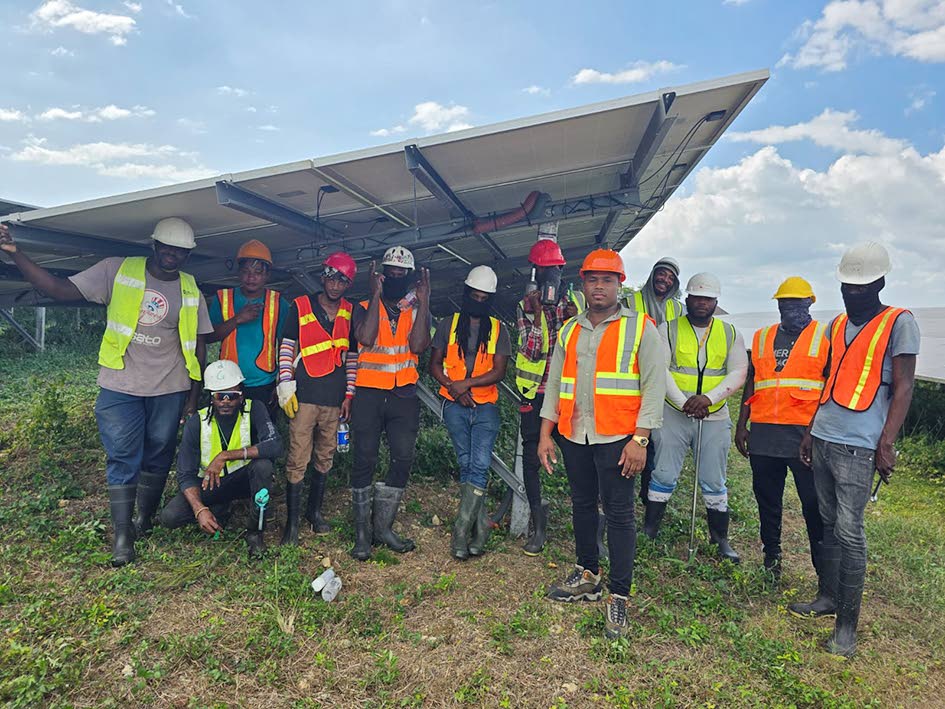 The Elite Contractors team gathers for a group photo at the site of a solar energy project at the Caribbean Maritime University.
As Jamaica and the wider Caribbean continue to attract attention from across the world, many are interested in the next step in the region’s development. Students enrolled in the Oxbridge Institute for Advanced Studies have sought to weigh in on what should be the region’s focus in the years to come.
Today, it is estimated that tourism and its supporting industries account for 27.2 per cent of Jamaica’s GDP. This not only shows how proficient the country has been in cultivating the industry, it is also a testament to the admiration tourists from around the world have for the island’s culture, hospitality and beauty.
Notwithstanding that, this reliance on the sector represents a major vulnerability, as disruptions like natural disasters can lead to a major economic downturn for the economy.
Major Vulnerability
For years, resorts like Sandals and Half Moon have spearheaded the expansion of Jamaica’s tourism sector. The Planning Institute of Jamaica estimates that the sector has experienced an impressive 36 per cent growth over the past 30 years. However, despite the success Jamaica has experienced, events like Hurricane Melissa and the COVID-19 pandemic have shown how returns from the sector can be easily diminished.
The COVID-19 pandemic is a classic example of this. When the pandemic first hit, the fallout decimated the island’s tourism industry. For instance, it is estimated that tourism inflows collapsed from US$3.64 billion to US$1.26 billion in 2020, with total visitor arrivals falling from 4.3 million in 2019 to 1.33 million in 2020.
Even though COVID is likely to be a once-in-a-lifetime catastrophe, it cannot be said that disruptions to the island’s tourism industry are a once-in-a-lifetime event. Hurricanes are a constant recurring issue that continues to jeopardise Jamaica’s economy, especially when damage is done to the tourism industry.
Pivot to Renewable Energy
These situations serve as a constant reminder as to why Jamaica needs to diversify away from tourism. This is a matter of utmost urgency. Instead of mainly focusing on hospitality, Jamaica should turn to renewable energy development as the focal point of the country’s economy.
Progress has already been made in this endeavour, with the Jamaica Public Service Company investing US$300 million to build the largest solar plant in the country, while Wigton Windfarm continues to expand, with new sites currently in development.
All of this is a part of a larger US$2.8-billion push by the government to modernise the country’s energy systems. This serves the larger goals of achieving the target of having 50 per cent of energy produced being renewable energy by 2030.
However, Jamaica should go beyond just developing new plants, it should also seriously consider the production of these new technologies. Spain shows that targeting this industry can be extremely lucrative.
Decades of investment have led to the European nation boasting of having the second largest wind turbine fleet on the continent. Supporting this expansion is 250 wind-manufacturing facilities and 39,000 workers nationwide. Consequently, cheap solar and wind power have lowered electricity costs and boosted the competitiveness of Spain’s manufacturing industry.
Jamaica possesses similar natural resources of sun and wind like Spain. If the country focuses on building the domestic renewable manufacturing industry, there is substantial potential to create durable jobs, reduce fossil fuel dependence, and establish an export industry immune to both rare and recurring disasters.
William Hunt is an incoming freshman at the Wake Forest University in North Carolina. He is interested in expanding the adoption of renewable energy technologies across the private sector.