Messing with the mace
Loading article...
-
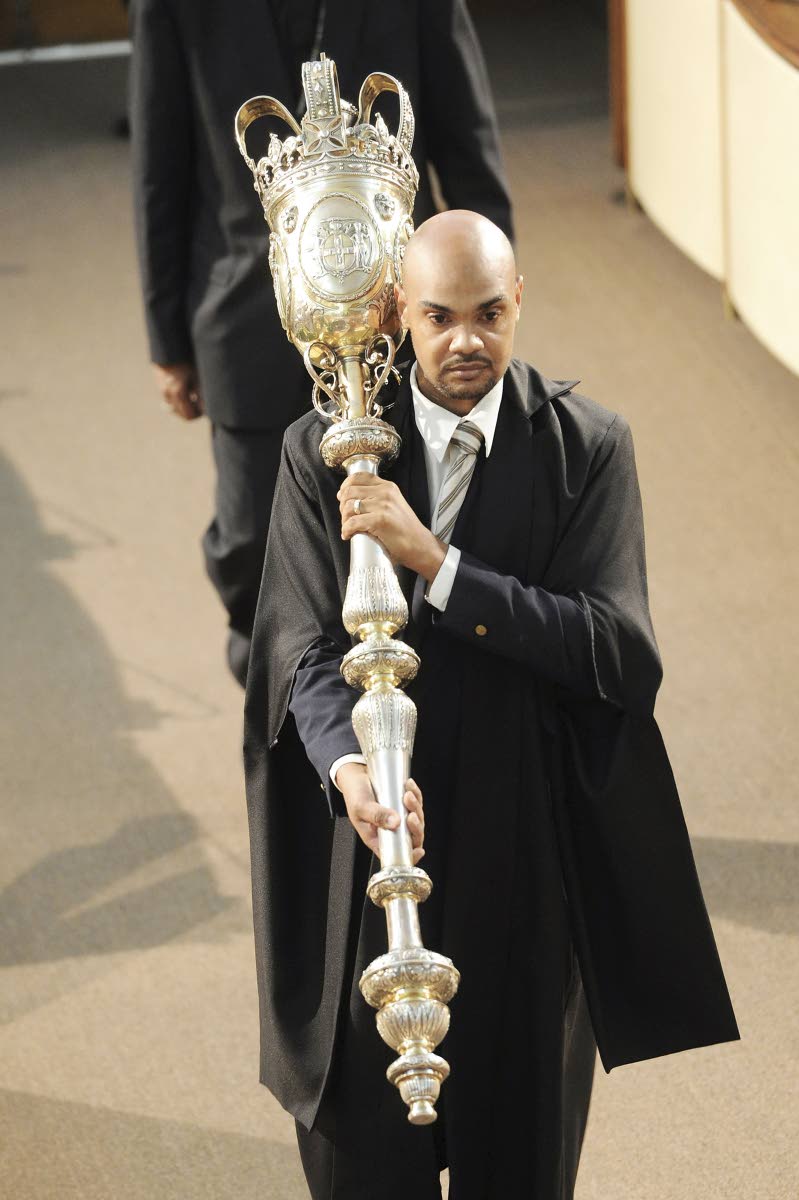
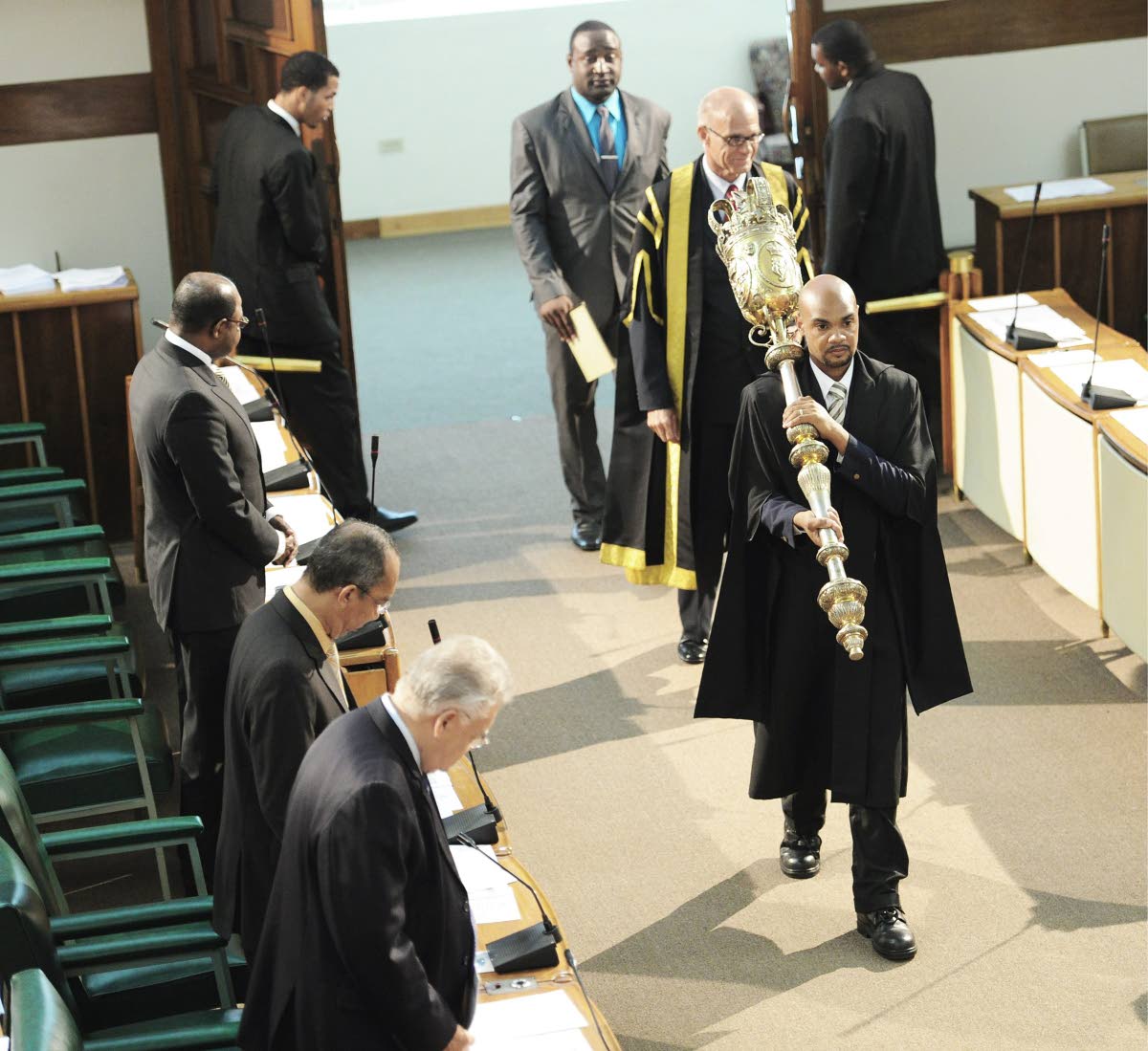
The then new House marshal, Kevin Williams, carries the mace during the opening of the new session of Parliament in 2012. The current House marshal is Captain Wayne Blake.
-
-
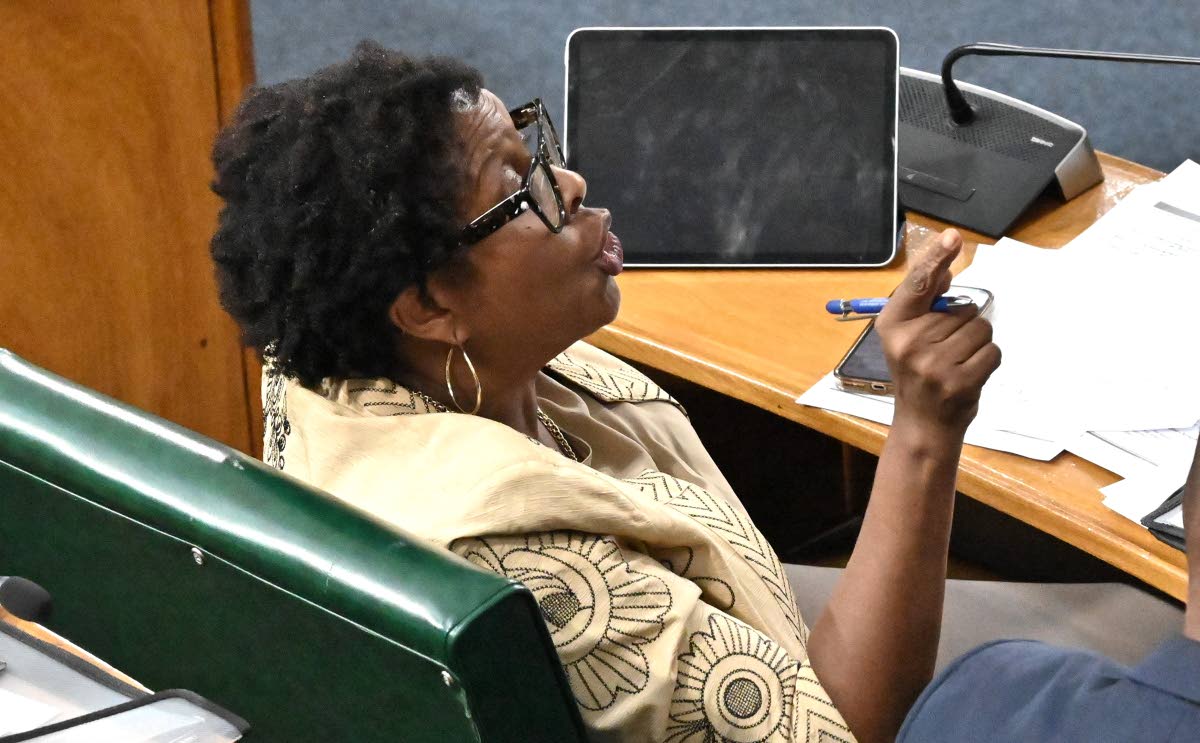 Angela Brown Burke, opposition member of parliament.
-
When Member of Parliament for St Andrew South Western Dr Angela Brown Burke hoisted the mace from “under the table” while the committee of the whole House examined the controversial National Reconstruction and Resilience Authority (NaRRA) bill on Tuesday, there was a predictable outcome – chaos ensued.
The parliamentary Opposition had made their position clear from early in the debate that they did not intend to support the NaRRA bill in its current form and demanded meaningful changes to insert effective oversight in the proposed law. The NaRRA bill gives sweeping powers to the chief executive officer of the authority to spend billions of dollars towards reconstruction efforts post-Hurricane Melissa without a strong oversight framework.
As the committee conducted its deliberations into late Tuesday, a video shared with The Gleaner showed that Brown-Burke left her seat and advanced towards the mace, the symbol of authority by which Parliament meets to pass laws, amend legislation or repeal them.
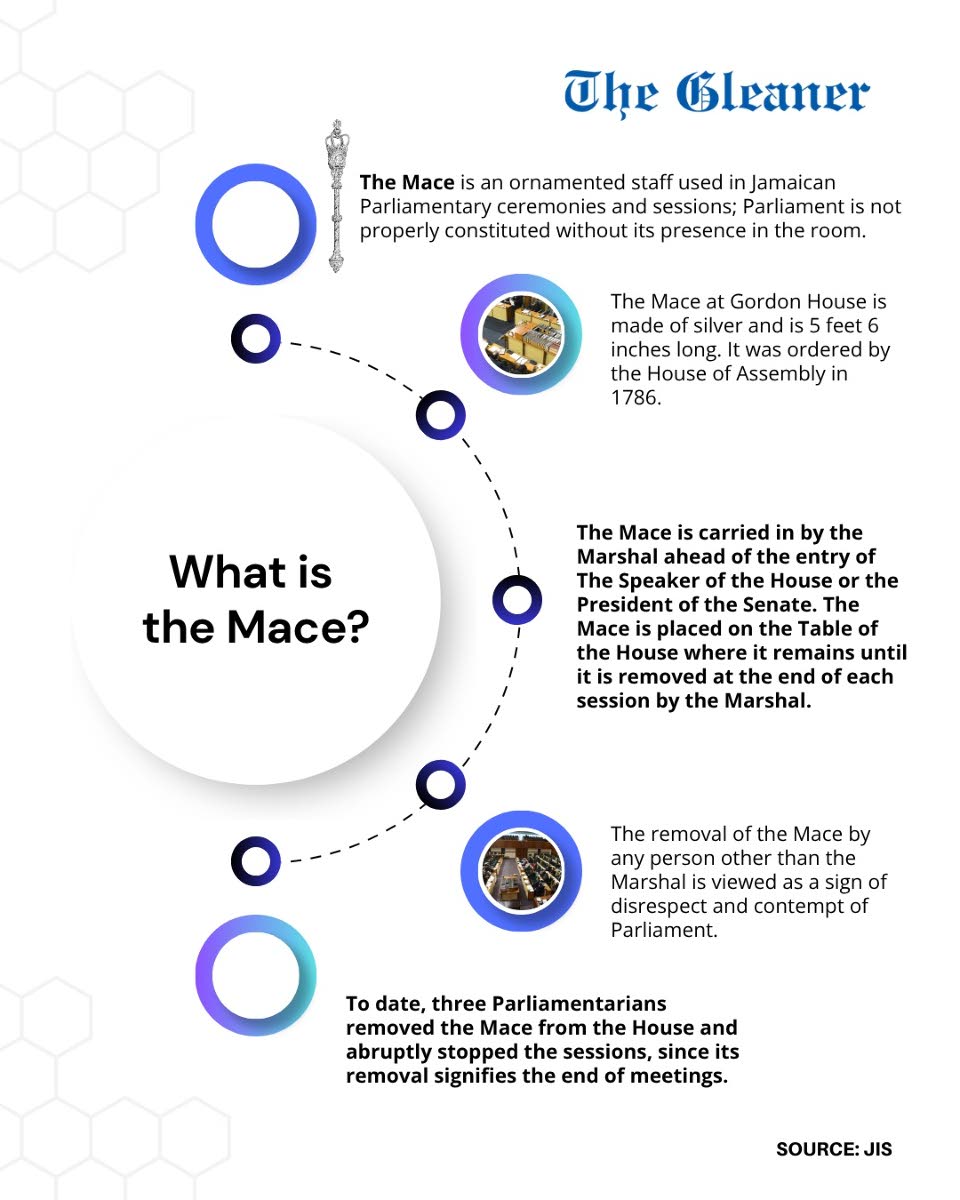
At the start of each day’s sitting, the presiding officer is preceded by the Marshal bearing the mace, and the mace is placed on the table of the House. When the House resolves into a committee of the whole and the presiding officer functions as chairman, the mace is placed under the table.
Notably, Brown Burke, in a seeming jest, took up the mace, put it down and repeated her action, then turned to engage members on the government side.
The Opposition MP’s action drew a sharp and swift response from chairman of the committee, Juliet Holness, who demanded that Brown Burke leave the chambers. “Marshal, please, Angela Brown Burke, I name you. Marshal go for her,” she declared.
A motion was subsequently moved by Leader of Government Business Floyd Green for Brown Burke to be suspended for the rest of the sitting. However, when the Marshal, Captain Wayne Blake, approached Brown Burke to usher her out of the Chamber, Opposition members encircled her and broke out into a popular Gospel chorus singing, “I shall not, I shall not be moved”.
After a short break, Opposition members left the chamber, and Brown Burke did not return with them when the House resumed.
Former Leader of Government Business Derrick Smith said Brown Burke was “completely out of order” and that the action of House Speaker Holness was appropriate for the infringement.
“I am wondering if she was ignorant of the Standing Orders or she was ignorant of the repercussions of removing the mace,” he said, while speaking with The Gleaner yesterday.
Smith also chided members of the Opposition who seemingly sided with Brown Burke after she committed the breach.
“Speaker Holness was completely correct in her actions to have her removed from the House,” he said.
Asked if further action should be taken against Brown Burke, the former veteran parliamentarian and House leader said he would not recommend any further disciplinary measure, as it was a one-off action from the Opposition lawmaker.
Brown Burke has been a member of parliament for about two terms.
One former senior member of the People’s National Party, who asked not to be named, said he believed the issue was being blown out of proportion as the member may have lifted the mace without ill will and was just creating a little drama.
The removal of the mace in Jamaica’s parliamentary sittings might be rare but not new. In December 2003, then Opposition MP Edmund Bartlett, in an uncharacteristic move, lifted the mace and sprinted with it to bar the front door of Parliament. In its story of the incident, The Gleaner headline screamed: ‘Pandemonium in the House’.
But what triggered the incident? Bartlett wanted to move a suspension of the Standing Order to allow for a motion moved by the then leader of Opposition business to be debated.
However, the then deputy speaker, the late O.T. Williams, had adjourned the House amid a loud chorus of “No, no, no” from the opposition benches.
As Williams descended from the Speaker’s chair to make the 15-metres walk along the centre aisle to the bar of the House (front door), Bartlett got hold of the mace and rushed towards the door, using the parliamentary symbol to block the exit of the Speaker from the Chamber.
Bartlett was assisted by members of the Opposition, while government members, on the other hand, tried to force the door open. The government members ultimately succeeded in opening the door and the Speaker exited the chambers.
The following week, then Speaker of the House Michael Peart said the “seizing of the mace by Mr Bartlett is a grave violation by all accounts. No one is permitted to touch the mace other than the marshal, once he accepts it from my office, brings it into this Parliament, and returns it to my office”.
Bartlett then offered his unreserved apology for what he said was “a critical departure” from the accepted practice and principle of the House.
“To the extent that my own action, Mr Speaker, did in fact contravene those rules and those principles, I offer to this chamber, to you, Mr Speaker, and to the country at large my personal apology.”
A search through Hansard – the official records of Parliament – has revealed that on October 17, 1968, Hugh Lawson Shearer, then prime minister, rose to give a ministerial statement and was cut short in his tracks by Opposition lawmaker Maxwell Carey, who left his seat and removed the mace from the table of the House.
While removing the mace, Carey said: “I am protesting because I think this is intellectual murder.” The member then walked away bearing the mace to the opposition benches.
When asked by the then Speaker, Eugene Parkinson, to give a reason for his conduct, Carey said he wanted to register his protest against the barring of Pan-African socialist and University of the West Indies lecturer Walter Rodney from Jamaica, noting that the then prime minister, Shearer, “did not even give an opportunity to the gentleman to reach his yard and to see his wife and child”.
Carey then left the chambers without further comment. Speaker Parkinson said he deplored the conduct of the opposition MP, calling it “unparliamentary”.
“It is unprecedented and I hope there will be no recurrence of acts like this,” Parkinson declared.
However, messy mace debacles are not confined to the local jurisdiction. In December 2018, Labour MP in Britain, Lloyd Russell-Moyle, in the House of Commons, seized the mace in protest against a decision by then British Prime Minister Theresa May to call off her Brexit vote.
When the government declared it would not continue with the withdrawal debate, Russell-Moyle grabbed the mace, held it up in the centre of the chambers to a chorus of outrage from the Tory benches.
Conservative MPs called for his expulsion, saying he was a disgrace as the Labour MP raised the mace aloft.
He eventually handed the mace back to Commons officials and was suspended by the Speaker for the rest of the sitting.
edmond.campbell@gleanerjm.com
More Mace Moving
In April 2008, Gleaner contributor Ken Jones, in highlighting cases of ‘Disorder in the House’, wrote:
“ Another six-month suspension was received by Mr Keble Munn who did not raise the level of his voice. Instead, he demonstrated his disagreement by swiftly removing the Mace from its place and heading for the door, thereby bringing the sitting to an abrupt end. That was in ‘69, 19 years after the maverick F.L.B. Evans had done the same thing, for the first time. He got only one month’s suspension. Then there was Maxie Carey, who repeated the offence in 1968 and was barred for two months.”