Forgotten Frontier
Loading article...
-
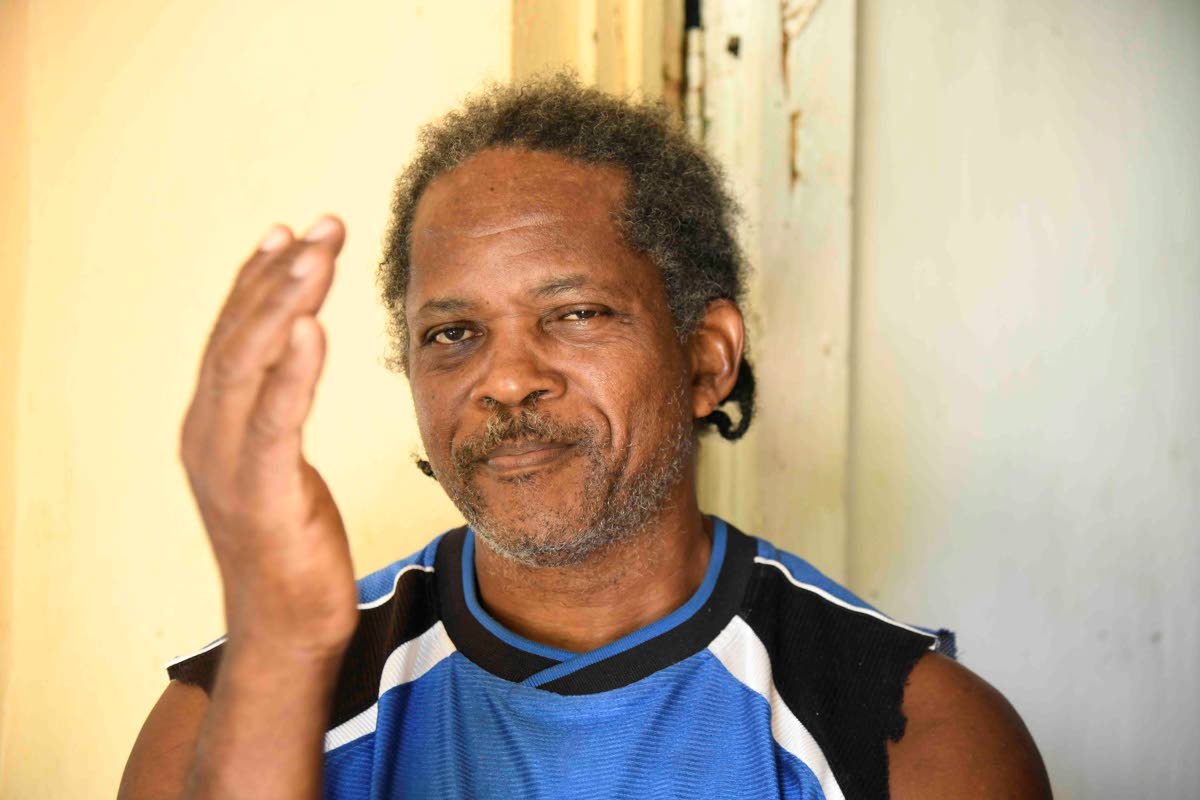 Neville Clarke said the accomplishment of owning a home has been dampened by the fact that he has, for years, been living without basic social amenities.
-
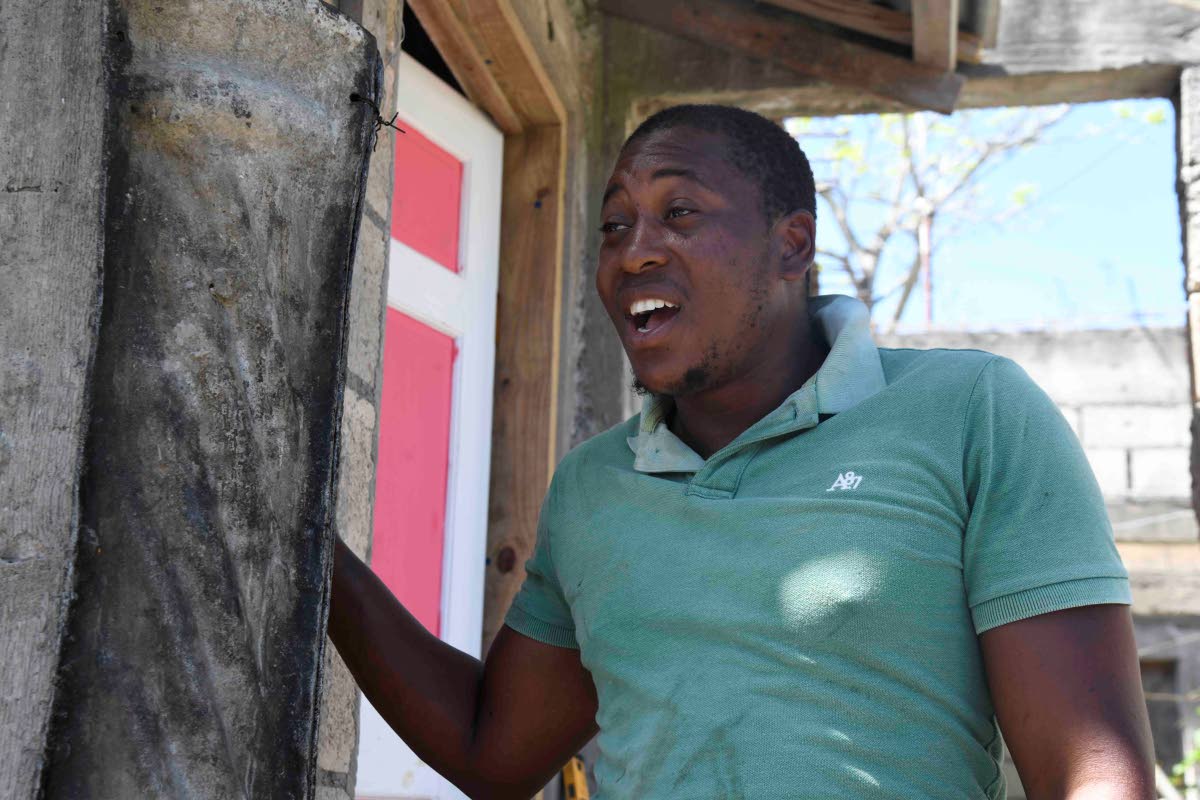 Father-of-three Steve Ashman lamented the additional expense of purchasing water almost every other week.
-
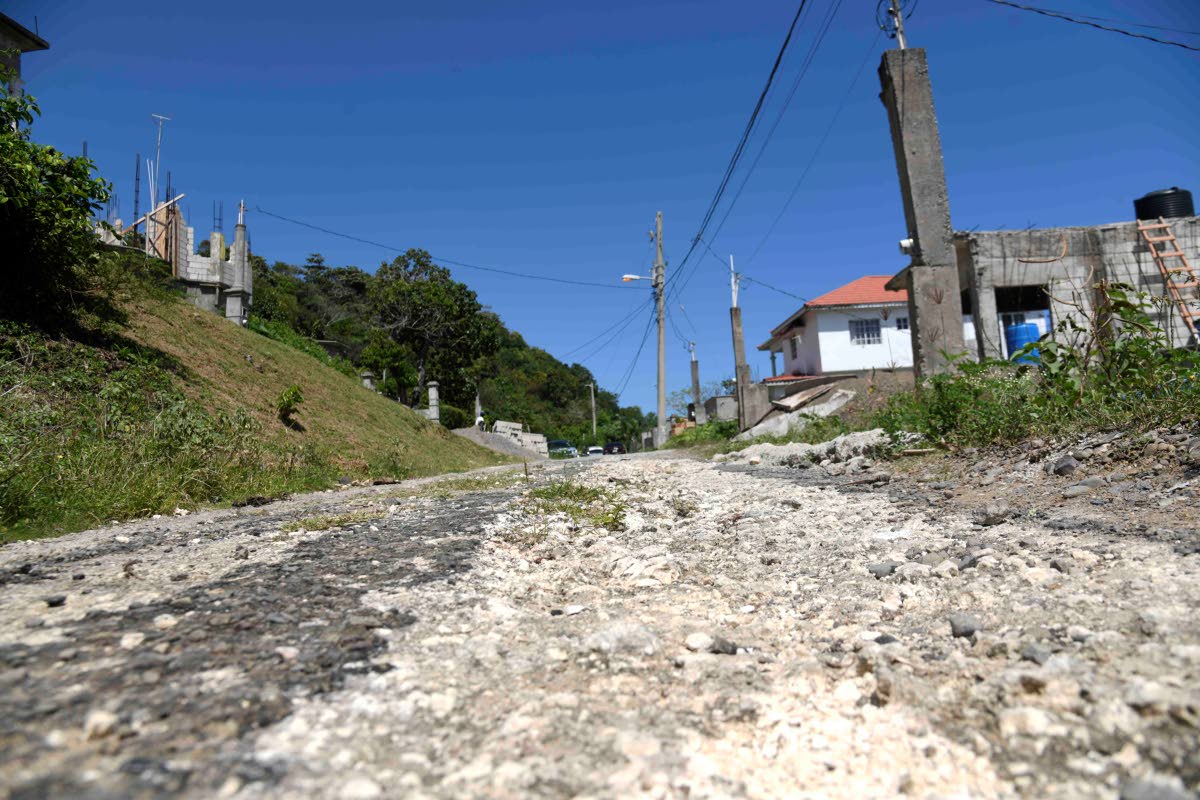 The poor state of one of the roadways in Frontier Phase 2 in St Mary.
-
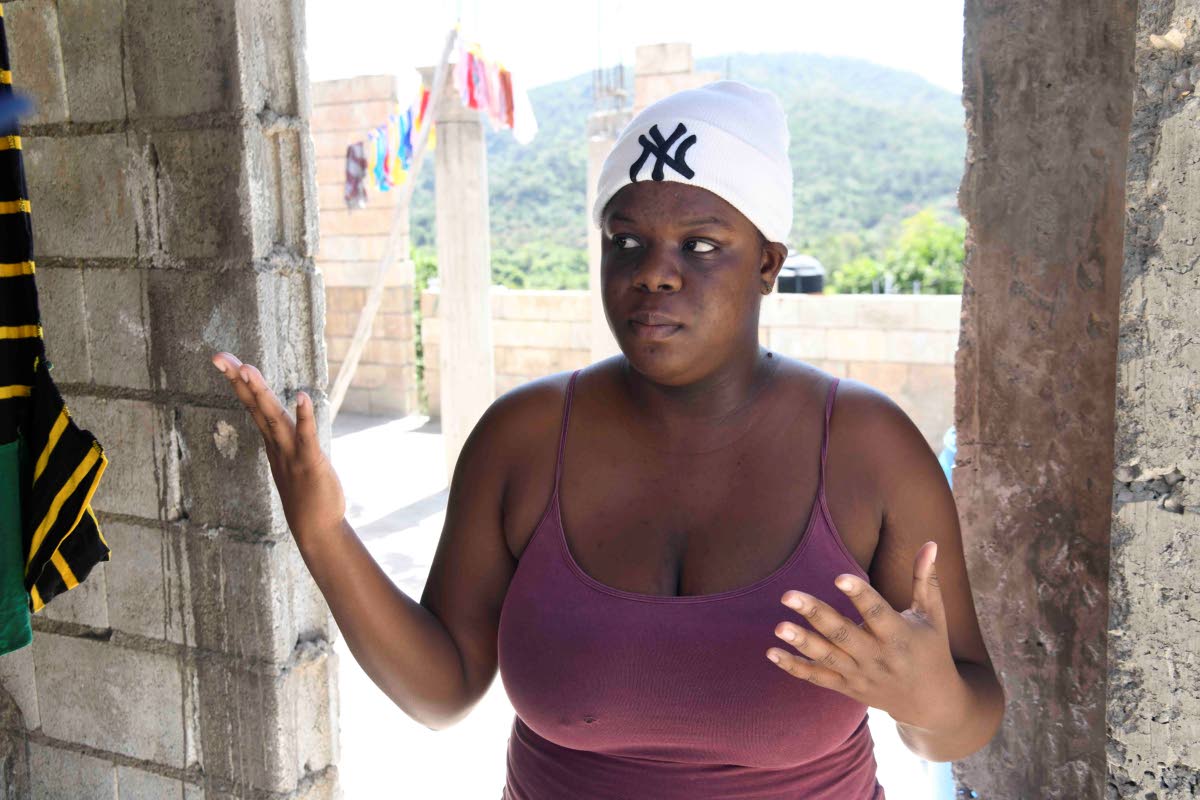 Twenty-four-year-old Tehillah Duncan recalled her days carrying water up the hill from a nearby standpipe for domestic uses before her parents bought a tank.
-
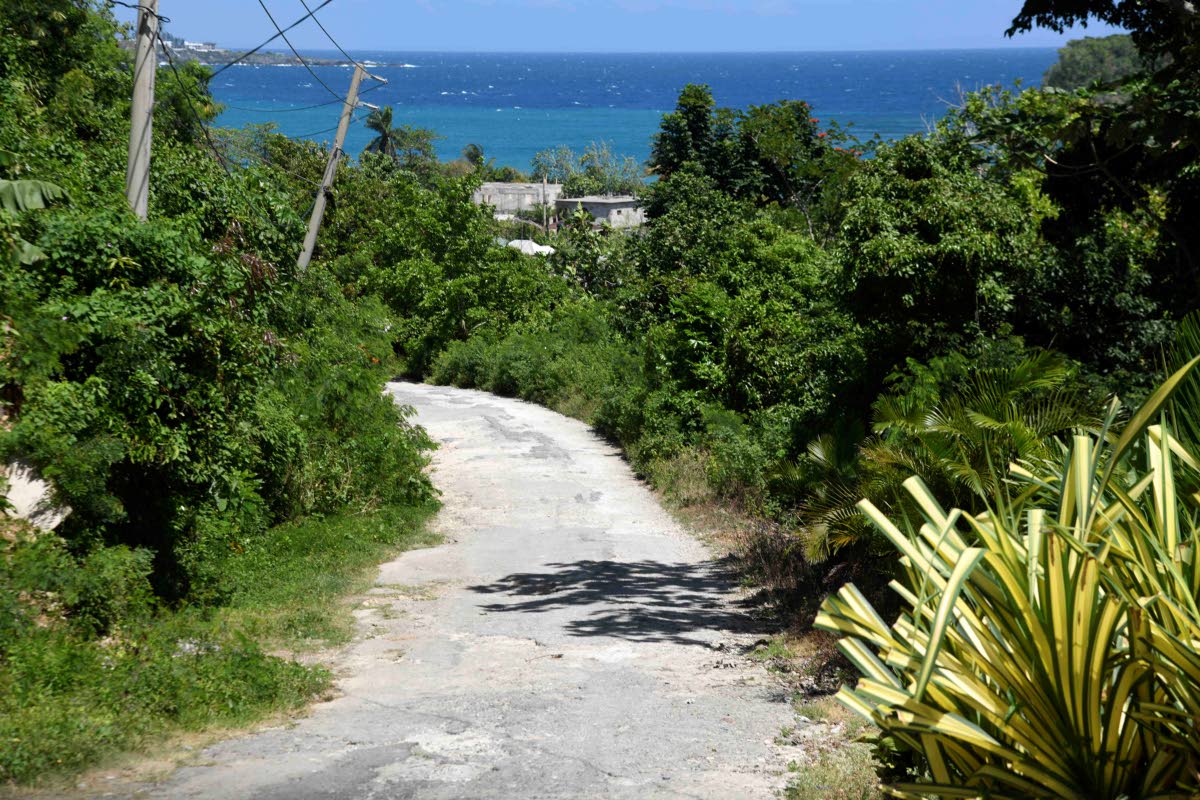 A roadway in the heart of Frontier Phase 2.
-
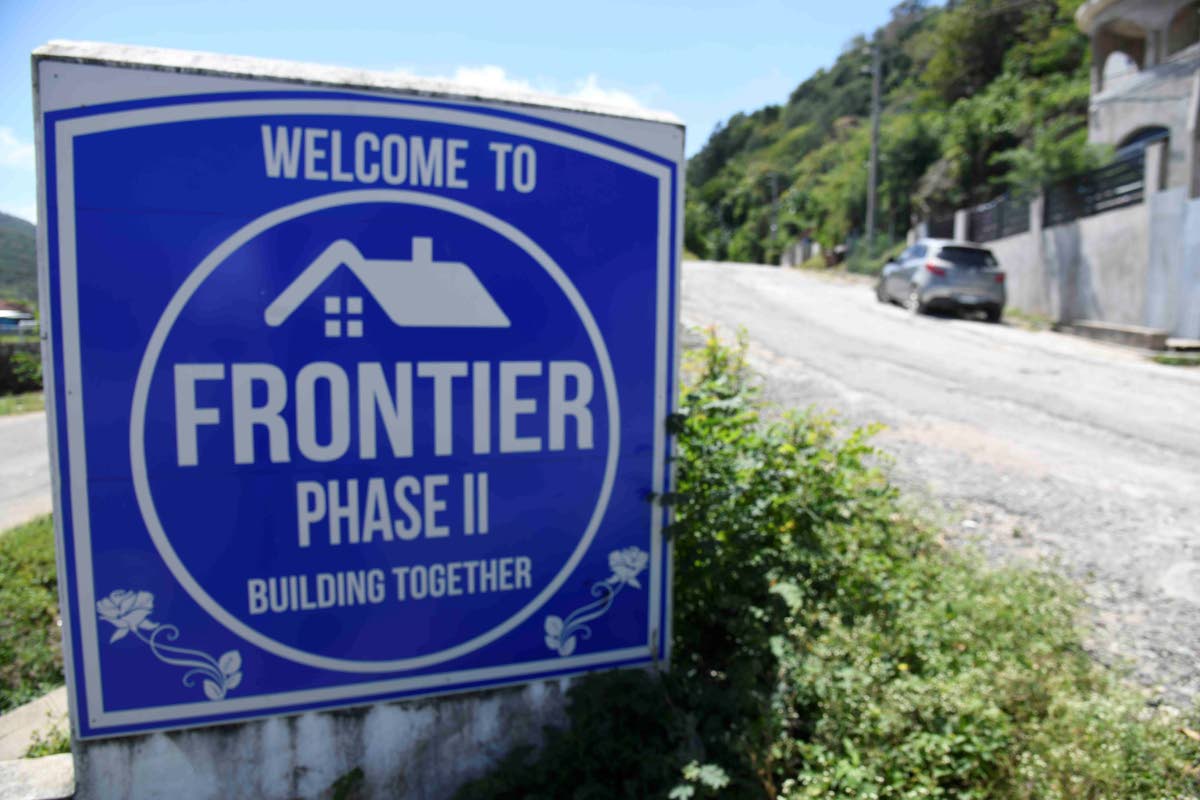 The entrance to the Frontier Phase 2 housing scheme in St Mary.
-
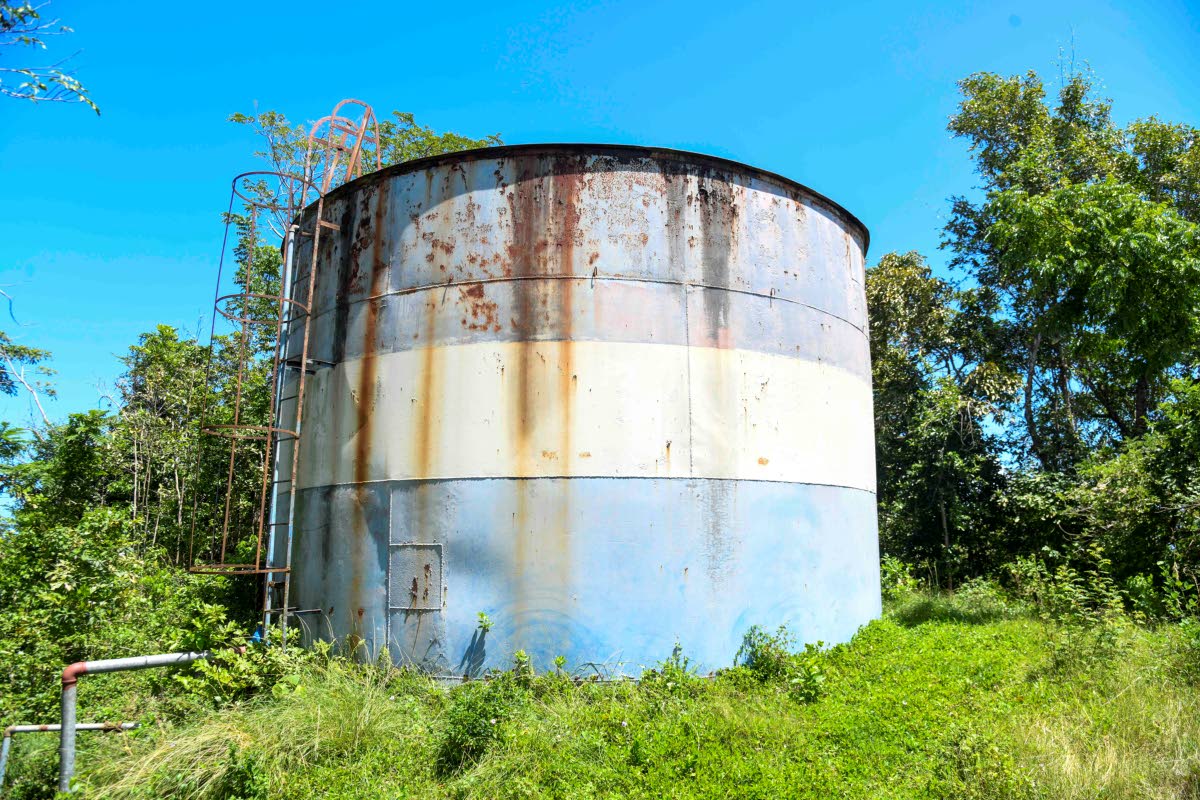 AN old water tank in the community.
Just minutes from St Mary’s seaside capital of Port Maria, the Frontier (Phase 2) Housing Scheme appears at first glance to be an idyllic residential enclave with its elevated lots gazing out towards Pagee Beach. But a closer look tells a different story – uneven roads riddled with potholes break its polished image, street lighting is scarce, and residents have for years been without piped water, and proper garbage collection.
The housing scheme was developed under the now-defunct Operation PRIDE (Programme for Resettlement and Integrated Development Enterprise), a subsidised land ownership programme launched by former Prime Minister P.J. Patterson in 1994 to make land legally accessible to low-income groups at affordable prices.
The scheme comprises 179 lots, formalisation commenced in 2006, and the lots were sold to occupants in 2009.
Neville Clarke’s four-bedroom house sits on a two-and-a-half square lot. The purchase was a milestone for the poultry farmer, who grew up in a nearby community and dreamed of owning land. But he told The Sunday Gleaner that his accomplishment has been dampened by the fact that he has, for years, been living without basic social amenities.
“We left on our own,” he said, complaining that the community has been without running water since its inception, resulting in residents having to buy the commodity and pay up to $7,000 to fill their water tanks biweekly.
Further, he said the community road has not been maintained since it was constructed at the onset of the development, forcing residents to scrape together materials to fix it from time to time.
“They don’t treat the people dem up here fairly. They treat dem unfair, and is not capture the place capture. People purchase and wi have to pay taxes every year,” he told The Sunday Gleaner, adding that at the time of purchase, he paid $665,000 for his property.
His neighbour, 35-year-old Steven Ashman, has been finding creative ways to conserve water and dispose of his garbage.
“Mi have some five-gallon bottle, mi full those to use in the kitchen, and mi tank, mi use dat fi wash clothes and so forth,” he said. “(And) mi haffi line up mi crocus bag, put mi garbage inna it and go dump it a one a di dumpster pon di main road.”
The father of three lamented the additional expense of purchasing water almost every other week, and feels dejected that their complaints over the years seem to be falling on deaf ears.
“This minute dem seh yuh a guh get wata and yuh see a couple come in and a do some pipe work, then nothing. Bout wah three four months after or wah year again yuh see people come in and seh ya go get water, then nothing,” he said.
Returning resident Yvette Boota wanted to spend her retirement living in her childhood community, in a home she had made numerous improvements to.
But the four years since she returned from the United States have been punctuated by misery.
“It’s very difficult [living under these circumstances] because right now, I can’t even get a shower. I have to go to the big ocean, and then I get some water wash off,” she told The Sunday Gleaner.
“We pray for the rain so that we can use some of it wash some clothes and flush the toilet. It’s crazy,”
Meanwhile, Clarke, who said he pays more than $5,000 in annual property tax, believes like residents are being “ripped off”.
“They treat the residents up here like a feeding tree ting, even though dem sell di land dem, dem collect di money, and dats it. Wi don’t know what we paying tax for, wi not getting any benefits,” he said.
Twenty-four-year-old Tehillah Duncan used to carry water up the hill from a nearby standpipe for domestic uses. Her parents eventually bought a tank and, like most residents in the community, pay $7,000 biweekly to have it filled.
The unemployed youngster said this has placed added financial burden on her family, and blasted the agencies for their apparent indifference towards the plight of the residents.
“Sometime wi just feel like seh wi get left behind like dem nah try sometime,” she said.
Mayor of Port Maria Fitzroy Wilson stressed that improvement of the community’s infrastructure is long overdue. He explained that the municipality is not responsible for the Operation PRIDE development as it was built by the Housing Agency of Jamaica (HAJ).
He explained that when a housing scheme is built by a developer, it is typically handed over to the local authority for maintenance. But in the case of Frontier Phase 2, the necessary infrastructure was never put in place, and so the development was never formally transferred to the municipality.
“We would not have taken it over without [proper] road infrastructure in there, water in there, nor street lights and fire hydrants. Those are basic requirements that are for all developments – that the road infrastructure would have to be in place,” Wilson said.
He said, however, that he is “in solidarity” with the residents, who are in “dire need of assistance”, and has been advocating on their behalf.
In response to Sunday Gleaner queries, the HAJ stated that the original plan for the development included roadways, drainage works, a water supply distribution system, and the installation of a water storage tank. In addition, 3.9 hectares of land spread over three lots, were reserved for social, communal and recreational use by the residents.
However, it pointed out that the approach used for implementation of developments under the Operation PRIDE Programme was to undertake works, incrementally, with heavy reliance on funds contributed by beneficiaries.
“The dilemma posed by this approach is the deterioration of works that would have commenced given long delays in undertaking works haphazardly and extending the scope of works in excess of available funding. Over time, the funds required to complete these projects would have increased,” it said.
Further, the HAJ said the scoping of works and related designs and the undertaking of construction work in occupied communities (brownfield developments) are not as efficient as working in greenfield projects – building from scratch.
“Brownfield projects have the added social, physical and environmental constraints resulting in higher costs and [a longer] time to implement,” the HAJL said.
The HAJ explained that an assessment of Frontier Phase 2 was done in 2018, but it has been unable to advance the completion of the development because of financial constraints as the agency “continues to prioritise critical infrastructure upgrades across its extensive portfolio of brownfield developments”.
The HAJ stated that completion of the development will be dependent on its ability to secure funding, and it will now move to take the applicable steps to scope the works required to complete this project, undertake any designs required, and prepare and price the related bill of quantities within this financial year.
Further, it said it will make appropriate representation to the Ministry of Finance and the Public Service for budgetary support to undertake the outstanding works.
sashana.small@gleanerjm.com
From Operation PRIDE to HAJ
Operation PRIDE (Programme for Resettlement and Integrated Development Enterprise) was officially launched in May 1994 by then-Prime Minister P.J. Patterson. It was initiated to address squatting, provide affordable land to the landless, and regularize informal settlements in Jamaica.
Due to widespread management issues, Operation PRIDE was merged with the Caribbean Housing Finance Corporation and the National Housing Corporation to form the NHDC in 1998.
Following further scandal and the 2002 Angus Commission of Inquiry Report, the programme was essentially shuttered due to a lack of financial and technical capacity to handle the remaining projects.
While the programme was formally stopped years ago, many projects remained incomplete with broken infrastructure decades.
The NHDC changed its name to the Housing Agency of Jamaica Limited (HAJL/HAJ) in September 2008.