‘Most improved’ student rises to inspire a new generation
Loading article...
-
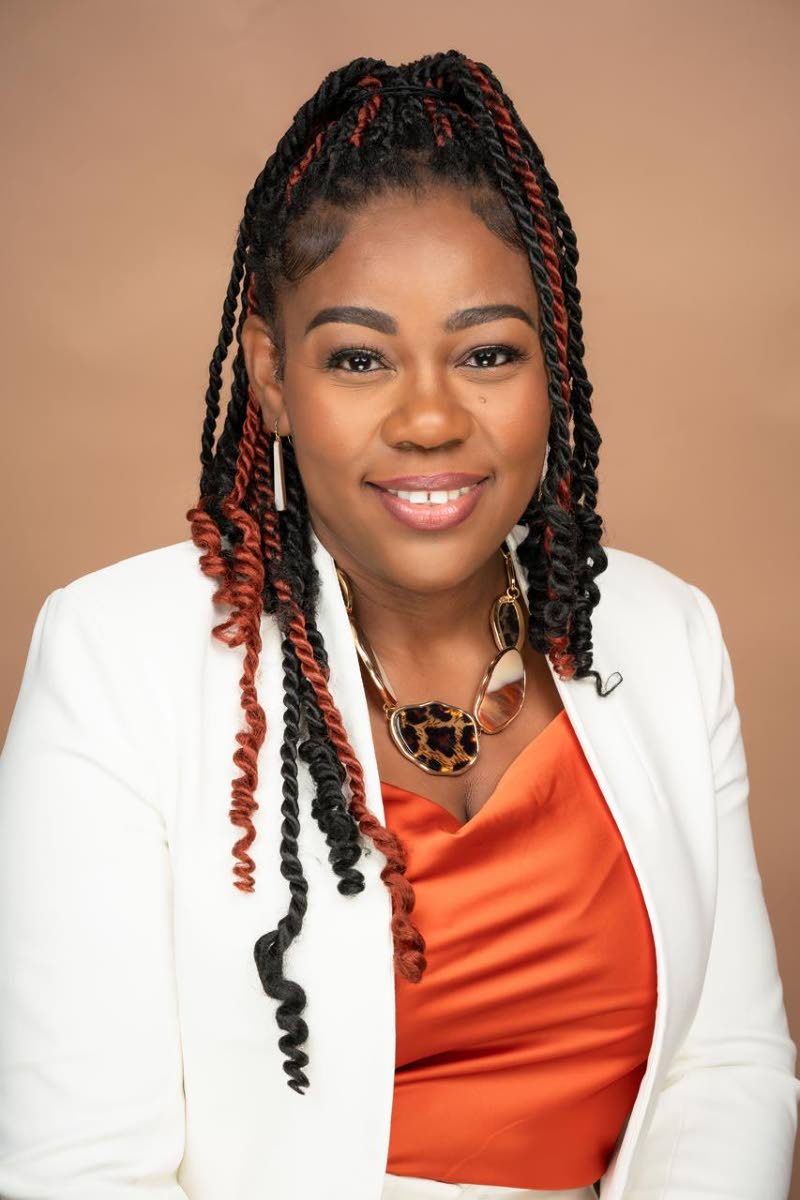
Euphemia Burke Robinson
-
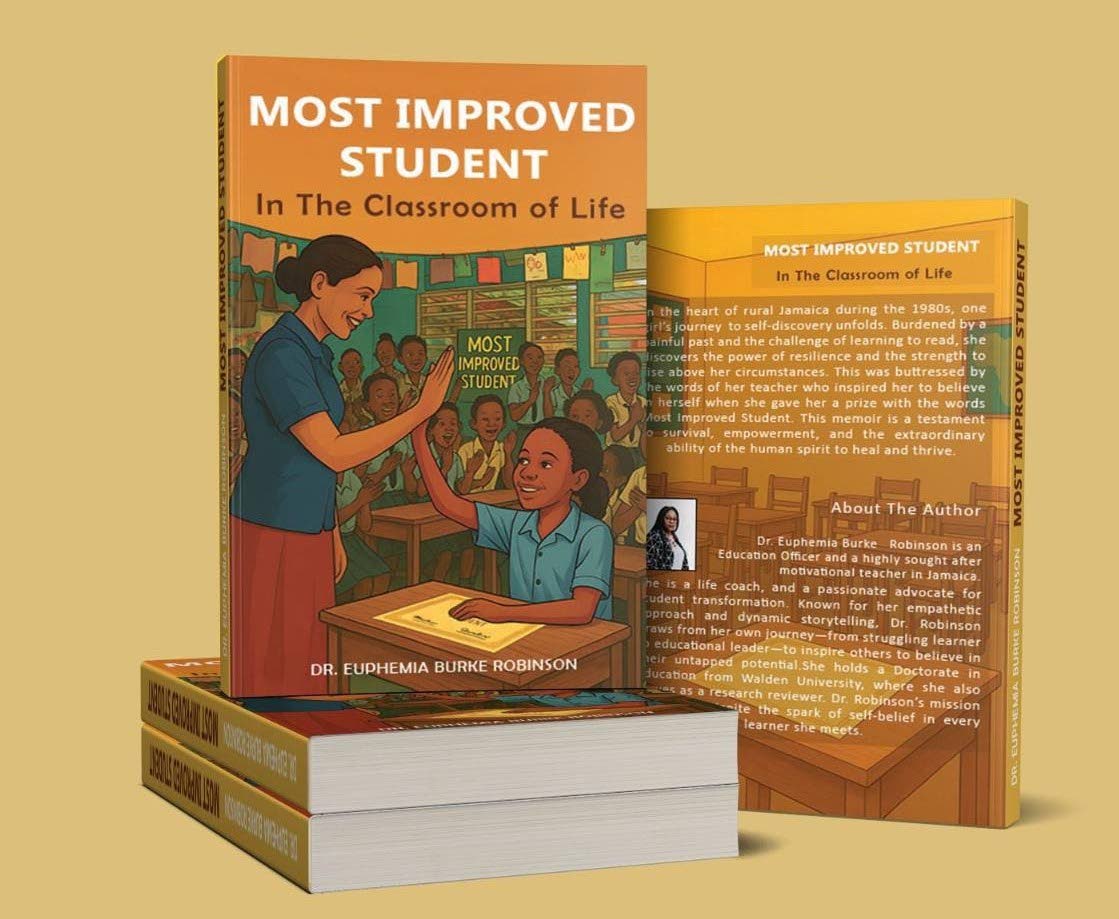 Euphemia Burke Robinson’s story is captured in her book “Most Improved Student: In the Classroom of Life”.
In the quiet, verdant hills of Garden Hill, St Catherine, specifically Dry Hill, a young girl once struggled to read, living in a one-room board house without electricity or piped water.
Today, that same girl stands as a respected education leader, author, and advocate for systemic transformation. In Most Improved Student: In the Classroom of Life, Euphemia Burke Robinson tells her story not as a mere autobiographical reflection but as a purposeful act of service.
“At this stage of my life,” Robinson explains, “I felt a deep sense of responsibility to inspire and nurture greatness, especially in students. As an educator, I interact daily with young people who struggle and sometimes feel like giving up. I wrote this story so they can know that great opportunities and a bright future are possible, even when faced with challenges like the ones I experienced.”
For Robinson, writing the book was not about revisiting pain. “It was about illuminating possibility. This was not just reflection; it was purpose,” she said.
Growing up in Garden Hill shaped her long before she understood the language of resilience. “Resources were limited; we did not have piped water, and my family did not have electricity. My four siblings and my parents lived in a small one-room board house, now I can hardly imagine how we fit in it. Every member of the family had to work hard. Yet community living was strong,” she said.
From those early years, she learned humility, perseverance, and disciplined effort. Experiencing academic struggle firsthand would later shape her leadership philosophy. “Today, as a leader, I never see statistics, I see children. I understand what it means to truly struggle and to feel unseen,” she said.
The defining moment that shifted her trajectory came when she received the “most improved student” award. “It was not about being the best; it was about being better. For the first time, I felt recognised as a human being,” she said.
That recognition transformed her internal narrative. “Even incremental progress is transformative. Effort changes outcomes,” she said.
For Robinson, improvement extends beyond academics. “Improvement is growth in character, mindset, and discipline. It is constantly holding a vision of your best self and working toward it daily. It is about becoming better than you were yesterday, not better than someone else.”
One of the most emotionally challenging chapters to write was, One Unforgettable Experience, where she recounts a deeply painful moment in her life. “Revisiting those memories placed me in a state of ambivalence and vulnerability. Reliving those moments meant confronting feelings of shame, but also triumph,” she said.
Yet the process was healing. “I could now see how God was shaping purpose out of pain. I was finally at a place emotionally where healing could happen through storytelling, with the hope that another Jamaican girl, another family who ever had to overcome such pain, will find inspiration,” she said.
SERVICE ORIENTED
Robinson’s journey from primary school teacher to policy leadership has shaped a service-oriented philosophy. “Leadership must be service-oriented. Policy must reflect practice. Effective leadership is not positional; it is relational,” she said.
As president of the Jamaica Association of Education Officers, her priorities centre on professional welfare and systemic strengthening. “We must be healthy, physically, mentally, financially, and professionally, to effectively serve the education sector,” she said. She also advocates for professional development, leadership succession planning, and stronger alignment between policy and school-level implementation.
Robinson is clear-eyed about the demands facing modern educators. While Jamaica’s teacher-training institutions are strong, she believes the bridge between theory and classroom realities must be strengthened.
“Teacher preparation must emphasise differentiated instruction, critical thinking, creativity, digital literacy aligned with 21st-century skills, and strong classroom management,” she said.
She underscores the importance of emotional intelligence in educational leadership. “Today’s students face unprecedented pressures, social media influence, mental health challenges, uncertainty from climate change; we just experienced Hurricane Melissa. Technical competence without empathy limits impact,” Robinson said.
Her advocacy is grounded in research. Early literacy and emergent numeracy interventions, she says, are critical. “When I could not read, I described it as living in darkness. If we secure literacy early, we get students out of the dark and into possibility,” Robinson said.
Her pursuit of military training, where she serves as second leftenant in the Jamaica Combined Cadet Force was inspired by her daughter’s involvement in the Jamaica Combined Cadet Force. What began as curiosity evolved into commitment. “The training reinforced discipline, resilience, accountability, and service, qualities that deeply influence my leadership approach,” Robinson said.
She believes uniformed groups and structured co-curricular activities are powerful tools for character-building. “Discipline should be developmental,” she said.
For Robinson, true transformation occurs, “when a student moves from self-doubt to self-efficacy.” It is about intentional growth and purposeful decision-making.
Legacy, she explained, is not deferred. “Legacy is our impact that outlives our presence. It is the lives we influence, the systems we improve, and the values we model. Legacy is not something I wait to leave after I am gone; I build it daily.”
keisha.hill@gleanerjm.com