Ja equipped to stablilise severe burn cases, says health officials
Loading article...
-
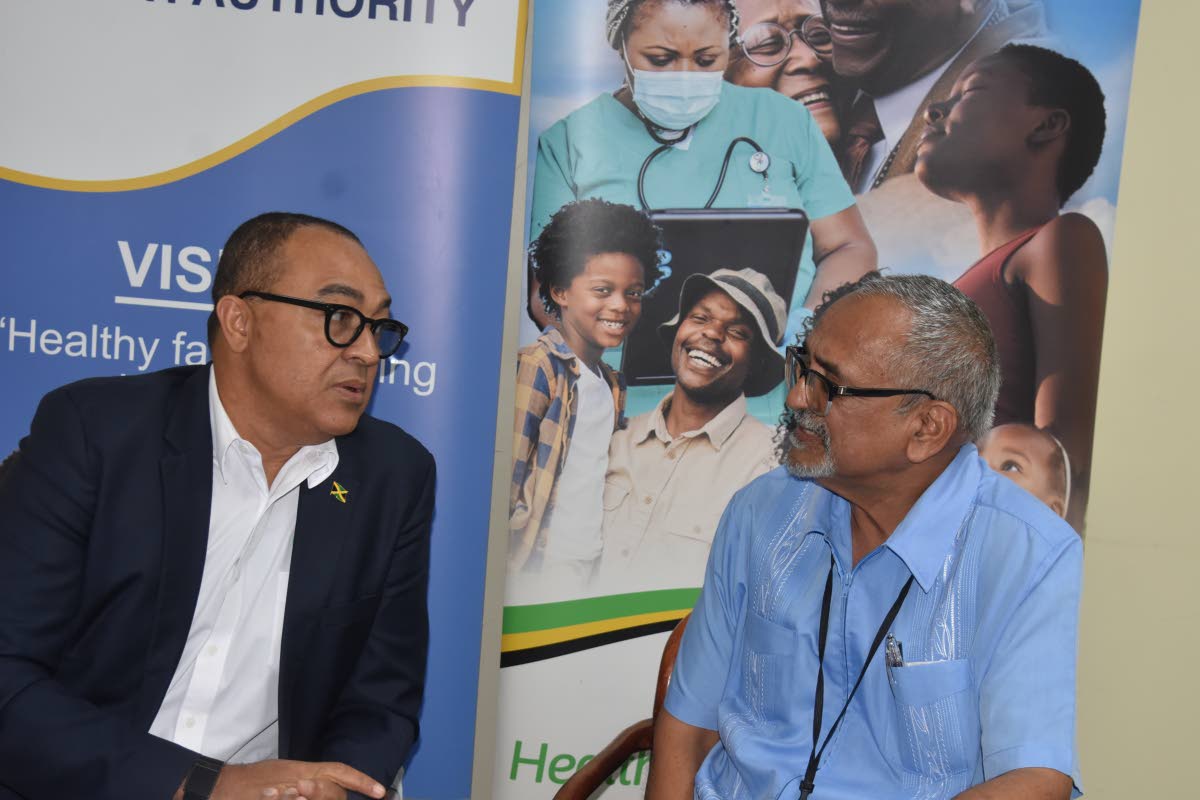 Health and Wellness Minister Dr Christopher Tufton (left) and Dr Delroy Fray, clinical coordinator, Western Regional Health Authority, converse during a press briefing at the WRHA’s offices in Montego Freeport on Thursday.
-
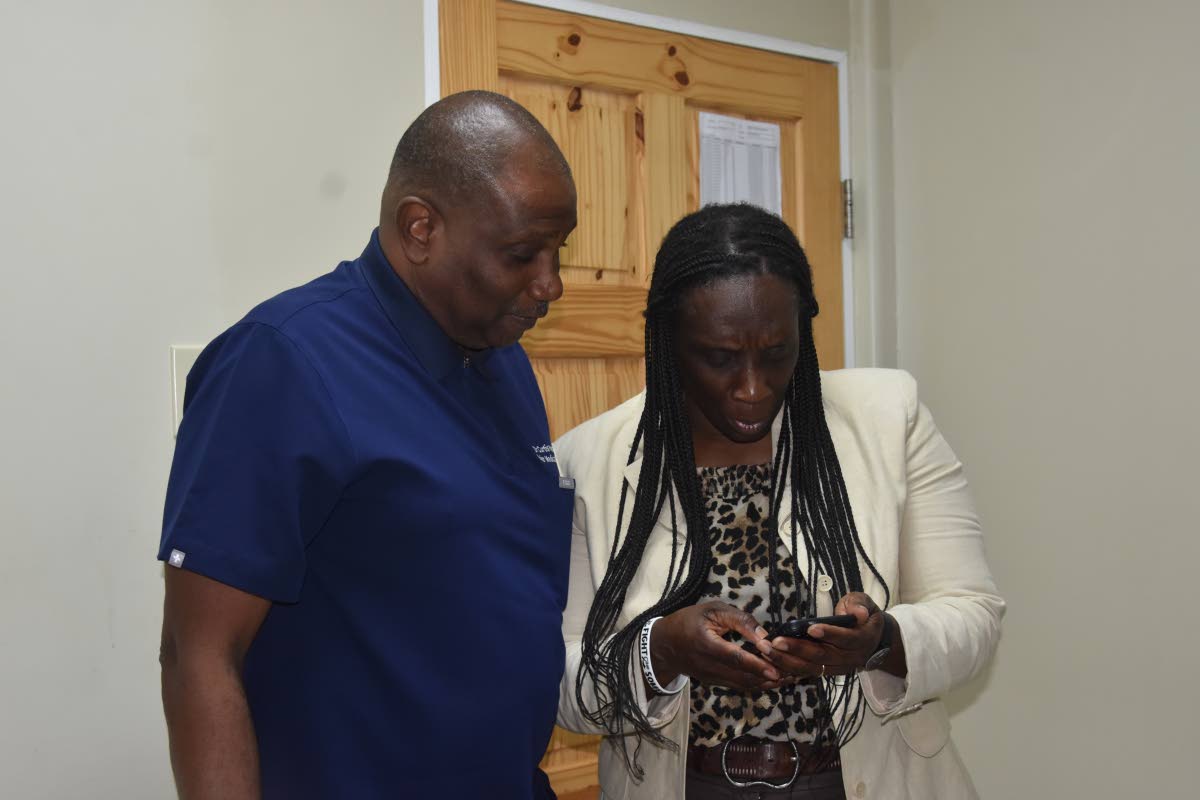 Dr Curtis Yeates, senior medical officer, Cornwall Regional Hospital, engages in conversation with the hospital’s CEO, Charmaine Beckford-Williams during a press briefing at the Western Regional Health Authority (WRHA) offices in Montego Freeport on Thursday.
WESTERN BUREAU:
Amid public concern over local treatment options for severe burn victims, health officials have insisted that Jamaica’s health system has the capacity to stabilise critical cases during the most decisive phase of care.
Survival in severe burn cases depends largely on the first 24 to 48 hours of treatment, a window in which Cornwall Regional Hospital (CRH) says it is fully equipped to respond through its high-dependency and intensive-care services.
“Once we get a severe burn patient, we mobilise one of our high-dependency units, which is like an intensive-care unit, where the patient receives one-to-one doctor and nurse care to ensure proper survival,” said Dr Delroy Fray, clinical coordinator for the Western Regional Health Authority (WRHA).
Fray noted that the stabilisation phase determines whether a patient makes it to the next stage of specialised care.
CRH Senior Medical Officer Dr Curtis Yeates said the hospital’s plastic surgery department, built on the foundation laid by pioneering plastic surgeon Dr Jeff Williams, continues to play a critical role in managing burn cases. He added that ICU spaces were specially designed to accommodate severe burns even though the hospital does not operate a standalone, formally designated burn unit.
“We are lucky that we have a good, experienced team,” Yeates said. “Even though we don’t have a burns unit as a designation, we have taken burns into consideration in our ICU design, and our plastic surgery team is well trained.”
Exceptional cases
Health Minister Dr Christopher Tufton said more than 1,000 burn cases are treated annually across the system, most of which do not attract public attention because they are successfully managed and discharged.
“The exceptional cases are the ones that make the headlines,” Tufton said, noting that the majority of burn injuries, including domestic accidents involving hot water or fire, are treated and resolved within the system.
The discussion about Jamaica’s burn-care capacity comes amid renewed scrutiny of a high-profile fundraising initiative launched in July 2023 to expand the burn unit at the University Hospital of the West Indies.
At the time, Petrojam Limited and partners announced a campaign aimed at upgrading and expanding the hospital’s burn-care facilities, with public statements highlighting the need for specialised infrastructure and equipment.
However, during Thursday’s briefing, Tufton suggested that while the initiative generated significant publicity, the level of financial commitment did not match the scale required to establish and sustain a fully specialised burn unit.
“There was a lot of fanfare around that project,” Tufton said, adding that the resources initially provided represented only a fraction of what would be required for a comprehensive standalone facility.
Tufton also addressed public commentary suggesting that the Government lacks compassion when families seek overseas treatment for severe cases.
“The Government, when necessary, weighs in and provides support. We have a compassionate grant,” he said. “But decisions on whether someone requires overseas care are based on the clinical judgment of doctors, not policymakers.”
Language ‘creates confusion’
While acknowledging that Jamaica does not maintain a fully specialised, standalone burn unit, a facility that would require significant capital investment and highly specialised staffing, Tufton cautioned against creating the impression that the country has no capacity to treat burns.
“I think the language sometimes creates confusion,” he said. “A burn unit as a designation is highly specialised, but treating burns is addressed on a daily basis within the health system.”
Health officials conceded that not all severe burn cases survive, noting that outcomes depend on the extent of injury, but maintained that Jamaica’s system is equipped to manage cases up to a certain threshold.
“You don’t win all cases,” Tufton said. “But that is true across the board.”
janet.silvera@gleanerjm.com