Earth Today | Designing a strong Nature-based Solution project
Loading article...
-
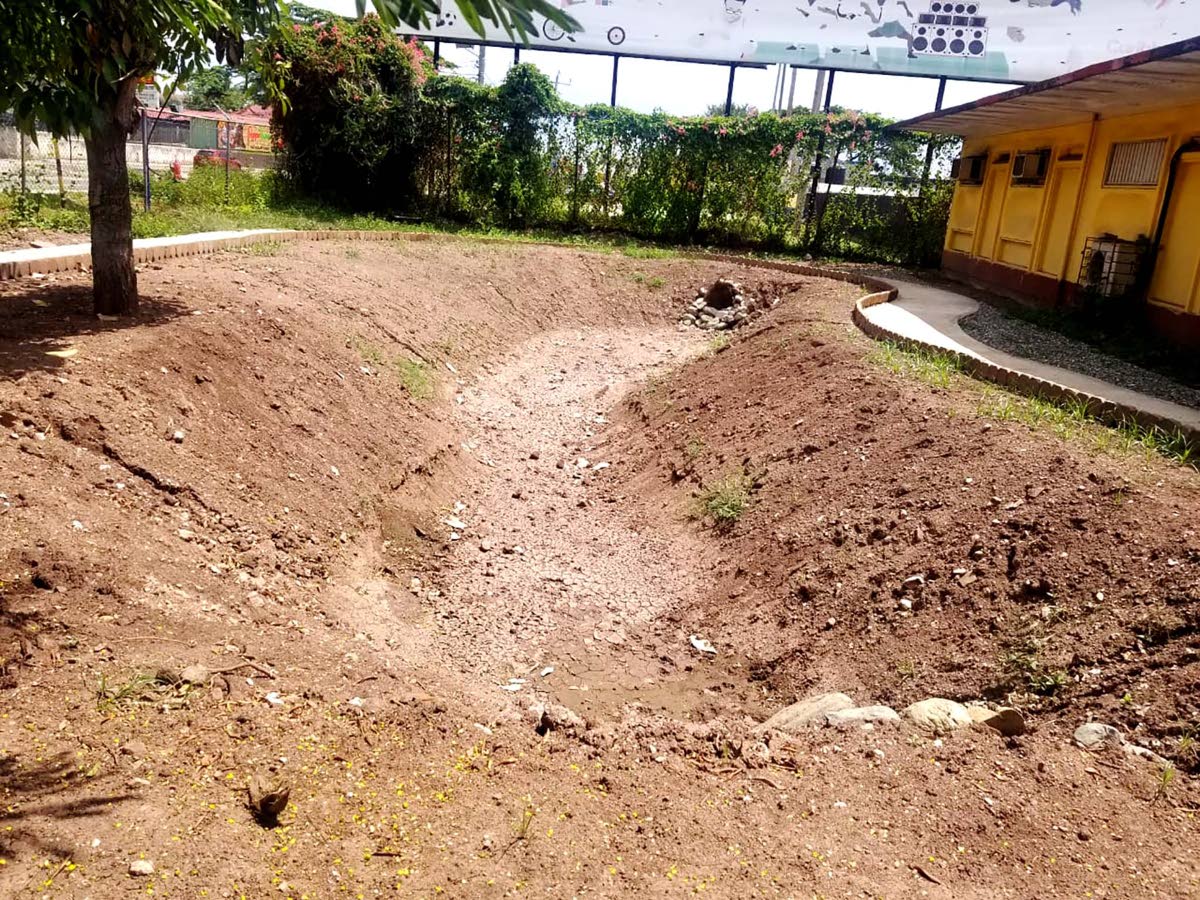 A rain garden, an example of a Nature-based Solution, now under construction under the J-USE project.
-
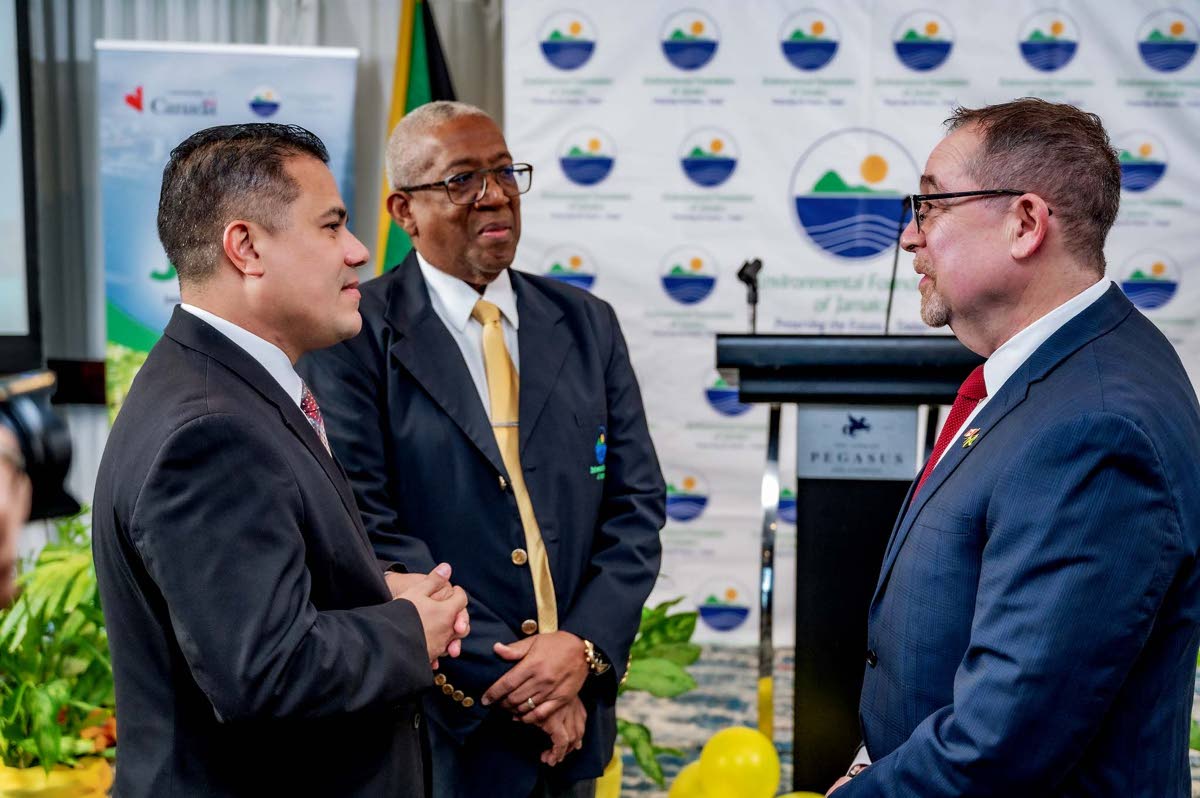 From left: Matthew Samuda, Minister of Water, Environment andClimate Change; Professor Dale Webber, chairman of the Environmental Foundation of Jamaica; and Mark Berman, High Commissioner of Canada to Jamaica in discussion at the launch of the J-USE project last year. File Photo/Contributed
JAMAICA’S URBAN centres face increasing pressure from flooding, rising temperatures, degraded public spaces, and growing social vulnerability. As climate impacts intensify, traditional “grey” infrastructure alone is no longer enough.
Globally, cities are turning to nature-based solutions (NbS) – approaches that work with nature to address environmental risks while delivering social and economic benefits. NbS are more than tree planting or beautification. When designed well, they reduce flooding, lower temperatures, improve biodiversity, create safer public spaces, generate green jobs, and strengthen social cohesion.
International best practice, as highlighted in publications such as the IUCN Global Standard for Nature-based Solutions (IUCN, 2020) and Comparative Analysis of the Existing Criteria, Principles and Safeguards for the Implementation of Nature-Based Solutions (International Institute for Sustainable Development, 2025), shows that strong NbS projects are not designed in isolation. They are co-created, shaped by communities, supported by institutions, and sustained through partnerships.
As Jamaica continues to scale up urban climate action, many organisations are asking an important question: What makes a strong NbS project?
1. Start with a clearly defined problem, not the solution. Tree planting is valuable, but if flooding is caused by blocked waterways or poor drainage design, trees alone may not resolve the issue. Strong proposals clearly articulate the specific environmental challenge being addressed, identify who is most affected, and explain why existing approaches have been insufficient. The intervention must directly respond to a locally understood need.
2. Taking a multi-stakeholder or participatory approach. Equally important is co-creation. Solutions should be developed with stakeholders, not for them. Projects designed in isolation often struggle with community acceptance and long-term sustainability. Strong initiatives demonstrate early and meaningful engagement with affected players. They show how vulnerable groups were consulted and involved in shaping the project. When communities help design a solution, they are more likely to protect, maintain, and champion it over time.
3. Build sustainability into the design from the start. Nature-based interventions require long-term maintenance, governance arrangements, and institutional support. A well-designed green space that lacks a maintenance plan can quickly deteriorate, undermining its intended benefits. Strong projects, such as Emancipation Park, clearly outline who will be responsible for upkeep, how resources will be mobilised beyond initial funding, and how local capacity will be strengthened to manage the solution over time.
4. Monitoring, Evaluation and Kaizen (continuous improvement). Strong proposals identify specific, measurable, achievable, relevant, and time-bound indicators of success. How will flood reduction be measured? How will temperature changes be tracked? How will improved safety or increased participation in green jobs be assessed? Practical monitoring mechanisms demonstrate accountability and generate data to inform scaling. In a dynamic climate environment, learning and adaptation are essential.
5. Build Partnerships across sectors. Cross-sector partnerships strengthen technical quality, mobilise resources, and enhance credibility. They also reflect the shared responsibility required to transform urban environments in meaningful and lasting ways.
6. Budget realistically and transparently. Having realistic cost estimates, supported by credible quotations is essential when planning an NbS project. Proposals should reflect a clear understanding of implementation costs, technical expertise, materials, labour, community engagement activities, monitoring, and maintenance. Overestimated budgets without justification or underestimated costs that ignore operational realities weaken credibility.
Across Jamaica, innovative ideas are emerging for restoring degraded spaces, creating biodiversity corridors, improving stormwater management, and expanding green enterprise opportunities. As national efforts to strengthen urban resilience continue to evolve, stakeholders are being encouraged to refine these ideas, deepen partnerships, and develop proposals that are inclusive, measurable, financially sound and sustainable.
In the coming months, the Jamaica Urban Solutions for the Environment (J-USE) project, being implemented by the Environmental Foundation of Jamaica with funding support from Global Affairs Canada, will support urban NbS that demonstrate co-creation, inclusivity, integrated benefits, and long-term viability.
Organisations that prepare now by clarifying their problem statements, engaging communities, and building strategic partnerships will be well positioned to receive support to advance impactful initiatives. Nature-based Solutions are not simply environmental projects but investments in more resilient cities, safer communities and stronger local economies.
- Contributed by Reneiquca Walker-McKnight, Jamaica Urban Solutions for the Environment Project