What makes a pair of jeans truly sustainable?
Loading article...
-
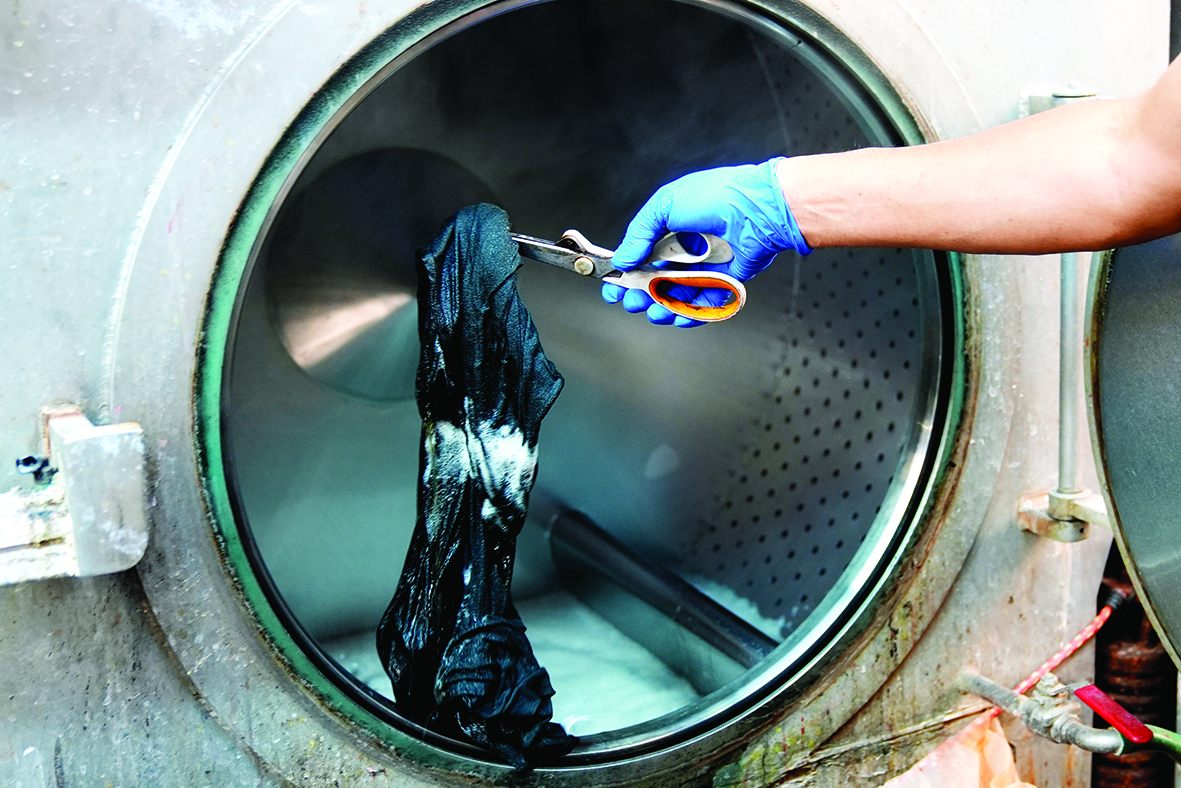
A piece of clothing is examined for colour during a wash.
-
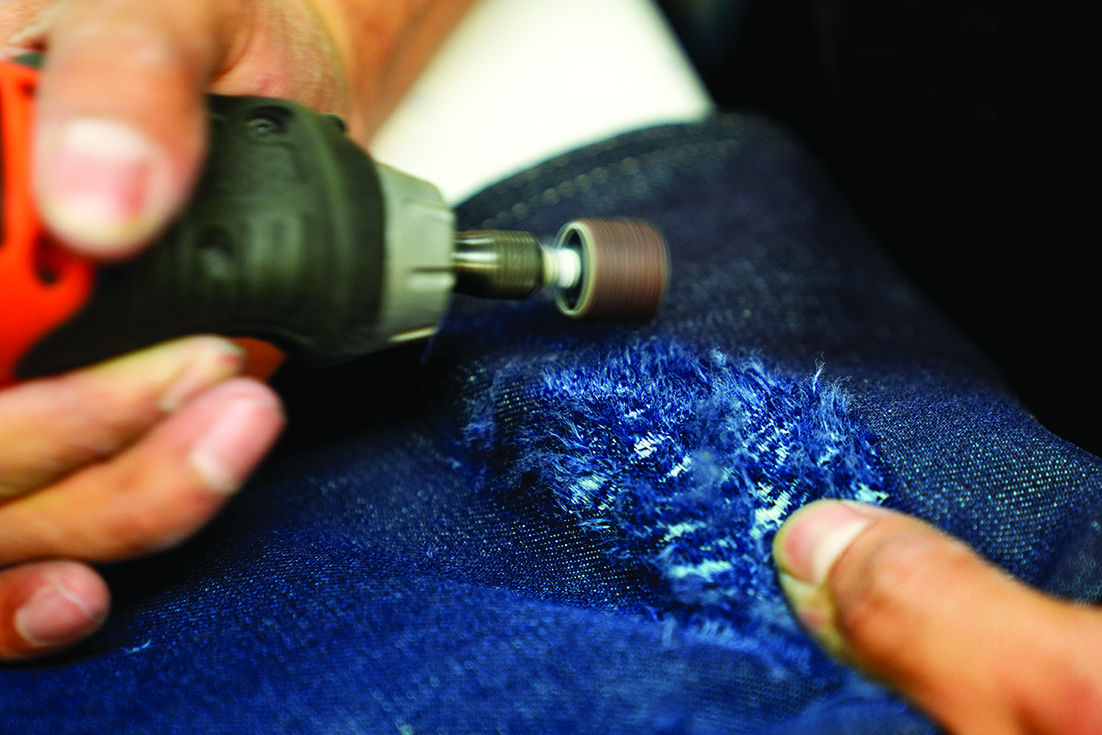
Denim distressed by hand.
-
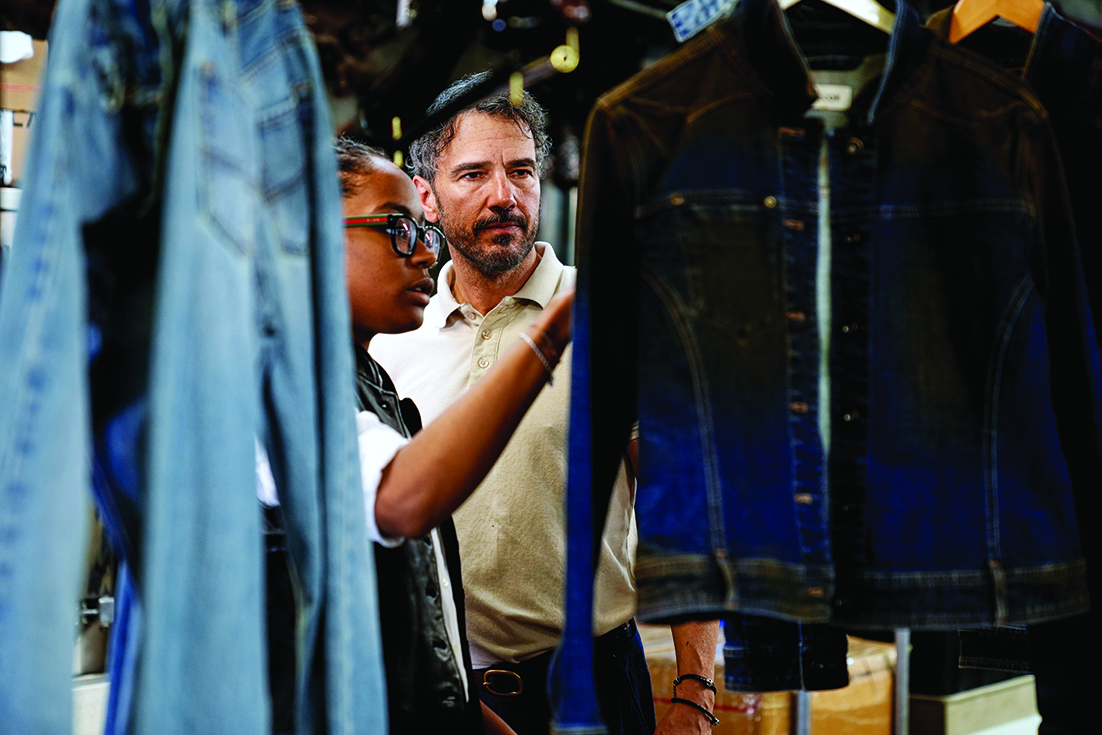
Bill Curtin, owner of BPD Washhouse, looks over some samples at his denim processing facility in Jersey City, New Jersey, on May 5.
NEW YORK (AP):
Your favourite pair of jeans might have travelled around the world through cotton farms, dye houses, wash facilities and factories before ending up in your closet. The denim might have never been worn, but it is stonewashed, sanded, chemically faded or laser-treated to look like it.
Those processes can require significant amounts of water, energy and chemicals, part of the reason denim has become a growing target for sustainability efforts across the fashion industry, which is among the world's biggest producers of greenhouse gas emissions.
Brands are responding to wider awareness by marketing their jeans as "sustainable", touting regenerative cotton, recycled fibres, and low-water manufacturing techniques. But figuring out whether that's true is far more complicated. For one, sustainability is difficult to define, and there isn't a universal set of standards.
Last week, Chinese fast-fashion giant Shein acquired Everlane, a brand known for transparency and sustainability efforts, highlighting broader tensions over scale and affordability. Improvements in sustainable processes typically cost more, making it difficult for companies with fast production cycles and low prices to adopt them widely. Consumers are left to navigate a complicated web of trade-offs involving farming practices, chemical processes, labour ethics and a wide range of prices.
Experts say people can find sustainable denim by learning how jeans are actually made.
COTTON FARMING
Most jeans are made from cotton, a crop that can require large amounts of water, fertiliser, and pesticides.
Beth Jensen, chief impact officer at the non-profit Textile Exchange, said many brands still lack full visibility into where their cotton comes from. Because denim production often spans multiple countries and suppliers, it can also be difficult to track labour conditions.
"We as an industry, collectively, have a long way to go on this," she said.
As concern grows over fashion's environmental impact, some brands have looked to solutions like regenerative cotton, which focuses on soil health, biodiversity and reducing synthetic chemical use. But as Jensen said, what's feasible on a farm in California might not be in a place like India or Australia because of their different climates.
DENIM PRODUCTION
After cotton is harvested, it is spun into yarn and dyed, typically with indigo, a process that can involve significant water use and chemical treatments. It's then woven into denim fabric and cut and sewn into jeans.
Jeans then usually go through finishing treatments to create different shades, fades and distressed textures. Bill Curtin, owner of New Jersey-based BPD Washhouse, said denim-finishing is divided into "wet" and "dry" processes.
The wet process involves washing jeans with water, chemicals and treatments that lighten or tint the denim. Historically, brands have used pumice stones to achieve a worn, stonewashed look — with stones often shipped from Mexico, adding transport emissions and cost to the process. Many facilities are now switching to enzyme-based alternatives and ozone technologies that use less water.
The dry process creates abrasions, whiskers and ripped details either by hand or with laser technology, which Curtin said is more efficient and less labour-intensive.
Many stretchy jeans also contain fabrics like polyester or elastane — fossil fuel-derived synthetics that can shed microplastics over time.
Fashion designer Maria McManus spent years wanting to add denim to her low-impact line, but couldn't find a way to do it that aligned with her values. The culprit, she said, was always the washing process.
"From a water and chemical perspective, it's very invasive," she said.
So instead she sourced dark, raw denim from Japan — indigo, minimal processing — and skipped the wash stage altogether, avoiding the faded and distressed look that define most commercial jeans. It was a deliberate constraint, and it held for years.
A breakthrough came when she collaborated on a collection with Agolde, a larger denim brand. Along with its parent company, Citizens of Humanity, it's respected in the fashion industry for its focus on regenerative cotton farming.
Working with the company gave McManus access to infrastructure her small brand couldn't build alone — a consulting agency that connected her with regenerative cotton farmers, a vetted indigo-dyeing process using biochemical rather than petrochemical dyes, and rigorous supply chain traceability.
But even that process, she said, isn't simple. Organic and regenerative cotton crops can fail. Supply chains are hard to verify. "You know, when they tell you their harvest failed" that they're honest, she said of one supplier.
"I know I can trust them because really, what they should have done as business people or capitalists was just get regular cotton — because nobody is testing this stuff."
But that often leads to higher prices. A pair of jeans from McManus' brand is nearly $700 — a function of small production runs, she said. "It's truly a units game."
FINDING SUSTAINABLE JEANS
Experts say consumers should be wary of vague sustainability claims and instead look for brands that provide detailed information about their sourcing and manufacturing processes.
Dana Davis, a strategic fashion adviser who led sustainability efforts for the label Mara Hoffman, encouraged shoppers to look beyond a single product page and examine whether brands discuss labour rights, textiles and manufacturing sites across their entire business — not just in a capsule collection.
"If a brand really explains the whys behind why they're doing these things, then you can get a sense of, 'OK, this feels authentic,'" Davis said. But she added that "greenwashing" — overstating sustainability claims — can make it difficult for consumers to figure out what's legitimate.
Certifications can help, though Davis cautioned that there is no single label that guarantees sustainability. One worth seeking out is the B Corp certification, which evaluates companies' social and environmental performance. Some tree-based fibres like lyocell, a material commonly blended into jeans, may come from sources vetted by the Forest Stewardship Council (FSC), indicating the wood pulp was sourced from responsibly managed forests.
But one of the simplest ways to reduce denim's environmental footprint is also the least glamorous: To buy fewer jeans, wear them longer, wash them less and shop secondhand.
According to a life cycle assessment by Levi Strauss & Co., if 34.2 million people — or the equivalent of 1 in 10 Americans — bought a pair of secondhand jeans this year instead of new ones, it would avoid roughly 1.5 billion pounds (roughly 0.7 million metric tons) of carbon dioxide, equivalent to the emissions of about 150,000 gasoline cars.
"The most sustainable thing you can do," Jensen said, "is use a product that's already been made."
lifestyle@gleanerjm.com