Imani Tafari-Ama | When the machine does the thinking
Loading article...
-
 Imani Tafari-Ama
-
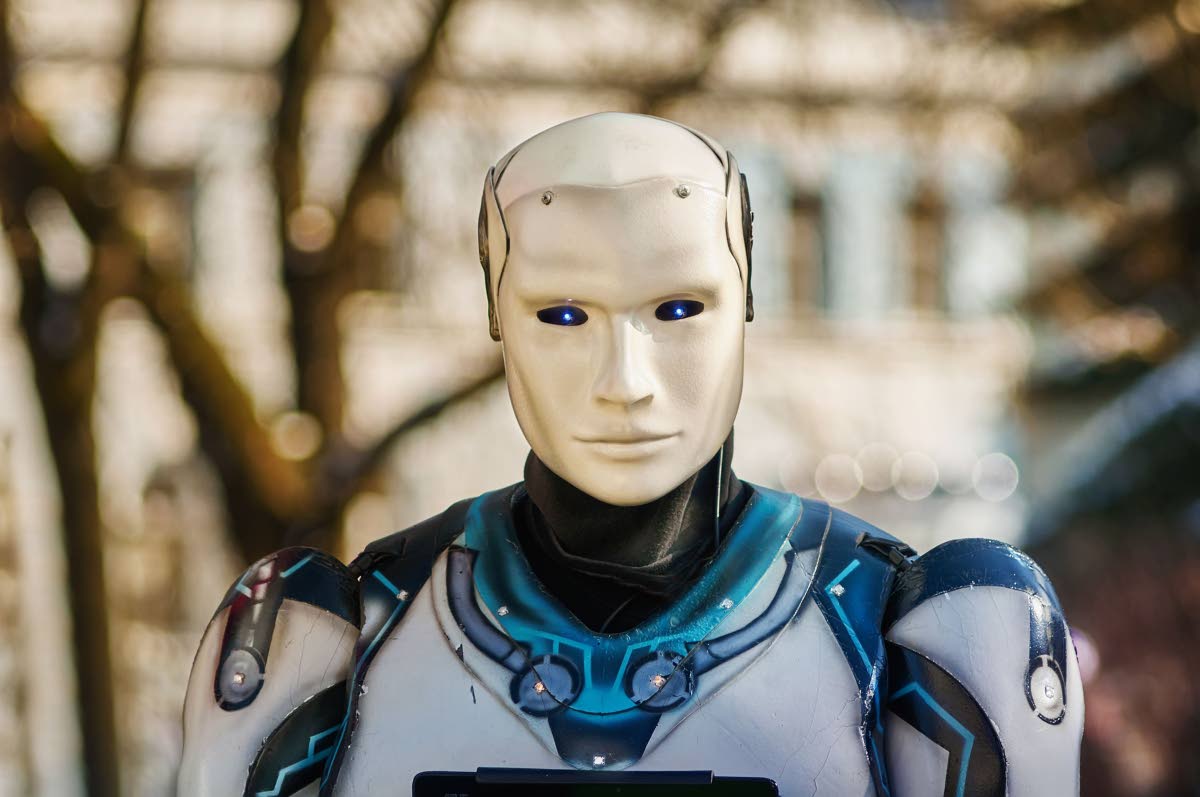
The anxiety surrounding the pervasive power of artificial intelligence (AI), particularly its potential impact on mental development, learning and psychosocial behaviour, has become sufficiently serious to prompt policymakers to pause and reconsider the speed at which this new technology is being introduced into our schools and social environments.
That counterpoint was dramatically illustrated this week in New York, where Mayor Zohran Mamdani announced a one-year moratorium on student-facing generative AI for children from 2-K to Grade 8 in the city’s public schools. The policy is designed to give younger students more opportunity to develop through human interaction, discussion, creativity and the struggle to solve difficult problems without outsourcing the thinking to a machine. High-school students, meanwhile, will be exposed to AI in a much more controlled way, including AI-literacy classes and limited, teacher-supervised pilot programmes.
The New York policy acknowledges that young people are growing up in a world in which AI will increasingly be embedded in the workplace and in everyday life. Rather, the message is that children should first acquire the intellectual tools with which to use technology intelligently.
That is a distinction we in Jamaica and elsewhere would do well to consider.
It does not take rocket science to figure out that excessive dependence on machines capable of producing answers in seconds could cause young people to lose some of the very capabilities that education is intended to develop: critical thinking, problem-solving, curiosity, persistence and the ability to wrestle with a difficult question until an answer emerges.
There is something valuable about having to search, make mistakes, start again and eventually arrive at an answer through one’s own reasoning. The danger is not that a machine knows more than we do. The danger is that we may gradually lose the inclination to know anything for ourselves.
I have been using AI tools (with critical awareness) for some time. One of my favourite memories of this engagement is taking my father to a bank machine for the first time. He stood there in amazement and said, “Look what mi live fi come see, a machine spitting out money!”
Today, we scarcely give a second thought to the ATM. We insert a card, enter a PIN and collect cash. Even more remarkable is the ease with which we conduct financial transactions online. We can transfer money, pay bills and conduct business without travelling to a bank or standing in a long line.
That is technology serving humanity.
For the traveller, the evolution is equally impressive. If you have not yet yielded to the convenience of using a wheelchair to navigate the seemingly endless distances through airports, particularly when making connecting flights, your day may yet come.
My sister recently regaled me with the micro-details of her experience with one of these remarkable devices. The officer who checked her in programmed the wheelchair to take her, unaccompanied, to the security checkpoint.
Then came the part that left me gobsmacked.
The wheelchair could detect when somebody was in its path. It would slow down, avoid the obstruction and continue its journey.
Here, automation was not taking away my sister’s ability to think. It was extending her mobility and independence. The question, therefore, should not be whether we embrace AI or reject it. The more important question is: what are we asking AI to do for us, and what are we allowing it to do instead of us?
A student who uses AI to help understand a difficult mathematical concept, generate questions for further investigation or receive feedback on a piece of writing may be using technology as a learning aid. However, a student who asks AI to write the essay, solve the problem, conduct the research and formulate the argument has crossed a different line.
The assignment may be completed, but has the learning taken place?
New York authorities appear to understand this tension. Their new policy specifically seeks to protect the “productive struggle” that is part of learning, while exposing older students to AI in controlled circumstances. The city is also requiring high-school students to learn about AI’s risks, bias, privacy implications and appropriate uses.
The onset of the COVID-19 pandemic accelerated the migration of many services from physical spaces to digital platforms. Banks increasingly encouraged customers to conduct transactions online. Government services migrated to websites and electronic systems. Businesses adopted digital payment mechanisms.
For those who were already digitally comfortable, this transition was liberation. But, for others, it was exclusion. People who had spent their lives walking into a bank, sitting before a teller and conducting their business face-to-face suddenly found themselves dependent on younger relatives or friends to navigate online banking.
That is where the principle of “leave no one behind” becomes particularly relevant. There will be workers who use AI to increase their productivity and workers whose jobs disappear because they were never given the opportunity to acquire new skills. There will be students who learn to work alongside intelligent systems and students whose capacity to think independently has been weakened by allowing those systems to do the thinking for them.
This is why the response cannot simply be to put more technology into schools, offices and public services and declare that we are modernising, which without inclusion is another form of exclusion.
The challenge before parents, policymakers, educators and technology providers is therefore to ensure that the human being remains at the centre of the technological revolution. We should welcome the ATM, the automated wheelchair and the online transaction because they extend human capability. But we should be cautious about a system that makes it so easy for a child to obtain an answer that the child never learns how to find one.
While AI can be a magnificent servant, it becomes dangerous when we allow it to become our substitute for thinking. The machine may be able to produce an answer in seconds, but the real measure of progress is whether we are still capable of asking the right question.
Imani Tafari-Ama, PhD, is a Pan-African advocate and gender and development specialist. Send feedback to i.tafariama@gmail.com and columns@gleanerjm.com.