Don Robotham | SPARK or BOOST? STEAM or maths? Issues in educational reform
Loading article...
-
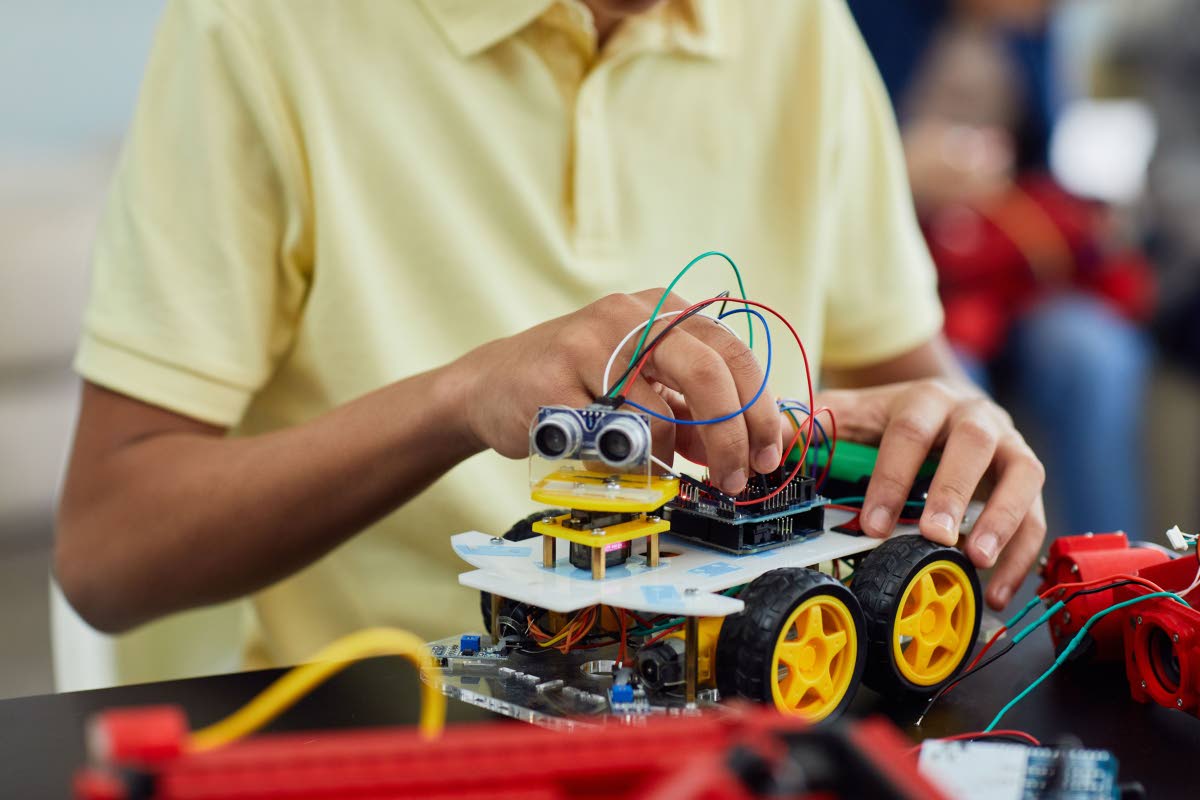 Photo - Vanessa Loring / Pexels
-
Photo - Vanessa Loring / Pexels
-
 Don Robotham. Photo - Contributed
Recently, ETOC, the Education Transformation Oversight Committee, presented a progress report on the implementation of the recommendations of the Patterson Commission on Education Reform. According to this report, 47 per cent of the recommendations have been implemented. This is to be welcomed. Nevertheless, fundamental issues remain that could undermine the entire effort.
INFRASTRUCTURE FIRST?
As a country with limited resources and bound by IMF conditionalities, every government of Jamaica, whether JLP or PNP, must make hard choices. A choice has been made by this Government: The Capital Expenditure Budget for 2026-27 allocates J$21.9 billion to capital investments, while the Ministry of Education allocates J$3.4 billion to its capital projects. The SPARK road-modernisation project alone is projected to absorb J$45 billion over a number of years.
We have forty-million-dollar men in NaRRA and other areas of infrastructure, but teachers’ salaries and benefits remain inadequate. There is talk of another SPARK 2 but no talk of an Education Reform 2. Highways come before education.
We must make a different choice from the ‘infrastructure-first’ one. We must put education first.
CUT SPARK, FUND BOOST
The clearest expression of the infrastructure-first principle is the J$45-billion SPARK budget. To put education first, we should cut SPARK by J$10 billion and reallocate it to education. This would still leave J$35 billion to fund much-needed water-main improvements and our rural roads, but some of the larger prestige projects may have to be shelved for another day. What we would get in return would be tremendous: a lasting improvement in the quality of education that our students receive. This is a priceless benefit that would not only transform our economy but the entire quality of life of our society.
The J$10 billion released should be transferred to fund the BOOST programme. In 2021, Professor Michael Taylor, dean of the UWI Mona Faculty of Science and Technology, developed BOOST (Building Out Our STEM Teachers). BOOST is a collaborative project with the Faculty of Humanities and Education. It seeks to expand the number of maths, physics, chemistry, biochemistry, and IT specialists in our classrooms and is funded primarily by the National Baking Company Foundation, which has committed J$159.6 million over a six-year period. It also receives support from the Digicel and NCB foundations, the Orane family, and the American Friends of Jamaica.
It selects a small group of top final-year students in these fields, gives them a four-week crash course in pedagogy, and then bonds them to teach for up to three years in our high schools. In return, tuition fees/student loans are paid off for each year of teaching. The result is that our graduates with specialist knowledge are not snapped up solely by the private sector or by elite schools: All students in all our secondary schools have a chance at getting access to some excellent specialist teachers with real subject-matter mastery.
But only a handful, about 10-16 per year, for a total so far of about 41, BOOST Fellows across 33 schools, according to the information available to me. A drop in the bucket but far better than nothing. It is what the current funding can support.
Imagine for a moment what would happen if J$10 billion was injected into this programme. With this level of funding, we could significantly increase the recruitment of specialist science students at the UWI, Mona. Over time, we could increase the annual number of specialist maths/physics/chemistry/biochemistry teachers to 50 or more per year.
The result would be a transformation of our education system. Our labour force would become one composed of knowledge workers on the Asian model. Such a change goes way beyond the present vision of better skills training and TVET. The social and cultural impact of a change of this magnitude would be of inestimable benefit to Jamaican society for many generations to come. This is the real path to economic transformation, and it is perfectly feasible, budgetarily speaking.
STEAM OR MATHS?
There are two obstacles: one political, the other ideological. First, roads win votes. Physics, maths, and chemistry do not. Equally important is the ideological obstacle: The Government is convinced that infrastructural improvements are the key to economic development and that STEM/STEAM schools are the way to achieve the required educational transformations. But is this correct?
This STEM/STEAM ideology is itself derived from the so-called ‘discovery learning’ paradigm of education. This is the notion that you do not need students to acquire specialist knowledge of pure maths, physics, chemistry, biochemistry, or, for that matter, history and literature in the traditional sense. What you teach them instead are ‘critical-thinking skills’ which, in theory, are deployable across any disciplinary field. Because our students do not need to master calculus and advanced trigonometry like their Japanese and Singaporean counterparts do in high school, we do not need to focus on educating many more specialist maths and physics teachers. Singapore, Japan, South Korea, and China need to do so but not Jamaica. So we focus on training ‘master teachers’ rather than on increasing the number of specialist teachers in mathematics and physics.
This approach, not followed anywhere by any of the top school systems in the world, has big negative consequences. It is fatal for workforce productivity, especially in the rapidly changing world of AI and other technological transformations. But according to STEM-STEAM ideology, that is exactly the right approach: All we need is integrated science, and students can use their newly acquired analytical skills to master modern technology.
This is an illusion. What it results in is generalists who have not mastered maths or physics or chemistry to the exacting levels demanded by the modern knowledge economy. Neither will they know sufficient history, literature, or philosophy, now reduced to a mere ‘A’ in an integrated curriculum. None of the Asian systems that routinely top world educational rankings use this STEM/STEAM approach. Why then have we adopted it?
UNDERMINING NEST/MICROBITS AND NIEL
The irony is that this STEAM approach undermines other positive projects. The NEST/Microbits project, supported by the British Council, is an innovative and effective way to arouse children’s interest in the sciences from the basic- and primary-school levels. Likewise, is the Numbers in Everyday Life (NiEL) project of Dr Lois George, senior lecturer in mathematics education at Mona, and Charis Voutsina, professor of mathematics at the University of Southampton. These projects lay an initial foundation, but for them to have lasting effects, rigorous programmes in physics and maths from upper primary and especially high school have to follow organically.
These policy mistakes are all own goals, completely self-inflicted. A radical reorientation of our strategy, especially at the high-school level and in teacher education, is urgent. We must put education first. We must move substantial funds to BOOST. And we must drop the STEAM strategy. Or there will be neither educational nor economic transformation.
Don Robotham professor emeritus of anthropology and Africana studies, the Graduate Center, at City University of New York. Send feedback to drobotham@gmail.com and columns@gleanerjm.com