Peter Espeut | Leading up to Emancipation Day
Loading article...
-
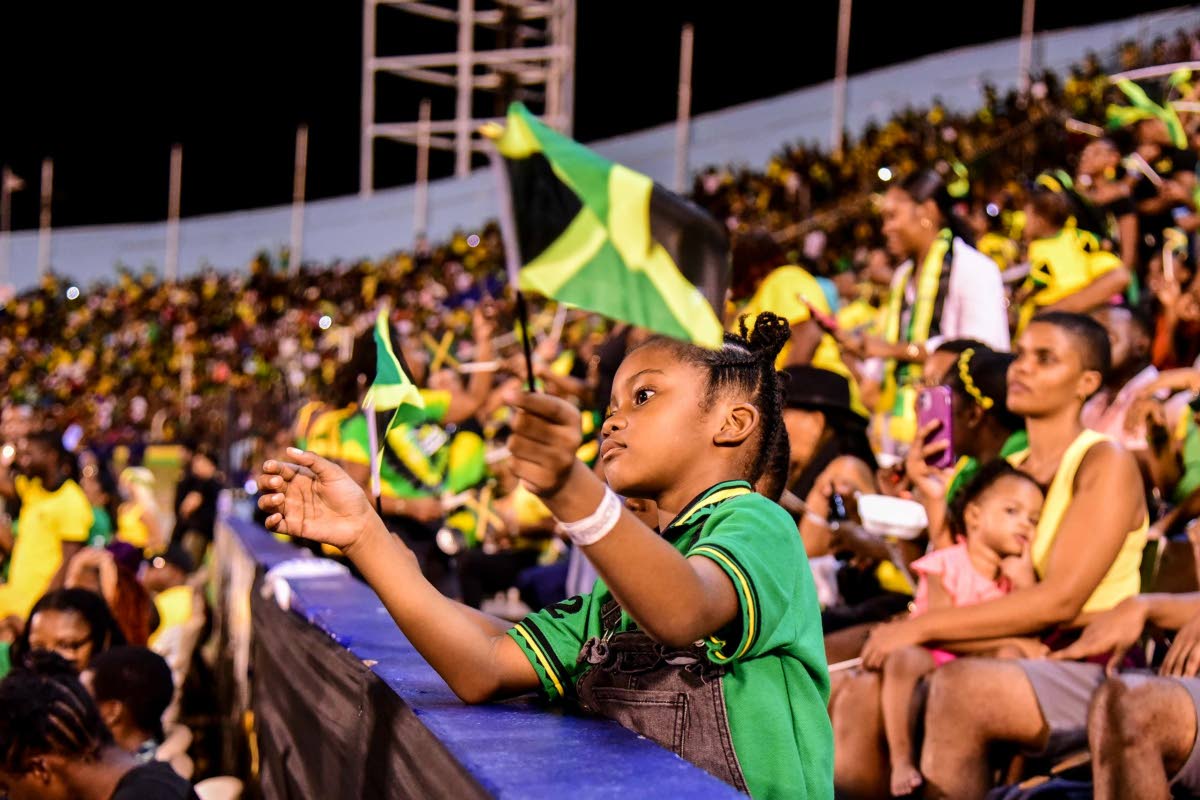 A little girl enjoying the Grand Gala celebrations at the National Stadium.
-
 Peter Espeut
On August 1, 1834, the 309,331 enslaved persons in Jamaica were formally emancipated by an act of the British Parliament. Nowadays, we celebrate every August 1 – including tomorrow – as a public holiday. I use this space to provide some historical background to the events of 1834/1838.
It was clear to those Jamaican slaveowners who followed events in England that lobbyists for Emancipation were making headway. Something had to be done quickly to prevent it, or postpone it.
The Hon Richard Barrett, custos of St James and Speaker of the Jamaica House of Assembly (JHA), urged his white planter colleagues to grant civil rights to Free Black and Coloured slaveowners (males) in order to encourage them to join the whites in a slaveowners’ alliance against the abolitionists. In December 1830 ,the JHA passed a General Privilege Bill (29 votes to 5) granting civil rights to Free Coloureds and Free Blacks (making them “honorary whites”):
“All such persons of free condition shall be entitled to have and enjoy all the rights and privileges, immunities and advantages whatsoever they would have been entitled if born of and descended from white ancestors”.
The Hon.Richard Barrett knew his facts; Jamaica’s Free Coloured and Free Blacks owned some 70,000 enslaved Africans and persons of African descent. For example, an 1820 census of the Maroons (free blacks) indicated they owned the following enslaved: Charles Town (32 slaves); Moore Town (47 slaves); Accompong Town (12 slaves).
In July 1831, a similar bill was passed granting male Jews the right to vote and to stand for public office, after meeting the necessary property qualifications. Jews in Jamaica had the right to vote before Jews in the United Kingdom, who were given that right only in 1867. The need to buttress slavery in Jamaica overcame the profound anti-Semitism in the British mentality.
Custos Barrett so feared Emancipation that he became the leader of a movement organising Jamaican planters to threaten the Imperial government that, if they ever freed the slaves, Jamaica would secede from the British empire, following the example of the 13 North American colonies in 1776. On July 6, 1831, Barrett chaired a meeting of planters in the Montego Bay courthouse which passed the following resolution: that, if the British parliament went ahead with their plans for immediate Emancipation:
“they will alienate from his Majesty’s government, and from the country which upholds it in its unjust and despotic measures, the affections of his Majesty’s hitherto loyal and faithful subjects of Jamaica; and will compel them to petition his majesty to absolve them from their allegiance, that they may seek the protection of some other power able and willing to secure to them the enjoyment of their rights and the peaceable enjoyment of their properties”.
Within a few months, similar slaveholder meetings had been held in all the 21 Jamaican parishes except three, passing similar resolutions. The British government knew that this was an empty threat, for the militia staffed with Jamaican colonists could not resist even the smallest garrison of British troops, and the smallest warship.
The uncertainty and apprehension among the Whites surrounding the possibility of Emancipation was sure to have been transmitted to the enslaved population. Those who learned to read in the day, evening and Sunday schools run by the missionaries would certainly have laid eyes on British and Jamaican newspapers discussing the debate. And they would have been aware of the strong resistance of their masters towards the activities of the anti-slavery activists. In 1831, rumours abounded in Jamaica among the slaves that freedom had even been already granted, but was being withheld. The tension in the society was palpable.
Flowing from those rumours, Sam Sharpe’s 1831 Christmas Rebellion took place, mobilising as many as 60,000 of the enslaved. The colonial government used the British army and the Jamaican militia – and Maroons from Charles Town and Moore Town – to put down the rebellion within two weeks.
Believing the Baptist Church to be fomenting discontent and revolt among the slaves, on January 26, 1832, the Anglican rector of St Ann’s Bay formed the Colonial Church Union (CCU) “first, to support the Established Churches of England and Scotland … secondly, to expel the Sectaries, and other incendiaries from our island” ( The Baptist Magazine. October 1832. Page 459).The “sectaries” referred to were the Baptist, Methodist and Moravian missionaries who in England were lobbying for Emancipation. Members of the CCU included custodes, magistrates, justices of the peace, militia officers, planters, and Anglican clergymen. It is interesting that several CCU executive members were brown men (slaveowners). By March 1832, there were CCU branches in 11 parishes, and a Grand Island Union comprised of delegates from the parish unions was projected. The slaveowners were organising to preserve slavery!
The CCU burned or pulled down (with ropes and horses) at least the following Baptist chapels: Brown’s Town, Duncans, Falmouth, Green Island, Gurney’s Mount, Hayes, Lucea, Montego Bay, Ocho Rios, Oracabessa, Putney, Ridgeland, Rio Bueno, St Ann’s Bay, Salter’s Hill, Savanna-la-Mar, and Stewart Town; and the following Methodist chapels: Ebenezer, Falmouth, Lucea, Ocho Rios, Oracabessa, St Ann’s Bay, and Stewart Town. As reprisals for Sam Sharpe’s Rebellion, several non-conformist ministers were hung in effigy, and were either beaten and/or tarred-and-feathered, arrested and jailed.
The response to Sam Sharpe’s Rebellion by the white members of the CCU was probably the last straw which forced the British government to abolish slavery. The House of Commons expressed outrage that white planters could have tarred and feathered white missionaries.
Just over a year later (on July 22, 1833), despite the powerful planters’ lobby, largely neutralised by the Reform of the British Parliament in 1832 eliminating “rotten boroughs” and “pocket boroughs”, the Emancipation Act passed unopposed in the British Parliament and received royal assent on August 28, 1833. It took effect on Emancipation Day, August 1, 1834.
The Rev Peter Espeut is a member of the National Executive of the Jamaica Baptist Historical Society. Send feedback to columns@gleanerjm.com