Denise Eldemire-Shearer | Digital transformation and older persons
Loading article...
-
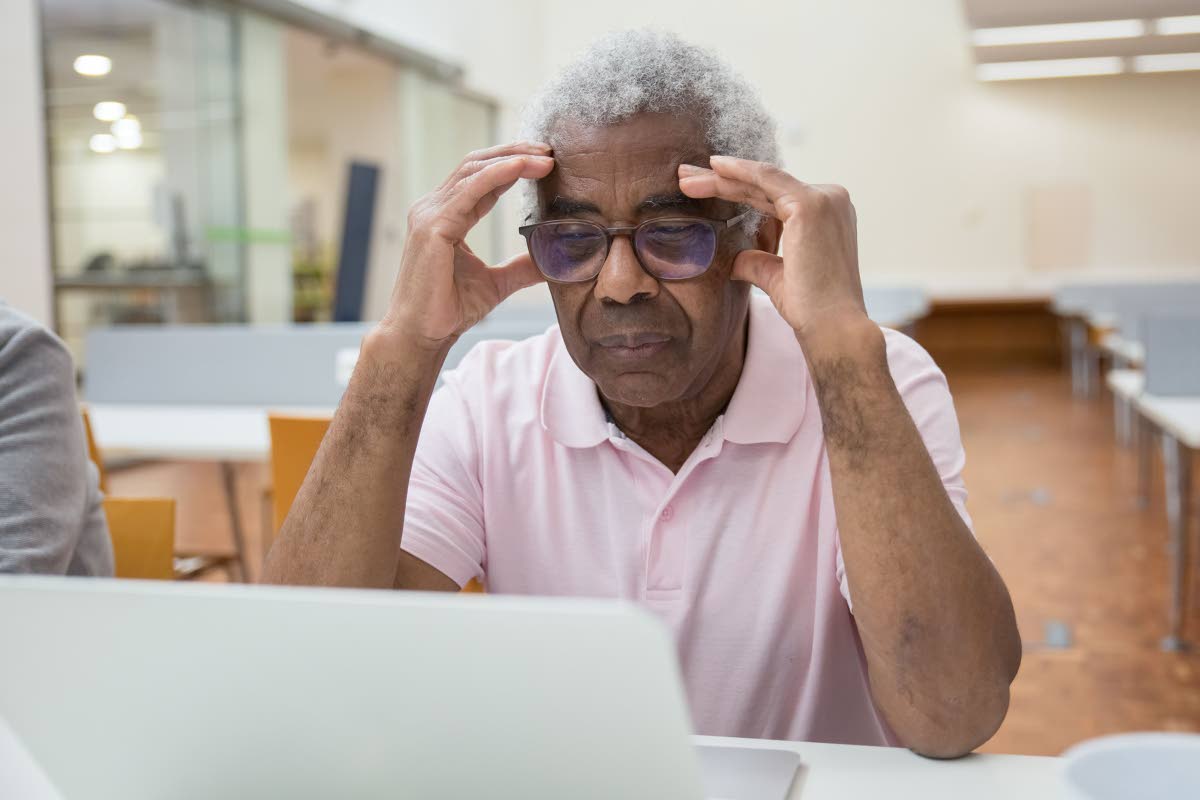 Representational image of a senior citizen having difficulties with technology
-
 Denise Eldemire-Shearer
Digital transformation is the future and game-changer for how business is done. It is key for successful modern organisations but, while there are advantages, the possible challenge of digitising services, especially for persons over 60, must be recognised and considered.
There are approximately 375,000 persons over 60 in Jamaica and, according to the research available, over 60 per cent have mainly a primary school education and may not be technically savvy. While most have mobile phones, many do not use the features available on the phones and having a mobile phone is not necessarily having a smartphone.
Jamaica’s digital transformation provides both empowerment and challenges for older persons, a fact that seems to be increasingly recognised and, in some cases, addressed.
While it is accepted that digital access can promote independence through online services, the opposite is true if the older person cannot manoeuvre the service and needs to rely on a family member or friend. In those cases, pins/passwords have to be shared, financial business is shared and, most importantly, the older person feels dependent.
Older persons, unfortunately, often based either on personal experiences or those of others, have trust issues, safety, fearing online scams, and data privacy violation, which stop them from using new tools.
NOT COMFORTABLE
In a 2023 Inter-American Development Bank (IDB) study, 60 per cent of persons over 60 reported they did not feel comfortable or adapted to the digital world. While efforts to simplify the life certificate system are welcomed for persons over 60, there are challenges.
Many older persons have visual barriers around sensory changes, vision and hearing and mobility issues, which can make standard apps and complex websites hard to use.
According to a 2011 study by Mona Ageing & Wellness Centre 40 per cent of the elderly live in rural areas, especially males, where Internet service is spotty at best. To return the signed life certificate, it still has to be printed, signed and copied, and, while urban persons may have access to these services, it is being reported as difficult in rural areas.
The recent statement by Minister of Efficiency, Innovation and Digital Transformation, Audrey Marks, that Jamaica Post is being repositioned to help both with computer service and in-person service is very welcome. It also allows older persons to meet and have a social outing, as they used to when picking up their pension.
Another study pointed out that some seniors have no form of identification, which is often needed to set up accounts. The National Identification System (NIDS) will address this, but what happens in the meantime?
Another area of concern is, what about persons with cognitive difficulties who have stopped or are no longer capable of checking emails? What systems are being put in place? In the past, a family member would sort out the hard copy received in the mail.
BANKING CONCERN
Banking is another area which seniors have expressed concern about.
Using ATMs and having to remember PINs/passwords and being able to read and follow instructions have proved difficult for some older persons.
In addition, older persons often prefer hard copies of receipts. Presuming they have Internet access, they need their account information, the website information where they will also need to create an account, and they need a credit/debit card, which many older adults do not have. The big question is how the country modernises while not leaving some citizens behind. Recently, a person related that an old lady at an ATM handed him her card and provided him with her PIN and said ‘please help me to get $500’.
The reliance on giving sensitive information to other persons increases the risk of exploitation and fraud. Some older persons struggle to use online payment systems, and, in addition, without a hard copy receipt, they are not satisfied that the bill is paid.
Phased introduction and efforts like the postal one may ensure older persons are included. Transitioning should ensure no one is excluded.
There is no doubt that older people benefit from digital transformation through things such as continuous health monitoring, telemedicine consultations, simplifying daily tasks through automation, and providing tools for communication, so reducing isolation and loneliness.
ADDRESS DIFFICULTIES
But society needs to be aware of difficulties and address them rather than just promote the importance of digital transformation. Many older persons want to be independent, not requiring someone to make their medical appointment or pay a bill. As an 80-year-old asked the other day, “Have people stopped answering phones? The machine tells me what it wants, but it doesn’t answer my question.”
Video calls can facilitate virtual visits and provide support, but older persons prefer in-person visits. Especially around church activities. Social media and online communities catering to personal interests and hobbies can be helpful.
In designing educational programmes to improve the acceptance and adoption of digital transformation activities by older persons, it is critical to understand their psychology and what influences their thinking. This includes perceived usefulness, ease of use, and affordability.
Ethical considerations are paramount, particularly given the extensive media coverage surrounding data protection, potential issues and privacy. Such reports can make older adults cautious, especially when they do not fully understand the technologies or processes being proposed. Therefore, if older persons are to embrace digital transformation, it is essential to ensure they understand its purpose, benefits, and safeguards, and that they are comfortable with its use.
Social media has become a major platform for disseminating information and addressing misconceptions. However, it is important to recognise that many older adults do not use social media. Consequently, communication strategies should incorporate a range of other media, including traditional channels such as radio, television, newspapers, community meetings, and printed materials, to ensure that information reaches this population effectively.
Dr Denise Eldemire-Shearer is professor emirita of UWI Mona Ageing and Wellness Centre. Send feedback to columns@gleanerjm.com.