Editorial | Food security and war
Loading article...
-
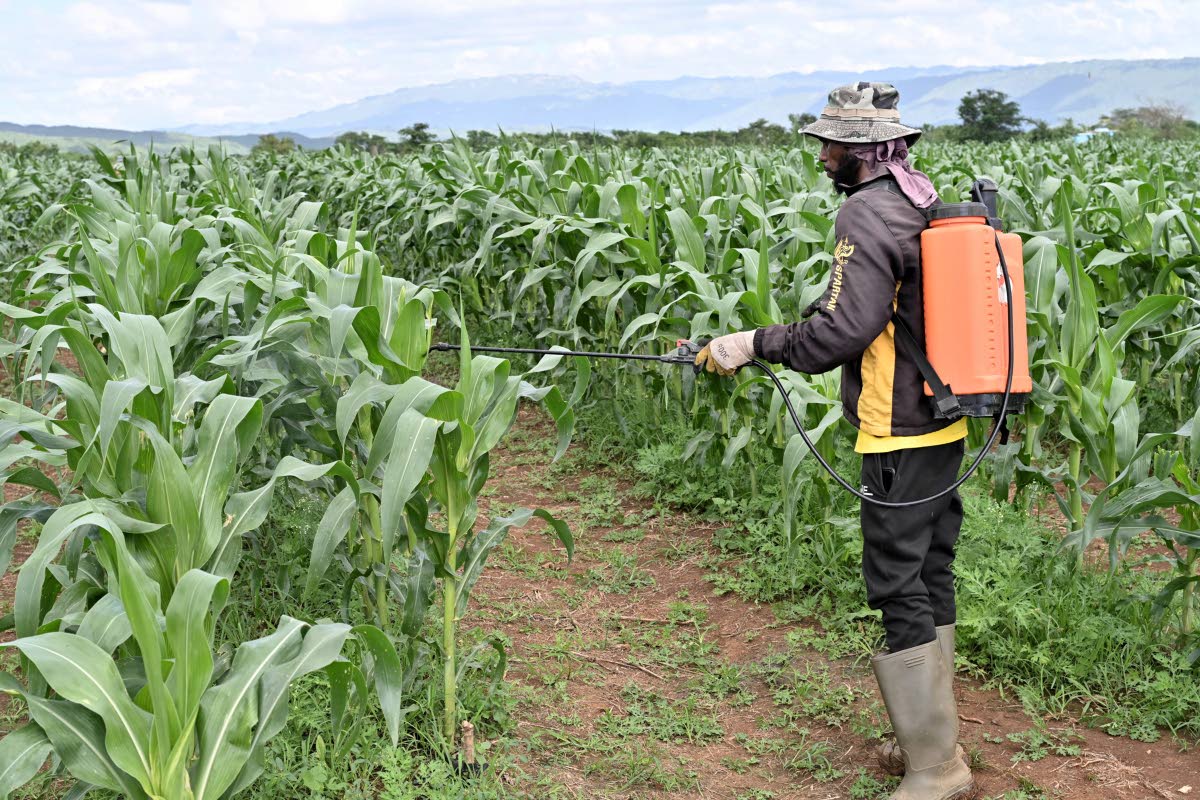 Jamaica’s farmers are mostly low-skilled, mostly working small plots, using low technology.
-
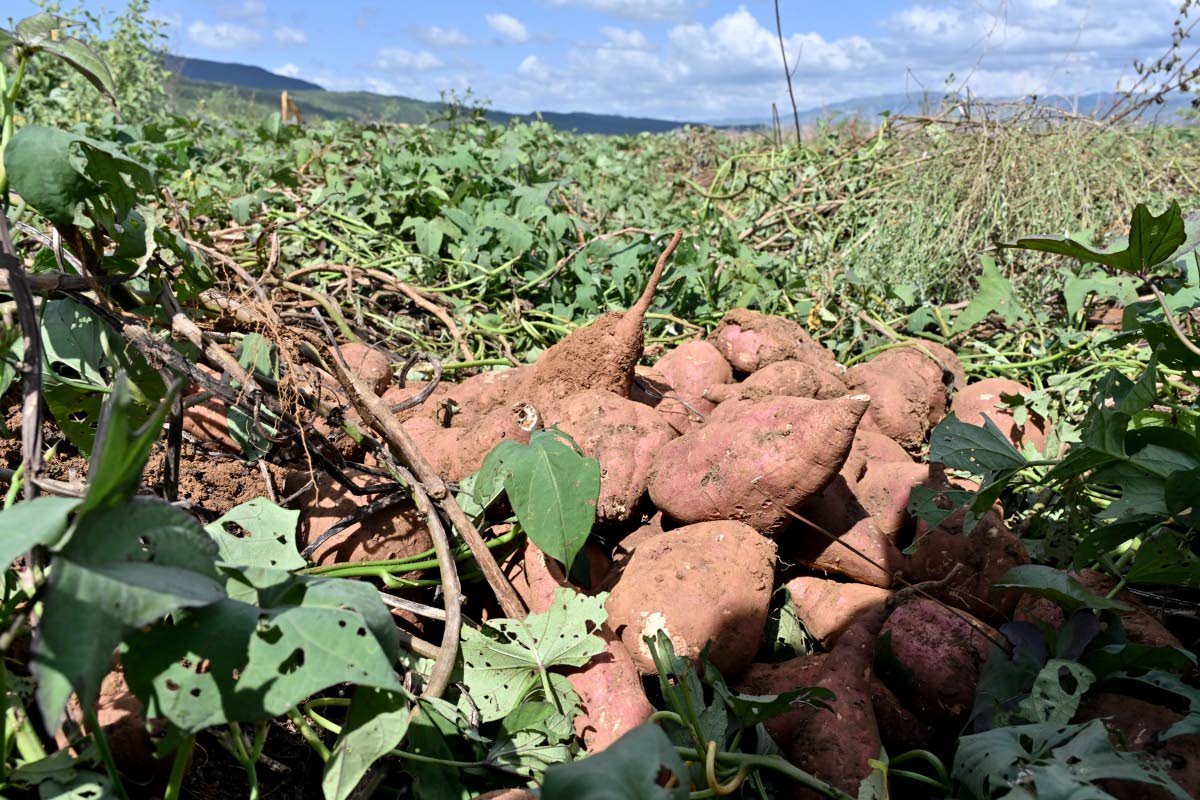 Experts say that between a fifth and a quarter of food imports could be substituted with domestic production.
With the war in the Gulf region, it is unlikely that Andrew Dyer will set off to Dubai any time soon to teach mathematics.
He may, however, still seek an alternative to onion farming if he continues to lose big bucks because he can’t compete with cheaper foreign suppliers.
Mr Dyer’s situation – reported by this newspaper on Sunday – highlights the policy tensions that often exist between the government’s wish to provide consumers with cheap foods while supporting domestic farm production and ensuring another matter that is likely to be obvious if the Gulf war is prolonged: that it is not only oil which is in play. So, too, is food security.
This is the context in which The Gleaner welcomes the move to fashion a 10-year development plan for Jamaica’s agriculture, for which the agriculture ministry and the UN’s Food and Agriculture Organisation (FAO) hosted a two-day visioning workshop of critical stakeholders in February.
There have been several of these types of initiatives in the past. They however tend to atrophy after an initial burst of energy, unable to survive the stress of competing policy interests – domestic and international.
In that regard, while endorsing observation by Michelle Parkins, the agriculture ministry’s chief technical director, that the development of the plan must draw on “research, field experience, market intelligence … and the lived experience of our farmers”, this newspaper offers what we believe to be an critical bit of advice, which we have made before. Any development plan for agriculture and agro-processing should be part of, or in tandem with, a broader industrial policy, whose goal, as we stated 15 months ago, must be “extricating Jamaica from its trap of low wages, low technology, low value-added and low growth, while at the same time enhancing the island’s food security”.
ECONOMICS OF FARMING
The Gleaner offers no analysis of Andrew Dyer’s production technologies and/or production and marketing systems. But the essential elements of his story are common to the economics of farming in Jamaica: having produced, it is difficult to compete with imports from large, technologically advanced producers abroad. In this case onions, of which, in recent years, Jamaica has produced, according to agriculture ministry data, around 40 per cent of the 13,000 it consumes annually. Recent production, until the damage caused by Hurricane Melissa in October, represented a significant turnaround of output from the late 1990s into the 2010s.
According to Mr Dyer, for his current crop, farmgate prices have collapsed by 60 per cent, causing him significant losses and having to contemplate whether he should leave the onion fields and return to the classroom. Part of the problem, apparently, was an increased opening of the market for onions and other agricultural produce after the storm. Deficient domestic supply chains and marketing systems exacerbate the issue of price competitiveness. Which highlights another matter in Jamaica’s agricultural dilemma.
While farming employs nearly 200,000 people, or over 10 per cent of the island’s workforce, agriculture accounts for around seven per cent of GDP. Additionally, the island’s food import bill of around US$1.4 billion accounts for 19 per cent of total imports. Experts say that between a fifth and a quarter of food imports could be substituted with domestic production.
However, Jamaica’s farmers are mostly low-skilled, mostly working small plots, using low technology. In other words, their productivity is low. Then, up to 30 per cent of production is forfeited in post-harvest losses because of poor handling and inadequate storage. A significant volume of crops is also stolen in the fields
MODERNISING AGRICULTURE
In many areas, Jamaican agricultural producers may not be able to match the productivity of their counterparts in major farming economies, whose high-tech production and great acreages afford them economies of scale. There is little doubt, though, that significant improvement can be made. In key crops, farmers, using modern and appropriate technologies, can produce in sufficient amounts, at reasonable prices, if the Government is willing to make the policy trade-offs. Which, in some instances, will mean higher prices in exchange for domestic food security, jobs and improved standards of living.
It is an approach that has been employed in the domestic poultry sector where large, sophisticated central operators share know-how with smaller, mostly individual producers, allowing for a spread of income while meeting market demand.
However, such issues have to be discussed honestly, and within a framework of clear national policy objectives. For instance, is the definition of food security only the ability, because of the availability of foreign exchange, to pay for the country’s food imports?
Or, should issues such as what happened at the outbreak of the Russia-Ukraine war be taken into account? Disrupted supply chains and the removal of key suppliers led to hikes in commodity prices, triggering food inflation. That is again a possibility with the outbreak of war in the Middle East.
Further, increasing geopolitical uncertainties, with the rupture of the long-standing global order, also raises the prospect not only of price hikes, but the blocking of critical supplies by powerful players.
Over the past dozen years, Jamaica has achieved significant macroeconomic stability. But even before Melissa, which cost 42 per cent of GDP, it was clear that balancing the fiscal accounts wasn’t sufficient, on its own, to generate transformative economic growth. In countries that have enjoyed sustained robust growth, macroeconomic stability has been bolstered by the public and private sectors and other stakeholders working in concert on clearly articulated and credible development and growth strategies.
Modernising agriculture in the context of food security and increasing geopolitical uncertainties should be part of this conversation.