Bartlett pushes visitor-backed fund to protect Caribbean tourism
Loading article...
-
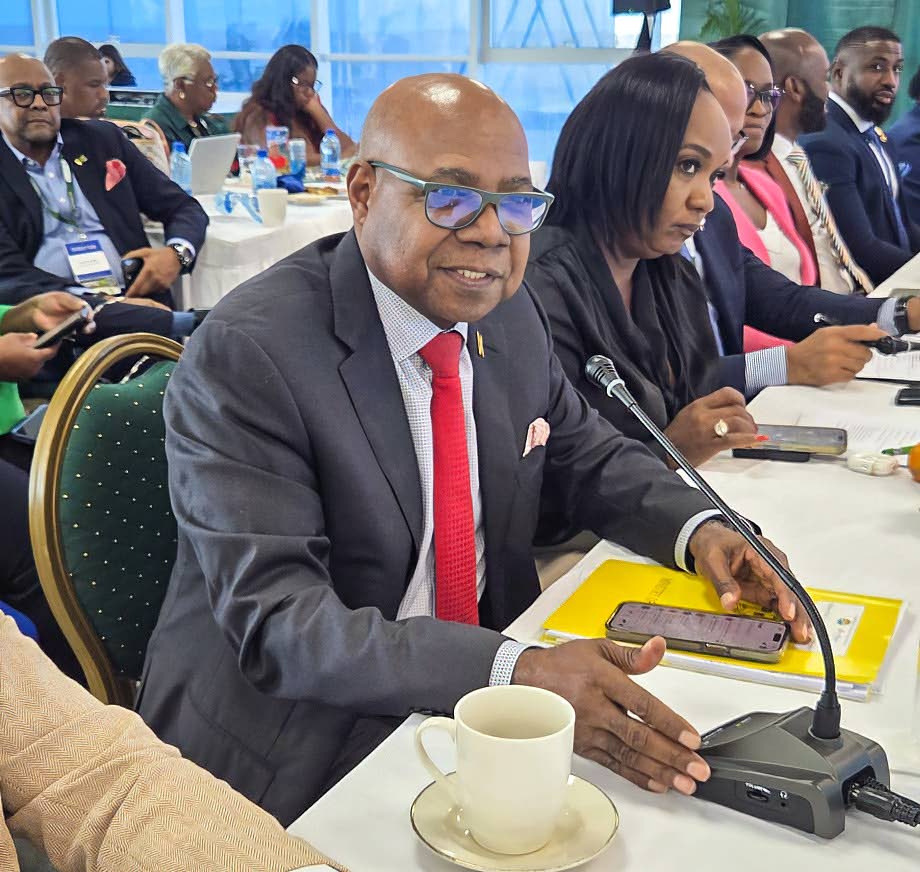 Jamaica’s Minister of Tourism Edmund Bartlett (left) seated next to St Kitts and Nevis’s tourism minister, Marsha Henderson, and other leaders during the Council of Ministers meeting in Guyana on Tuesday. Photo - Photo by Janet Silvera
-
Jamaica’s Minister of Tourism Edmund Bartlett (left) seated next to St Kitts and Nevis’s tourism minister, Marsha Henderson, and other leaders during the Council of Ministers meeting in Guyana on Tuesday. Photo - Photo by Janet Silvera
-
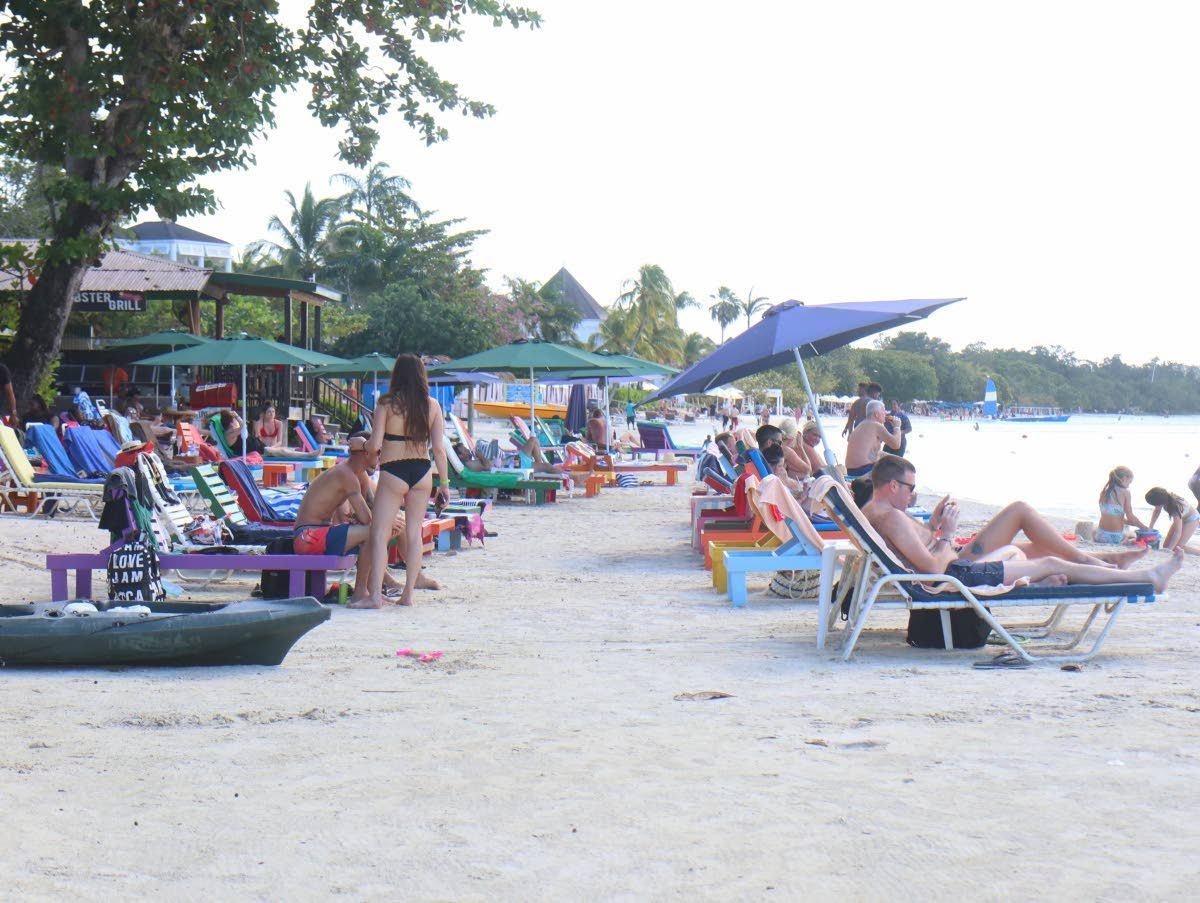 Tourists enjoying the beach in Negril in the Gleaner 2021 photo. Photo - File
GEORGETOWN, Guyana:
Jamaica’s Tourism Minister Edmund Bartlett is proposing a visitor-backed fund to help protect the Caribbean’s tourism industry from future shocks.
The proposed Caribbean Tourism Resilience Fund bears similarities to Jamaica’s Tourism Enhancement Fund (TEF), which is also financed by fees collected from visitors.
Speaking during the Meeting of the Caribbean Tourism Organisation (CTO) Ministerial Council during the State of the Tourism Industry Conference in Georgetown, Guyana, on Tuesday, Bartlett called for the establishment of a Caribbean Tourism Resilience Fund, arguing that the region must move away from repeatedly finding money to rebuild after disasters and instead finance resilience before they occur.
He suggested that consideration be given to a “modest resilience contribution” linked to visitor activity across the Caribbean.
“A few dollars multiplied across millions of visitors can become hundreds of millions of dollars in resilience investment,” Bartlett said.
The proposal bears similarities to the mechanism Jamaica established more than two decades ago through the TEF, which was created under the Tourism Enhancement Act and began operations in 2005.
The Jamaican fund was established to support projects and programmes aimed at tourism growth and development, improving the visitor experience, sustainable development and better management of environmental resources.
It is financed through a Tourism Enhancement Fee charged to eligible incoming airline and cruise passengers.
However, a significant change came in 2017 when the Government amended the legislation and TEF transitioned from a self-financing entity to a budget-funded body. Tourism enhancement fees collected from passengers are now paid directly into the Government’s Consolidated Fund, with TEF receiving funding through the national Budget.
VISITOR-SUPPORTED TOURISM FINANCING
His latest proposal would take the principle of visitor-supported tourism financing to the regional level, but with resilience and sustainability at its core.
Bartlett said governments, hotels, airlines, cruise lines, financial institutions, insurance companies, pension funds, private investors and the wider tourism value chain should also participate.
“I am not speaking about a measure that undermines competitiveness,” he said. “I am speaking about using the enormous volume of tourism activity in the region to create a permanent pool of capital capable of protecting the very destinations on which the industry depends.”
He said every dollar placed in the proposed fund should be used to leverage additional resources through blended finance, guarantees, co-investment, insurance products and partnerships with development banks.
Bartlett pointed to Jamaica’s experience with Hurricane Melissa as evidence of why the financing model must change.
He said the national assessment placed the storm’s combined impact at approximately US$12.2 billion, equivalent to 56.7 per cent of Jamaica’s 2024 gross domestic product.
While airports, cruise ports, hotels and attractions were able to return to operation, Bartlett said the Caribbean could no longer judge resilience simply by how quickly it recovers.
“For too long, we have become experts at rebuilding,” he said. “The next stage of Caribbean development requires us to become experts at reducing the need to rebuild.”
The proposed fund would therefore operate before, during and after disasters.
Bartlett outlined six areas for financing: resilient infrastructure and renewable energy; rapid liquidity following disasters; protection for tourism workers; assistance for small businesses and community tourism; natural capital and the blue economy; and technology, data and early-warning systems.
He also argued that environmental sustainability could no longer be separated from tourism economics.
CRITICAL ASSETS TO THE INDUSTRY
“In the Caribbean, environmental sustainability is economic sustainability,” Bartlett said, pointing to coral reefs, mangroves, beaches, water security and renewable energy as assets critical to the industry’s survival.
“This is not environmental idealism. This is sound economics.”
His position found support in the broader discussion at the conference, where the Inter-American Development Bank (IDB) underscored tourism’s importance to Caribbean economies and the need for investment in both physical infrastructure and the wider tourism value chain.
The IDB’s sector lead specialist, Roberto Duran-Fernandez, who also presented at SOTIC on Tuesday, said tourism accounts for approximately 20 per cent of GDP across the Caribbean, rising to about one-third in some countries.
The bank also stressed the importance of bringing governments, development institutions and the private sector together, while identifying inadequate data as a major constraint to better tourism decision-making.
Bartlett similarly proposed a Caribbean tourism resilience observatory that would map vulnerabilities, including exposed hotels and infrastructure, uninsured businesses, deteriorating beaches and reefs, and weaknesses in energy and water systems.
He said artificial intelligence, satellite data, predictive analytics and real-time monitoring could help destinations anticipate shocks before they become crises.
“The future of Caribbean tourism cannot simply be more visitors,” Bartlett said.
“It must be stronger destinations, stronger communities, stronger economies and a stronger Caribbean.”
janet.silvera@gleanerjm.com