KGOTLA exhibition explores African artistic heritage and cultural resilience
Loading article...
-
 Principal of The University of the West Indies, Mona Campus, Professor Densil Williams (left) exchanges thoughts Kaysia Vaughan, group chief customer and brand officer, VM Group and Professor Hopeton Dunn. Photo - Contributed
-
Principal of The University of the West Indies, Mona Campus, Professor Densil Williams (left) exchanges thoughts Kaysia Vaughan, group chief customer and brand officer, VM Group and Professor Hopeton Dunn. Photo - Contributed
-
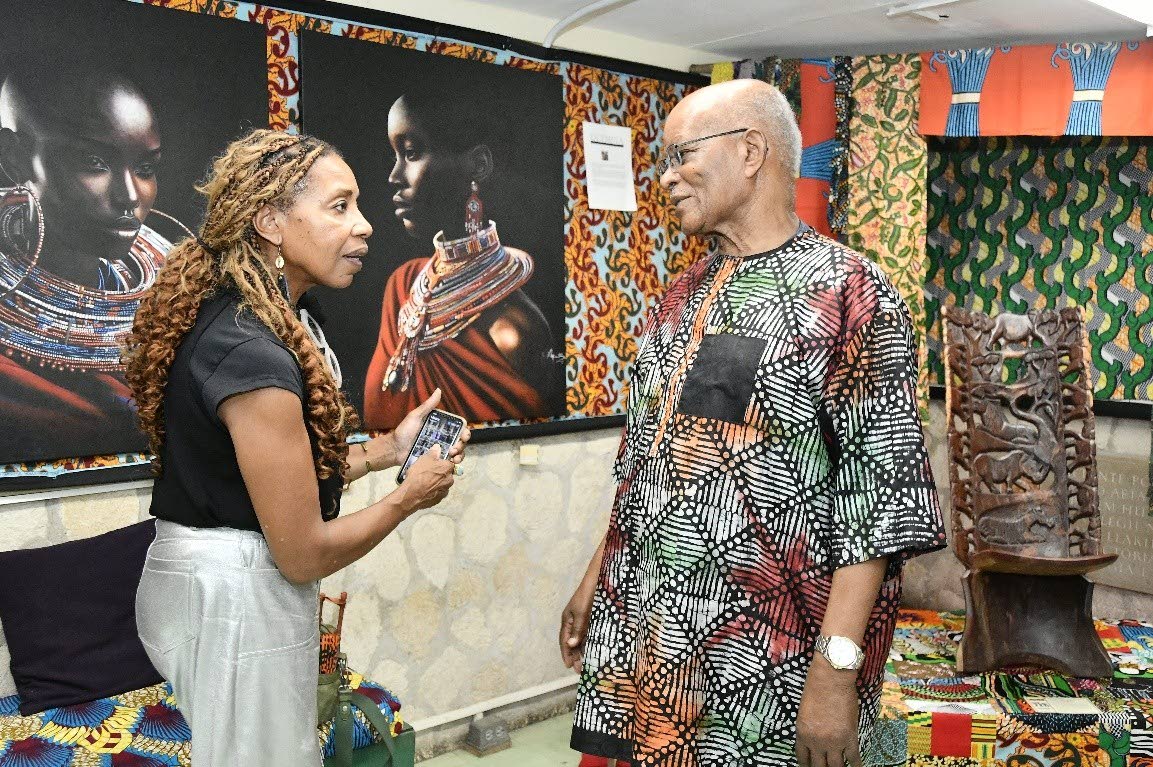 Shirley Thompson, well known composer, speaks with Professor Sir Kenneth Hall, former governor general of Jamaica and principal of The UWI, Mona Campus. Photo - Contributed
-
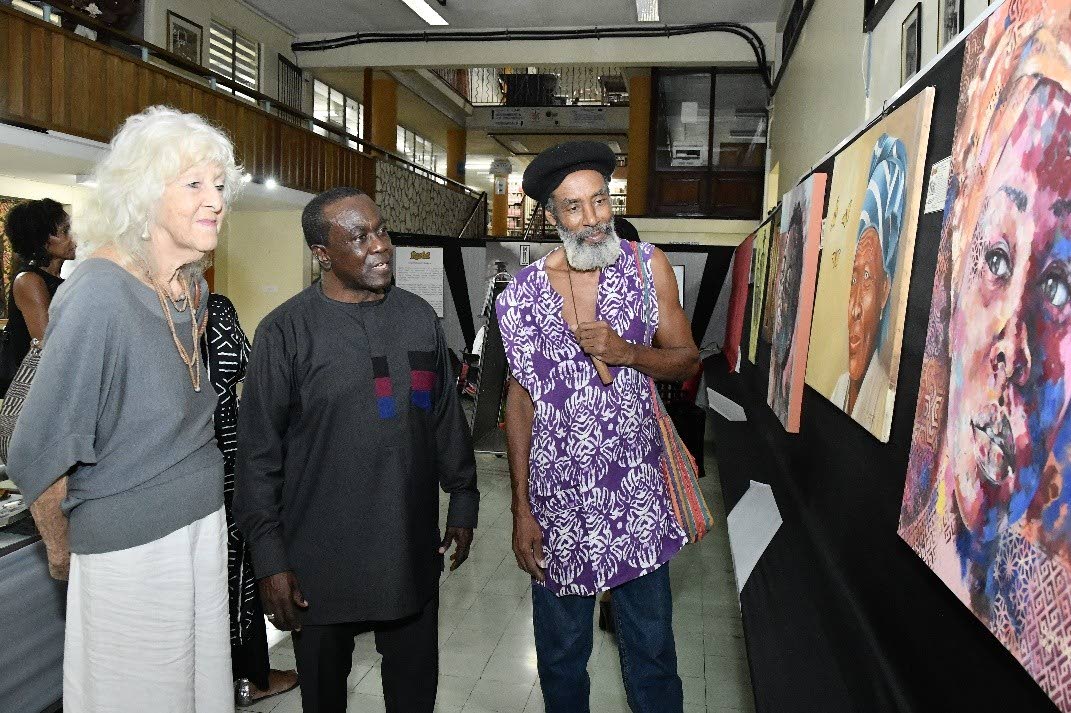 left: Professor Hopeton Dunn (centre) speaks with artist, Samere Tansley and poet and musician M’Bala- two visitors to the KGOTLA exhibition launch. Photo - Contributed
-
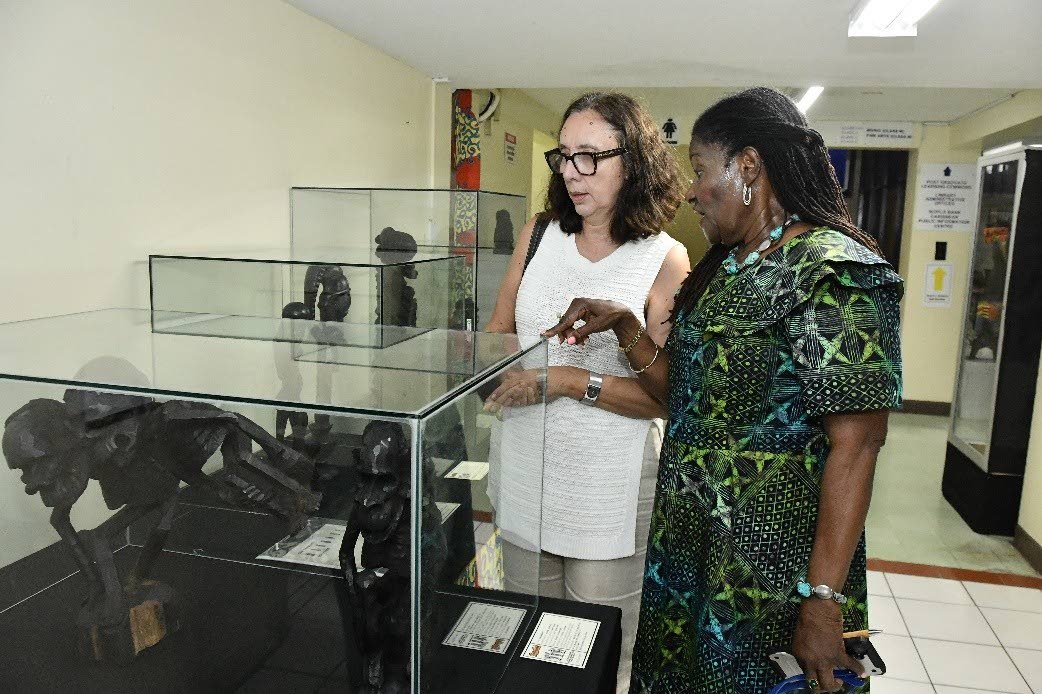 Dr Teresa Villoria- Nolla, senior lecturer and head of the Department of Modern Languages and Literatures, speaks with Professor Paulette A. Ramsay, research fellow at INAFRICARA. Photo - Contributed
An exhibition exploring African artistic heritage, cultural resilience and the preservation of history has opened at The University of the West Indies (UWI), Mona campus.
The KGOTLA African Art Exhibition was launched on September 16 at the university’s Main Library through a collaboration involving the PJ Patterson Institute for Africa-Caribbean Advocacy (INAFRICARA), the Africa Caribbean Institute of Jamaica/Jamaica Memory Bank and UWI Mona.
The opening ceremony was held in the library’s Multifunctional Room, where keynote speaker Lady Rheima Hall, distinguished Jamaican artist, art educator and the first principal of the Edna Manley College of Visual and Performing Arts, challenged attendees to view African art as a record of a civilisation that existed long before colonialism and enslavement.
She said African art provides evidence of the creativity, dignity and history of a people whose cultural identity could not be erased by colonialism or slavery.
She also argued that KGOTLA could help broaden conversations about reparations beyond governments and institutions to include communities, particularly through the restoration of art and cultural confidence.
The exhibition features two principal collections.
The Dunn Collection, owned by Professor Hopeton Dunn and his wife, Dr Leith Dunn, includes canvas paintings, Egyptian papyrus art and relief copper pieces.
The second is the Makonde Collection, owned by the Africa Caribbean Institute of Jamaica/Jamaica Memory Bank. It comprises sculptures from the Makonde visit to Jamaica in 1974.
Additional pieces have been contributed by other collectors and individuals.
The organisers said the exhibition is intended to encourage reflection on African cultural resilience and the role of dialogue and record-keeping in preserving traditions and keeping cultural heritage alive.
KGOTLA will remain open to the public until October 21, when it will culminate in a panel discussion.
Schools, particularly primary and high schools, are being encouraged to visit the exhibition. Tours can be arranged through any of the participating organisations.